
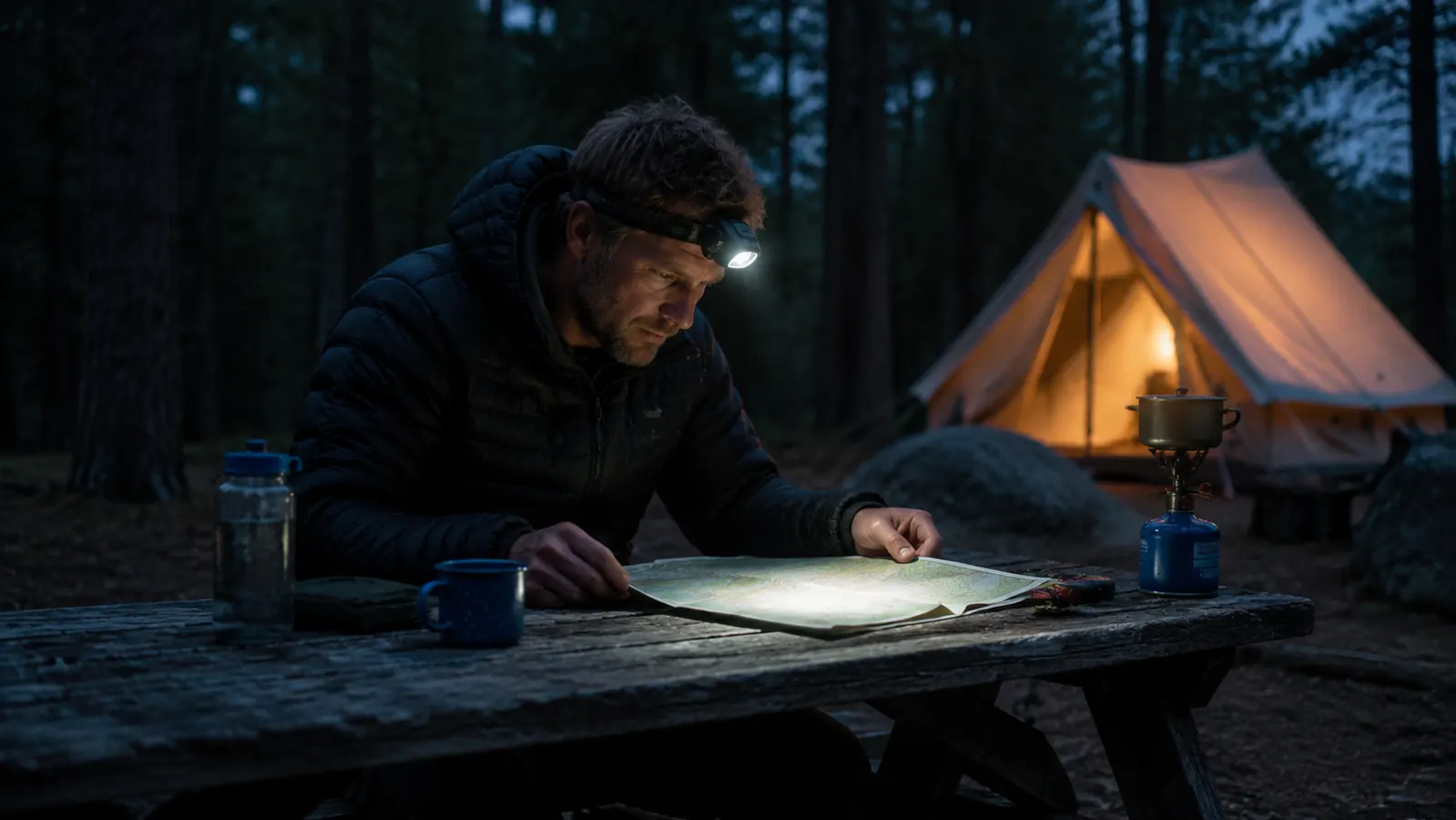
For a long time, my camp lighting situation looked like this: a Maglite rattling around behind the driver's seat, a small pocket flashlight in the top pouch of my pack, and a clip-on book light I had duct-taped to the brim of a hat after losing the original headband. Eventually I swapped all of that for a $17 LHKNL rechargeable headlamp, and the whole system got simpler overnight. Three separate things, three separate sets of AA or AAA batteries, and every single trip I forgot to check at least one of them before I left the driveway.
The Maglite was heavy enough to anchor a boat. The pocket flashlight had a rubber button that got loose after the second season and started randomly switching on in the pack, so I would reach for it at 1 a.m. only to find a dead battery and a warm nylon side pocket. The hat-lamp was fine for reading in the tent but put out about as much light as a birthday candle at ten feet. None of this was a crisis. It was just the low-grade friction that makes camping feel more complicated than it should.
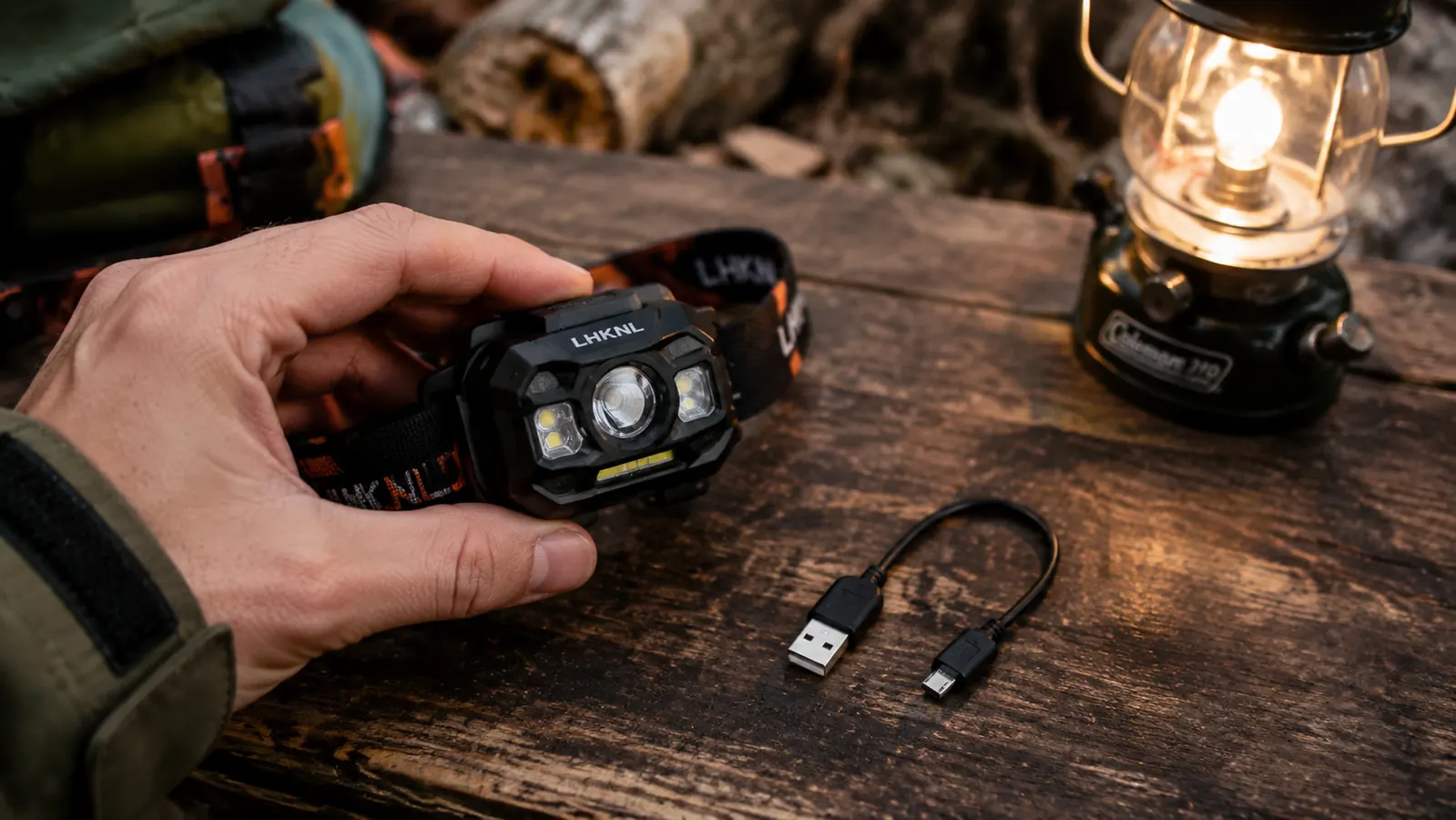
Last October, my buddy Marcus showed up at a car camping spot in the Ocala National Forest with a small headlamp I had not seen before. It was on his head within thirty seconds of getting out of the truck. No fumbling with a flashlight, no hat, no dropped-battery incident at midnight. He mentioned it came in a two-pack and cost less than a tank of gas. I asked him to send me the link when he got home.
That was the LHKNL rechargeable headlamp. I ordered it the same week. When the package arrived I pulled both units out, charged them via the included micro-USB cables, and within a few days I had quietly retired all three of my old lights. That was seven months ago and roughly a dozen camping trips back. I have not missed the Maglite once.
Within thirty seconds of arriving at camp, the headlamp was on. No flashlight to locate, no batteries to check. That simple shift is worth more than the spec sheet.
Stop starting every trip by hunting for batteries you forgot to buy
The LHKNL comes as a two-pack, charges over USB, and has been the first thing I grab before any camping trip, power outage, or late-night gear sort. Over 10,000 reviews back up the basics. Check today's price.
Amazon Check Today's Price on Amazon →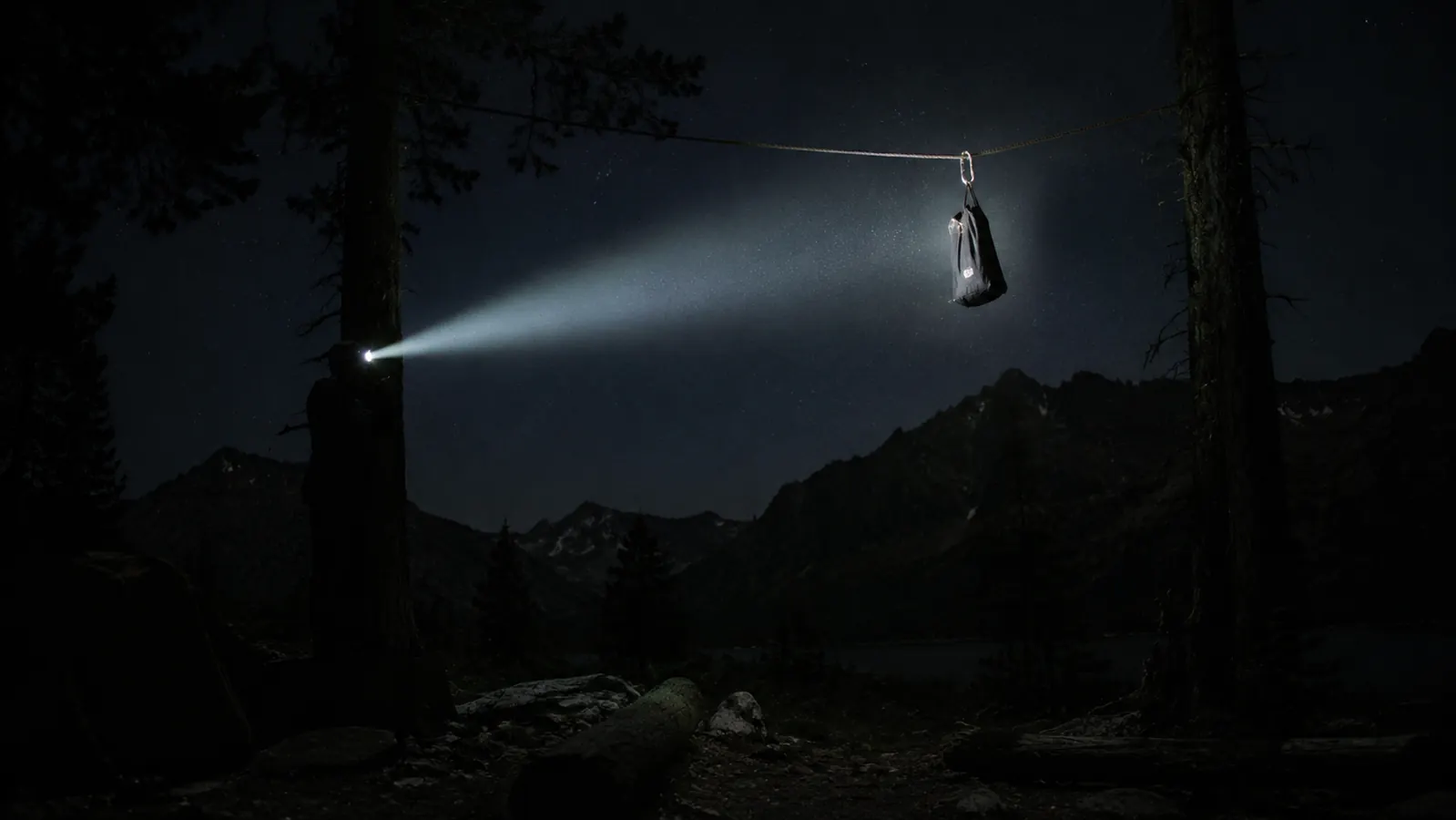
What I use most is the standard beam mode, which is bright enough to navigate a rocky trail to the bear box without second-guessing a footfall. There are three brightness levels and a red-light mode for nights when I do not want to kill my own night vision or wake up whoever is in the tent next to me. The motion sensor, which you wave your hand in front of to toggle the light, sounds gimmicky but is genuinely useful when your hands are full of firewood or a cast-iron skillet.
Battery life has not let me down yet. On a three-night trip at medium brightness I came home with charge left in both units. I charge them the night before I leave, toss one in my pack and one in the car kit, and I have not thought about batteries since October. The two-pack format matters more than it seems at first: one on your head, one on the camp table for ambient light, or one as a loaner when the person who forgot their flashlight shows up.
For a deeper look at how it held up over multiple seasons and what the beam actually looks like at night, I wrote a full breakdown in my LHKNL long-term review. And if you are still in the research phase, my headlamp buyer's guide covers the specs that actually matter in the field versus the ones that only matter on a spec sheet.
The one thing I will flag honestly: the beam is not going to replace a dedicated trail-running headlamp for technical nighttime running, and the strap adjustment takes a few tries to dial in on the first use. Those are real notes, not dealbreakers. For camp use, car camping, hiking in and out of a site, midnight bathroom runs, and cooking in the dark, it covers every scenario I throw at it.
What I Would Tell You If We Were Sitting at My Kitchen Table
If you asked me whether you should buy this headlamp, I would tell you what I told Marcus after my first trip with it: the thing that surprised me most was not the brightness or the charging or even the price. It was how much mental overhead it removed. I no longer have a battery checklist before I leave. I no longer have a moment of low-level dread at midnight when I cannot find the flashlight. That quiet removal of friction is worth more to me than the spec sheet, and the spec sheet is already decent for the money.
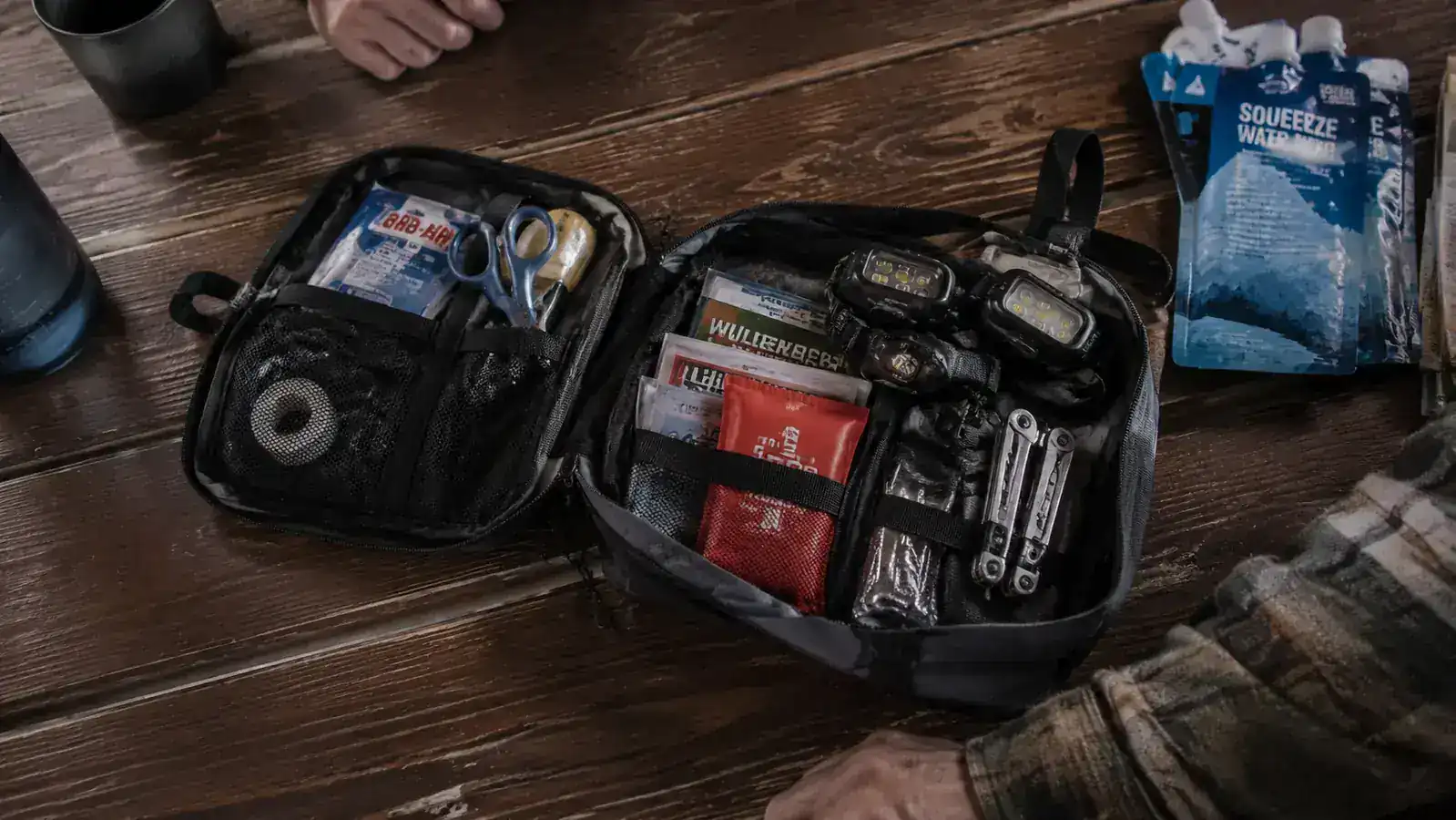
After the camping trips settled into routine, both headlamps ended up in my emergency preparedness bag at home. If the power goes out, both are charged and ready. That was not a planned outcome, it just happened naturally once I trusted the product. A two-pack for the price of a fast-food dinner, and one of them quietly moved into the emergency kit. That is the kind of gear story I like telling at the kitchen table.
Two headlamps, one USB charger, no more battery panic
The LHKNL two-pack is one of those purchases I stopped second-guessing after the first trip. It is on Amazon, it ships quickly, and the current price makes picking up a second two-pack easy to justify for a car kit or gift bag.
Amazon Check Today's Price on Amazon →