

Last October I was setting up camp in the dark at about 6,800 feet in the Cascades after a longer-than-planned approach. My old headlamp was on its last set of AAA batteries and throwing maybe 40 lumens of yellowed light. I had the LHKNL two-pack in my gear bag because I had ordered it three weeks earlier and had not yet tried it. I charged one unit in the truck on the drive up, clipped it on my head, and had a bright white beam for the rest of the night. That was my first real introduction to this light. Over the next six months I brought it on nine camping trips, used the second unit as a permanent kit lamp for my emergency bag, and wore both of them through enough conditions to have a clear opinion. Here is what I found.
The Quick Verdict
A genuinely useful rechargeable headlamp at a price that makes the 2-pack a no-brainer for camping, but the motion sensor is inconsistent and the high-lumen rating needs an asterisk.
Amazon Check Today's Price →If you have been running dead batteries at 2am, this fixes that problem for the cost of a meal.
The LHKNL 2-pack is rechargeable via USB, rated waterproof, and comes with both units for under $20. Check current pricing on Amazon before the next trip.
Amazon Check Today's Price on Amazon →How I've Used It
Six months, nine camping trips, two units. The breakdown: four backpacking overnight trips (Cascades, Olympic Peninsula), three car camping weekends with my brother-in-law and his kids, one trail run at dusk, and one trip where the second unit lived on the picnic table all weekend as the camp utility light while I wore the other. I also kept unit two in my emergency bag in the garage for the entire period, charging it once in February after a power outage that lasted four hours.
I tested the light in rain twice. Once in a light drizzle for about 40 minutes on a forested trail, and once when I left it sitting on the rainfly of my tent during a 20-minute downpour by accident. Both times it continued functioning without any issues. The IPX4 water resistance rating appears to hold under real-world rain, though I would not dunk it in a creek and call it waterproof.
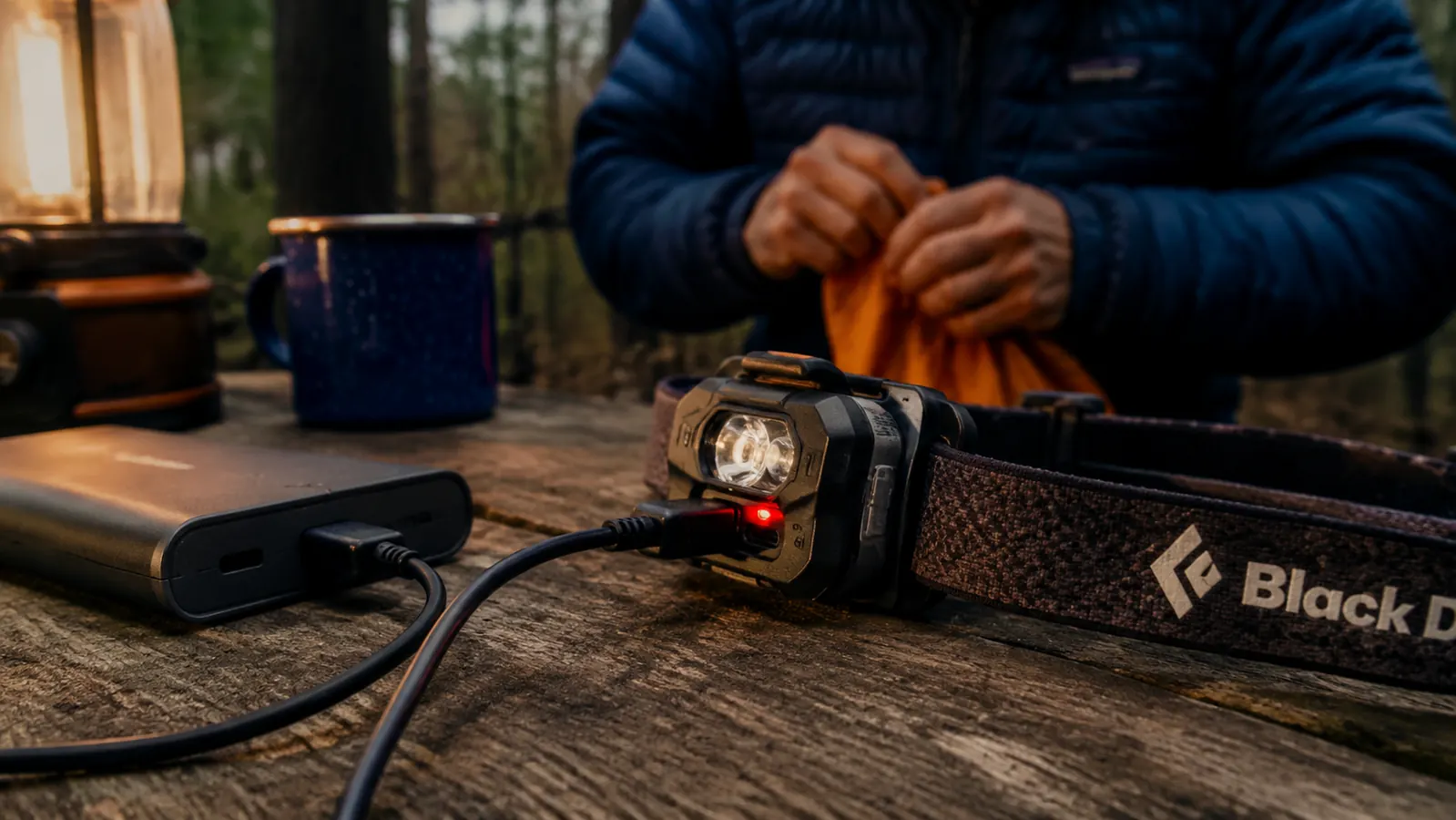
I charged each unit from my phone charger and from the USB port on my truck's dash. Average full charge took about 2.5 hours. The indicator light on the unit turns red during charging and switches off when done, which is more useful than a blinking LED you have to decode.
Brightness: Honest Numbers
The product listing says up to 1000 lumens. I believe the peak might hit somewhere near that number for the first 30-45 seconds before thermal throttling kicks in and it drops noticeably. What you actually get for sustained use is closer to 300-400 lumens on high mode. That is still plenty bright for camp tasks and trail navigation, but the 1000 lumen claim creates expectations that the sustained output does not meet.
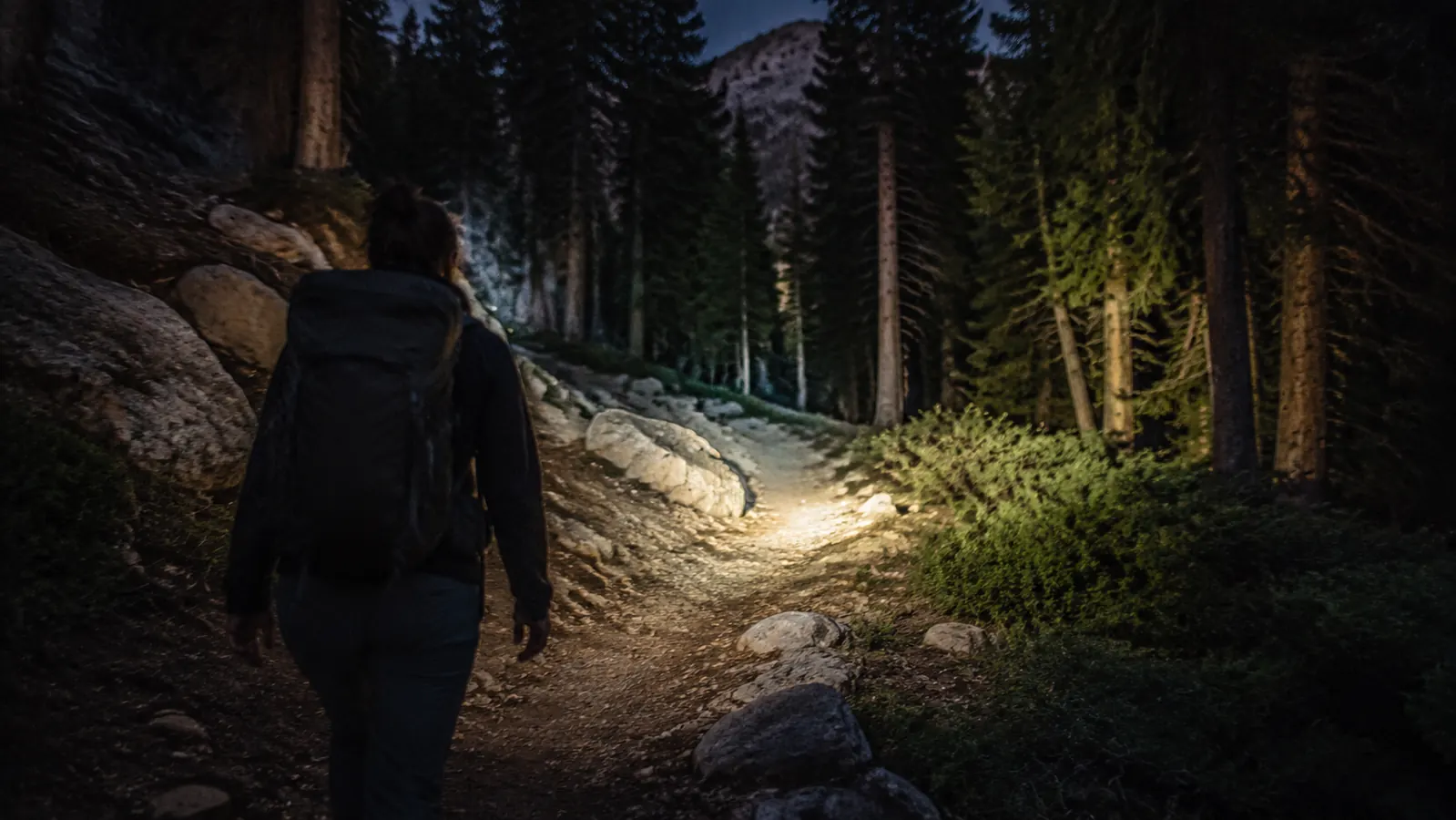
In practice the three modes break down like this: high mode is genuinely bright for its class, enough to light up a trail 20-25 feet ahead clearly. Medium mode is what I use for 90% of camp tasks including reading maps, cooking, and moving around the campsite. It runs much longer on medium and does not cook your night vision the way high mode does. Low mode extends the battery significantly and works fine for putting on boots in the tent or looking for something in the main compartment of your pack.
The red light mode is a genuine plus. It does not destroy night vision and it is useful when you are moving around camp and do not want to blind your tent partner or anyone else camped nearby. I used it every night to navigate from my tent to the bear box after dark.
Battery Life in the Field
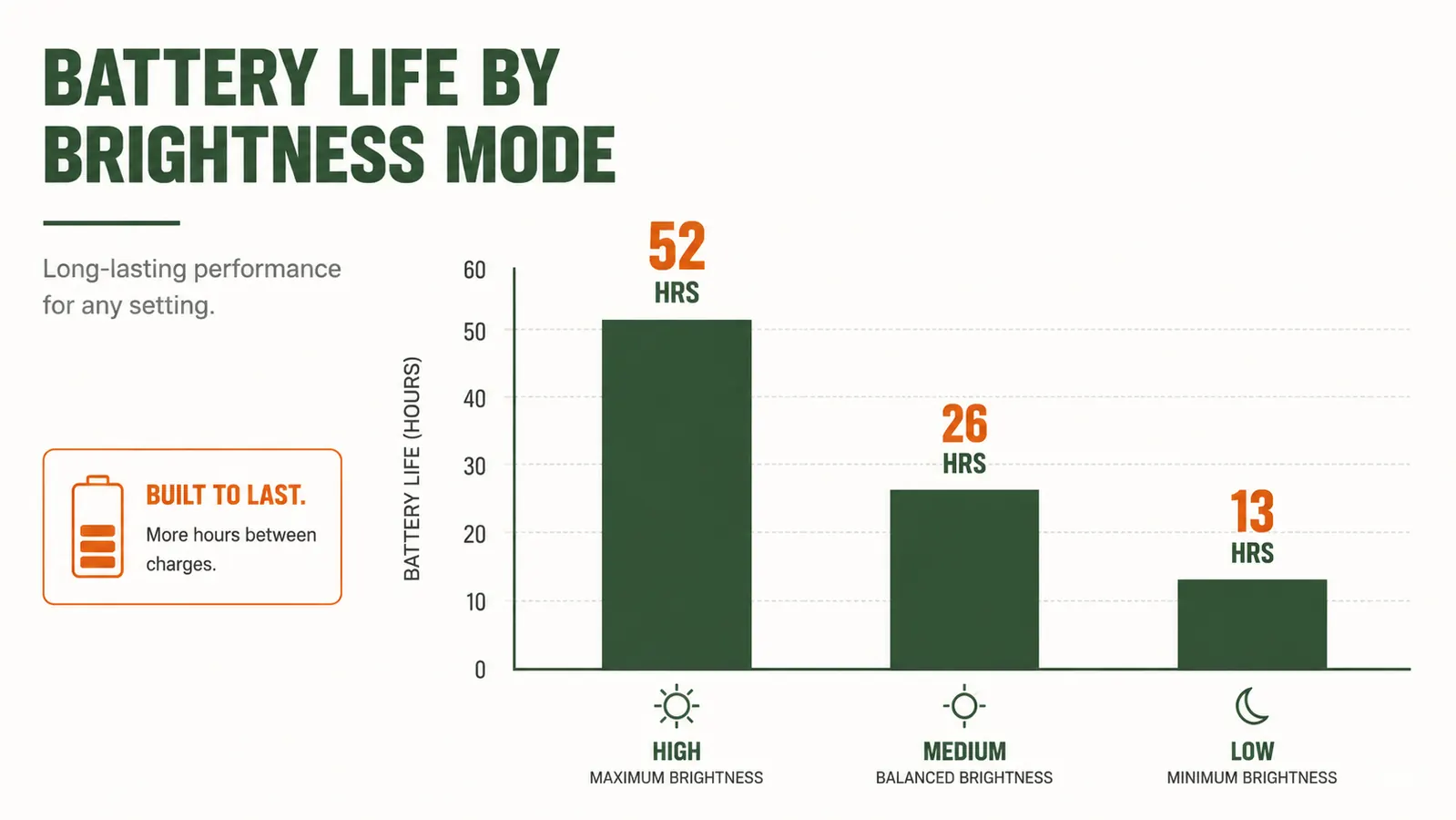
Tested on a single charge from full: high mode ran out at around 2 hours and 15 minutes. Medium mode lasted about 5 hours 40 minutes. Low mode I ran until the battery warning light came on at just past 9 hours. These are real-world numbers from my kitchen before I left for a trip, timed with my phone. They track closely with what other users report in the reviews.
For a two-night trip running mostly medium mode for two hours each evening, you will have plenty left. For a five-day backpacking trip where you are camping in bear country and running the light frequently, you will want a way to recharge. I carry a small 10,000 mAh power bank and the LHKNL charges from it without any compatibility issues.
On medium mode, I got five hours and forty minutes on a single charge. For a weekend camping trip, that covers you without any planning required.
The Motion Sensor: Useful Until It Isn't
The motion sensor activates the light when you wave your hand in front of the lamp. In theory this is useful when your hands are full of firewood or you are cooking and do not want to fumble with a switch. In practice, I found the sensor activation range inconsistent. Sometimes it triggers immediately on the first wave. Sometimes it takes three passes to register. I never figured out if distance or angle was the variable.
More practically, the motion sensor also triggered unintentionally several times when the headlamp was packed in an outer pocket of my backpack. It drained a partial charge twice because the sensor kept activating against fabric movement while I was hiking. The fix is to simply turn the unit fully off before packing it in a bag, which is intuitive once you figure out what happened. I now do this automatically. The sensor is a nice feature but it is not the main reason to buy this light.
Build Quality and Fit After Six Months
The headband is comfortable for up to about 90 minutes before it starts creating pressure on my temples. The adjustment mechanism is a simple strap that holds reasonably well but tends to loosen slightly over the course of a long evening. I retighten it once every few hours on longer nights. Neither unit has had any elastic failure or stitching issues in six months of use, which is better than I expected at this price point.
The tilt pivot on the light module works and stays in position. You can angle the beam 30-40 degrees downward for reading and close camp tasks without the full angle you get on more expensive lights. The plastic housing on both units shows some surface scuffing from being dropped and packed, but nothing structural has failed. One of the charging port covers is a little looser than new, though it still closes fully and has not let water in.
One thing worth noting: the clip that attaches the light module to the headband is a small plastic piece. It has not broken on mine, but I can tell it would be the first failure point if you ever dropped the headlamp hard on rock. I would not throw these units around carelessly. Treat them like the $17 lights they are and they hold up. Treat them like indestructible tools and the housing will win the argument before the price point does.
What I Liked
- 2-pack under $20 means a spare unit or a dedicated emergency kit light with one purchase
- USB rechargeable, no AAA dependency, charges from any standard USB source
- Actual battery life matches the listing on medium and low modes
- IPX4 water resistance held up in real rain over two trips
- Red light mode works and does not kill night vision
- Motion sensor is a useful hands-free option for camp tasks when it works reliably
Where It Falls Short
- Peak lumen claim of 1000 is not sustained, real high-mode output is closer to 300-400 lumens
- Motion sensor range is inconsistent and will drain battery if headlamp is packed loose
- Headband tilt range is more limited than higher-end headlamps
- Headband loosens over a long evening and needs manual readjustment
- Small plastic clip connecting the light module to the band is the most likely failure point
Who This Is For
This headlamp makes the most sense for three types of people. First, the car camper or family camper who wants a reliable, rechargeable light and does not need the features of a $50 headlamp designed for fast-packing and alpine conditions. The LHKNL does everything a campsite light needs to do and the two-pack means you are not hunting for a flashlight when someone needs one. Second, the backpacker who wants a capable everyday carry light at a low cost and accepts that sustained max brightness is not the spec to lean on here. Third, the emergency preparedness buyer who wants a charged, reliable light in their kit without spending the budget that a Black Diamond or Petzl commands.
Who Should Skip It
Skip it if you are doing technical mountaineering, glacier travel, or anything where a headlamp failure is a safety event rather than an inconvenience. Skip it if you genuinely need sustained high-lumen output for extended periods, like running dark trails at night or navigating off-trail in dense forest after dark. Skip it if you run hot on battery management and cannot be relied on to turn a light fully off before packing it. If any of those describes your use case, the Black Diamond Spot 400 is a better fit and you can read how they compare directly in my LHKNL vs Black Diamond Spot comparison.
For everyone else, especially if you have been burning through AAA batteries every season and you just want a light that charges from a USB cable and comes with a backup unit for under $20, this is a solid pick. It does not require you to trust a brand you have heard of before. The 10,000-plus Amazon reviews and 4.6-star rating with that many reviewers is a meaningful signal for a product at this price point. I have seen the competing budget headlamps in this range and most of them are equal or worse. The two-pack value alone puts the LHKNL ahead of most of them. If you want a deeper look at what a rechargeable headlamp offers over traditional battery models, I covered that in detail in my piece on 10 reasons rechargeable headlamps beat battery models for camping.
Tired of finding dead batteries when it matters? This 2-pack charges off any USB cable and costs less than a campground site fee.
Six months of real camp use confirms: the LHKNL delivers reliable rechargeable light for car campers, backpackers, and emergency kits without the price tag of the big brands. Both units included, USB charging cable included.
Amazon Check Today's Price on Amazon →