
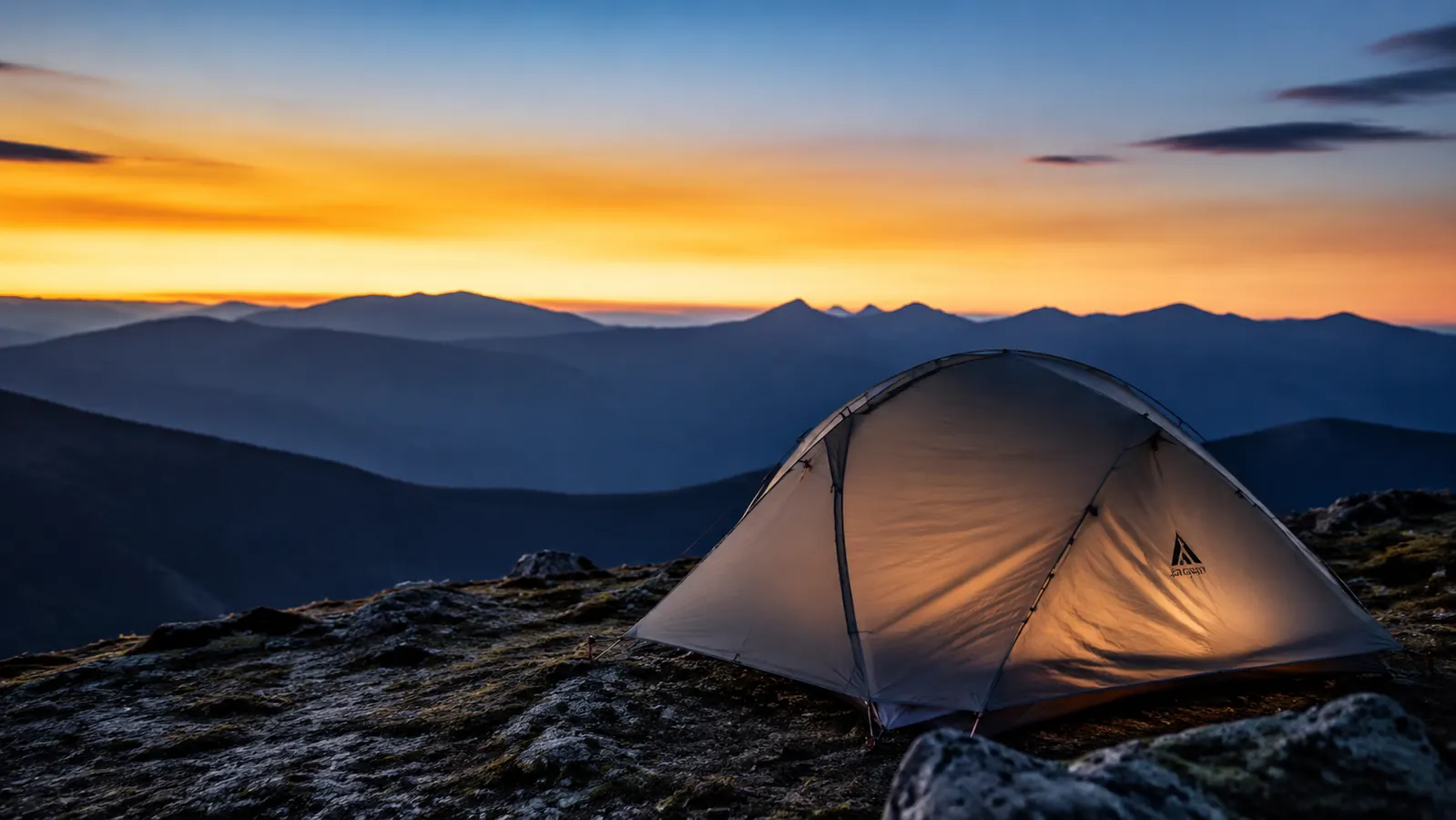
Trip nine was the one I expected it to break. It was late October in the Smokies, 29 degrees at the trailhead, and by midnight we had a steady rain that turned sideways around 3 a.m. I had the Naturehike Cloud-Up 2P pitched on a sloped site with one corner barely staked because the ground was too rocky to get a full bite. I woke up dry. The floor had about half a tablespoon of condensation in the far corner, which I'll explain, but the shell kept out every drop of rain and held its shape through six hours of wind. After nine trips at that point, I kept expecting it to fail. After 14 trips across three states, it still has not.
I bought the Naturehike Cloud-Up 2P in early spring because I needed something under two and a half pounds that could handle three-season conditions without a $350 price tag. I had used borrowed tents for two years and finally decided to own my own. What I did not expect was that $119 would buy me a tent I'd still be packing 14 months later with no real complaints about the structure. I have complaints about other things. We'll get to those.
The Quick Verdict
A serious backpacking tent at a budget price. Lighter than most options under $150, genuinely weatherproof, and fast to set up once you learn the pole sequence. Condensation management and pack pocket organization are the areas where more expensive tents earn their money.
Amazon Check Today's Price →If you're comparing budget backpacking tents, start with the Cloud-Up's current price before paying $300+ for a name.
The Naturehike Cloud-Up 2P checks in under 2 lbs 6 oz, includes a footprint, and ships Prime. Worth a look before you commit to anything pricier.
Amazon Check Today's Price on Amazon →How I've Used It
Fourteen trips over 13 months. Conditions ranged from July desert camping in southern Utah at about 6,200 feet to a late-November trip in the Appalachians where it dropped to 25 degrees overnight. Mix of solo trips and two-person trips with my partner. Ground surfaces included granite slabs with tent stakes barely engaged, soft forest duff, sandy desert hardpack, and one miserable riverside site in Georgia that was just mud. I've set it up in the dark twice, once completely solo in light rain.
I also deliberately ran some informal water tests at home after trip six, hosing down the pitched tent for 20 minutes from different angles to check for seam failures. Nothing came through. The factory seam tape held up through that test and has continued to hold through 14 actual rain events of varying intensity. That's more than I expected from a tent at this price point.
Setup time after the first two trips settled at about seven minutes solo, four minutes with a partner. The freestanding design means I can get the inner pitched and dry before attaching the fly, which matters on rainy arrivals more than any single feature on this tent.
Weight and Pack Size: Where the Cloud-Up Actually Earns Its Keep
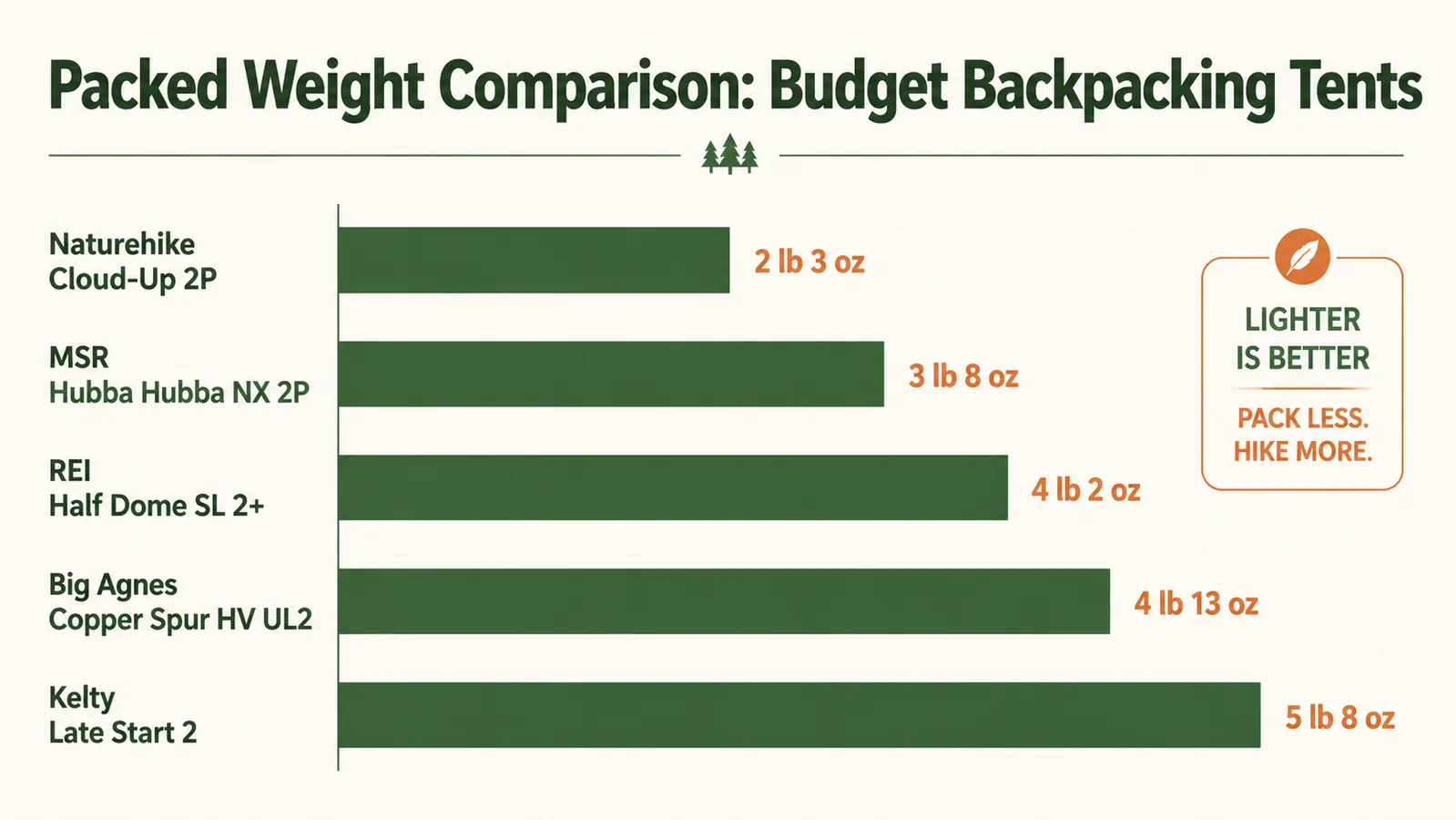
The published packed weight with footprint is 2 lbs 6 oz. My scale reads 2 lbs 8.5 oz with both stuff sacks and all eight stakes included. That discrepancy is completely normal for Naturehike and most Chinese tent brands. Still, 2 lbs 8.5 oz for a two-person tent with a footprint is a real number. For comparison, the REI Half Dome SL 2+ comes in around 3 lbs 8 oz. The Big Agnes Copper Spur UL2 is lighter at 2 lbs 1 oz, but it costs $500.
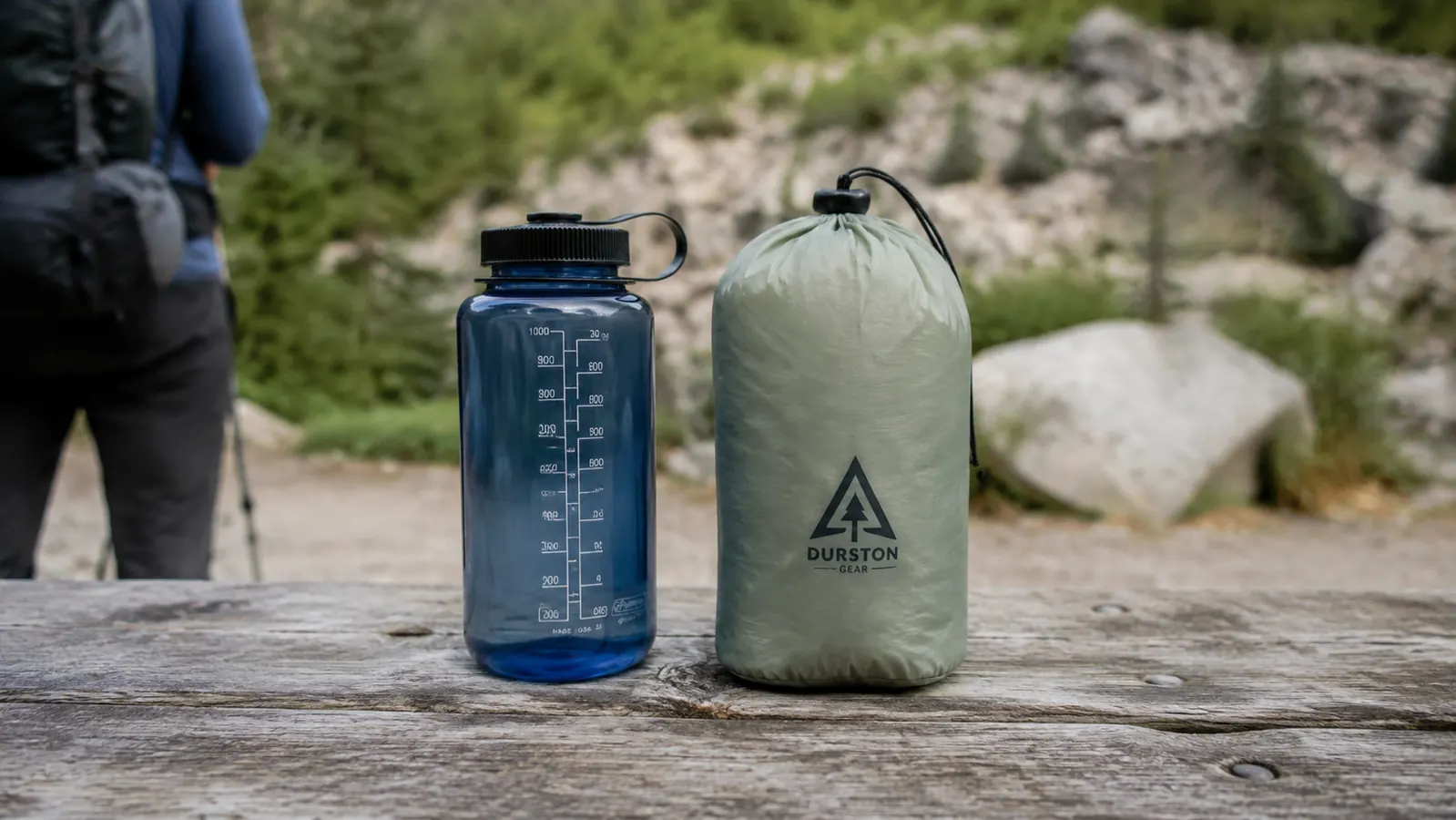
Packed size is where I first noticed the Cloud-Up was different from budget tents I'd seen before. Stuffed into the included compression sack, it comes out roughly the size of a 1-liter Nalgene and a half. That means it slips into the bottom of a 50-liter pack without dominating the space the way a car-camping dome would. The poles and tent body can be split between two packs if you're hiking with a partner, which brings each person's share down to just over a pound.
Weatherproofing: Three-Season Rain and Wind Performance
The fly is 20D ripstop nylon with a 3,000mm hydrostatic head rating. For context, 1,500mm is considered the minimum for sustained rain; 3,000mm is meaningfully better. The floor is 210T polyester rated to 5,000mm, which is strong enough that I stopped using the included footprint on trips with clean, debris-free sites and never had a floor failure.
In sustained rain, the tent has never leaked. The critical test was trip nine in the Smokies I mentioned at the top, but there was also a July thunderstorm in Utah that dropped over an inch of rain in two hours on a sandy site. No pooling, no seam failure, no wet gear. The bathtub floor design with the seams lifted 6 inches off the ground is the main reason. It keeps water from wicking in at ground level even when you're pitched on soggy soil.
Wind is where the design is less impressive. The Cloud-Up has a low profile, which helps, but the guy-out points are minimal. There are clips for two side guys and the fly has loops at the peak, but with only four included stakes, you're relying on the freestanding structure more than on tensioned guylines. In 25 mph gusts on a ridge in North Carolina, the tent flexed noticeably and got loud. I added two extra stakes I carry anyway and it settled down. If you camp in consistently windy conditions, add four titanium shepherd's hook stakes to your kit before your first trip.
The bathtub floor with seams lifted 6 inches off the ground kept me dry through every storm I threw at this tent. That single design choice is worth more than any spec on the label.
Interior Space and Livability for Two
The 2P label is honest if you and your partner are both under 5'11" and sleep efficiently. Two adults at six feet with full-length sleeping pads have about 4 inches of shoulder clearance on each side. Gear goes in the vestibule, not in the tent body, because there is no floor space for it if two people are sleeping. The vestibule is reasonably generous for a tent this light, big enough for two pairs of boots and a small pack each side.
Headroom at the peak is about 40 inches sitting up, which means I can sit upright to change layers but not stand. There are two small mesh pockets inside for phones and headlamps. One pocket is positioned at a weird angle that makes things fall out when you try to grab them in the dark. It is a small thing, but I notice it every trip. Taller and wider options like the MSR Hubba Hubba give you more elbow room, but you'll pay $200+ more for that privilege.
Condensation: The One Honest Trade-Off
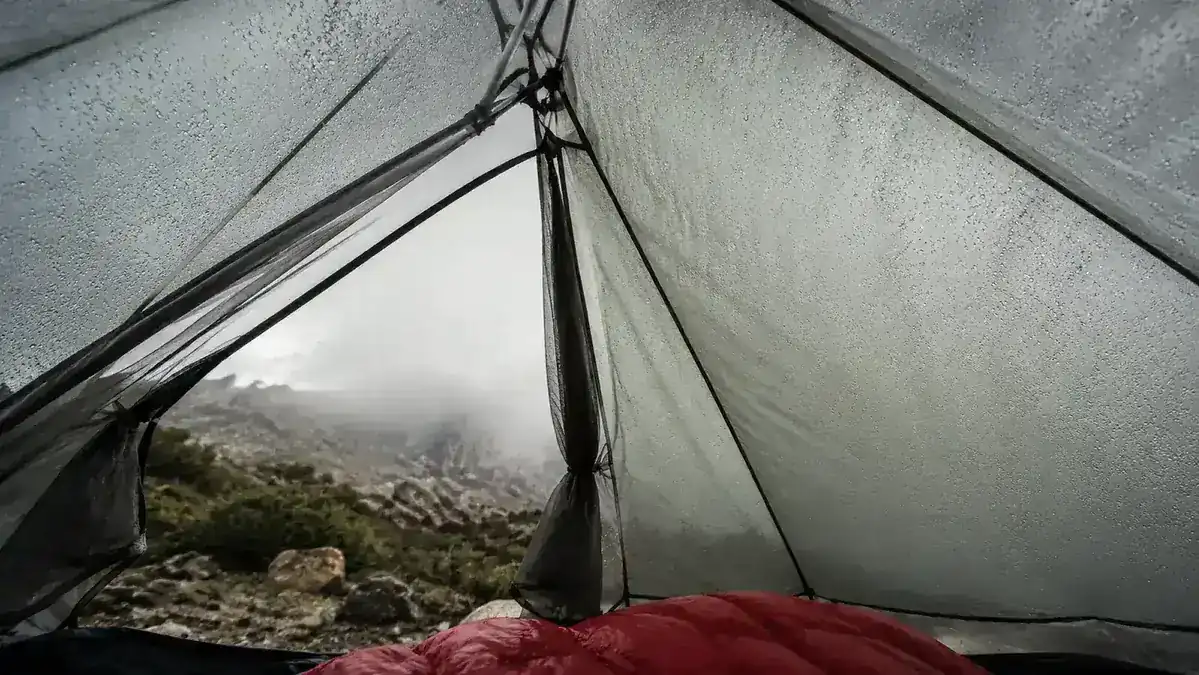
The Cloud-Up uses a double-wall design with a mesh inner and a separate fly, which is correct for condensation management. The problem is that the mesh inner and fly sit closer together than on tents with bigger pole designs. On calm, humid nights, you'll see condensation on the fly inner surface drip down to the vestibule area. I've also woken up with my sleeping bag touching the inner mesh and the bag getting slightly damp from the condensation transferring through.
The fix is to pitch the fly taut and open the top vestibule zipper a few inches on nights that are not actively raining. That airflow drops condensation significantly. But if you pitch it fast in the dark and forget to vent it, you may wake up with damp gear. This is not unusual behavior for a lightweight double-wall tent, but it is worth knowing before your first cold-night trip.
What I Liked
- Genuine 2 lb 8 oz packed weight with footprint included, verified on my own scale
- 3,000mm fly and 5,000mm floor have held up through 14 trips of real rain without a single seam failure
- Freestanding inner-first design lets you pitch the body before attaching the fly
- Packed size fits in the bottom of a 50-liter pack without taking over
- DAC aluminum poles have held shape through 14 trips with no bent or cracked sections
- 7-minute solo setup after two trips, 4 minutes with a partner
Where It Falls Short
- Wind performance is mediocre without added guylines, only 4 stakes included
- Two-person space is tight for taller hikers or gear-heavy sleepers
- Condensation transfers to sleeping bags on humid nights if not vented properly
- One mesh pocket has a poor angle that drops items in the dark
- Published weight is 2 oz lighter than actual with all components
Durability After 14 Trips: What Has and Has Not Worn Out
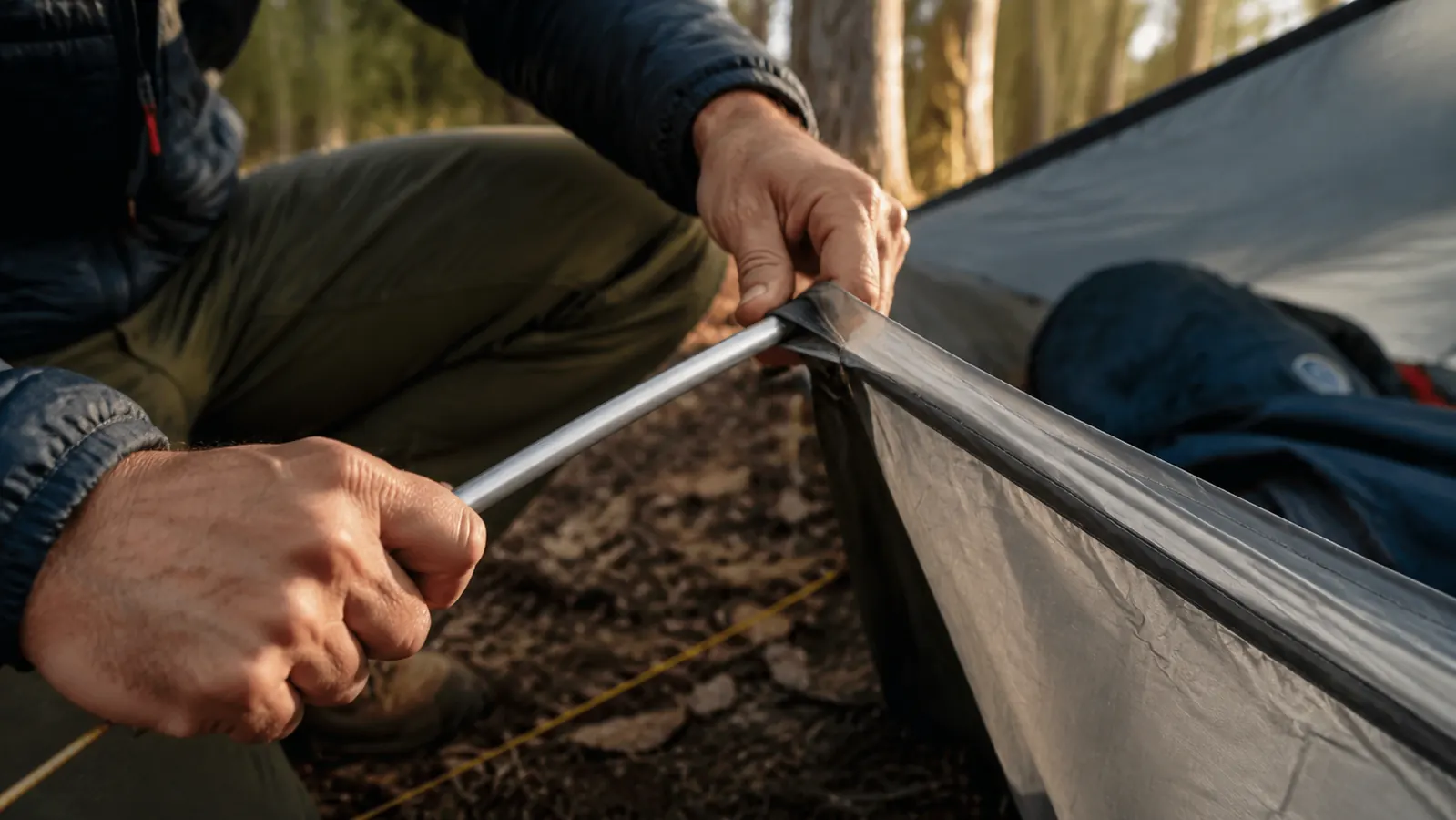
The poles are DAC aluminum, the same family of poles used by MSR and Big Agnes. After 14 setups and breakdowns, there is no bend or crack in any section. The pole ferrules are still tight. This is the component I expected to fail first because it is the component that fails first on budget tents. It has not.
The fly fabric shows light abrasion marks from two trips where I packed it wet and it rubbed against itself in the stuff sack. Nothing structural, but the finish is starting to look used. The zipper on the door has developed a slight sticky spot about six inches from the bottom on the left-side door. I ran a candle stub on it after trip 11 and it has been smooth since. The velcro fly attachment tabs at the base of the tent have lost some grip but still hold. These are all wear patterns I expected from normal use over a year.
What has not worn out: the floor, the seam tape, the stake loops, the guy-out clips, the inner mesh, the pole sleeve. The footprint shows significant abrasion on its underside, which is exactly what a footprint is supposed to do instead of the tent floor. Replace the footprint every second season and the floor will outlast the rest of the tent.
Who This Is For
The Naturehike Cloud-Up is built for backpackers who want a real sub-3-pound tent without spending $300 to $500 for a brand name. If you're upgrading from a borrowed tent or a heavy car-camping dome and want something that handles three-season rain and won't blow your gear budget, this is a sound choice. It's also good for someone doing 5-10 trips a year who wants a capable tent without treating it like an heirloom. I don't baby this tent, and it keeps performing.
It's also a reasonable choice for a solo hiker who occasionally has a partner. I use the 2P version solo when I want the extra floor space for gear. The weight penalty is modest and the extra vestibule room is useful. For a dedicated solo hiker who always sleeps alone, the 1P version is lighter and worth considering.
Who Should Skip It
If you camp primarily above treeline in consistently windy conditions, this tent's minimalist guy-out system will frustrate you. The MSR Hubba Hubba, the Big Agnes Tiger Wall, or anything with a proper four-season pole geometry will serve you better. If you're 6'2" or taller and sleep with a partner, you'll feel cramped in the shoulder area after night one. If you're planning a thru-hike where the tent goes up and comes down every day for five months, the zippers and velcro tabs may not make it to mile 1,000 without a maintenance stop. You're also linked in the comparison article to see how the Cloud-Up stacks up head-to-head against the MSR Hubba Hubba if you want a full side-by-side on those trade-offs.
For everyone else, meaning weekend warriors doing 2-night trips, couples doing established trail camping, and solo hikers who want a dry night at a fair price, this tent competes with products at two and three times its cost on every spec that matters in the field.
Still dry after 14 trips. Check whether it's still priced where I bought it.
The Naturehike Cloud-Up 2P with footprint. One of the few sub-2.5-lb tents that includes the footprint in the box rather than selling it separately.
Amazon Check Today's Price on Amazon →