

A few years ago I was setting up camp in the Cascades, 11 miles in, and my headlamp died two hours after dark. I had a backup set of AAA batteries, but one of them had corroded inside the tube from a previous trip. I spent that evening navigating with my phone flashlight and a lot of colorful language. That was the last night I ever camped with a battery-only headlamp.
Since switching to the LHKNL rechargeable headlamp 2-pack, I have run it through summer basecamp trips, late-fall car camping in the rain, and an overnight preparedness drill in the garage where my neighbor thought I had gone fully off the deep end. Here are 10 real reasons the rechargeable format wins for most campers.
Still buying AAA packs before every trip? There is a cheaper way.
The LHKNL 2-pack is USB rechargeable, rated 4.6 stars across 10,000+ reviews, and comes in at less than the cost of two year's worth of batteries. Check today's price on Amazon.
Amazon Check Today's Price on Amazon →You Stop Carrying Spare Batteries
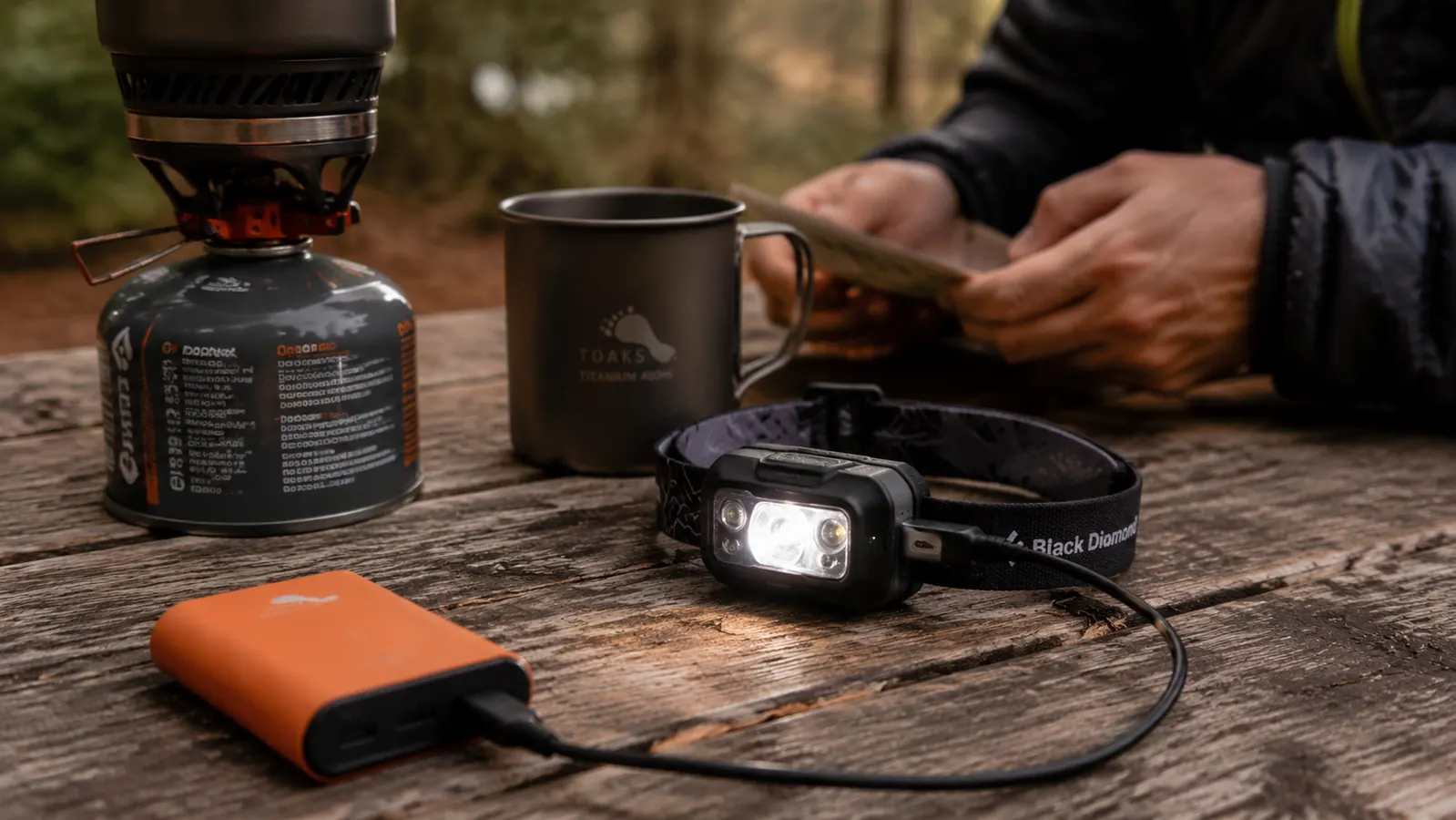
A four-pack of Energizer AAA batteries weighs about 2.4 oz. On a long trip where you might burn through two sets, that is nearly 5 oz of dead weight. The LHKNL charges from any USB source and holds its charge for a 6-hour burn on medium, so I stopped packing spares entirely. The weight savings are real, not theoretical.
No More Mid-Trip Battery Scavenger Hunts
If you camp in groups you already know the ritual: someone's headlamp dies at 10pm and suddenly everyone is checking their own batteries out of anxiety. With rechargeable units, you top them off from a shared power bank before dark and the problem disappears. The LHKNL charges fully in about 4 hours via micro-USB.
You Always Know How Much Power You Have Left
Alkaline batteries have an annoying habit of dying suddenly. The LHKNL has a low-battery indicator light that comes on before the beam starts to dim. That 10-minute warning is the difference between finishing a night hike clean and stubbing your toe on a root you stopped being able to see.
The Motion Sensor Hands-Free Mode Is Actually Useful
I was skeptical of the motion sensor before I used it at camp. But when your hands are covered in fish slime or you are elbow-deep in a pack, waving your hand two inches from the headlamp to toggle the beam is genuinely more convenient than finding a button. You can also turn it off if the trigger sensitivity bothers you in windy brush.
It Costs Less Per Year Than Batteries Do
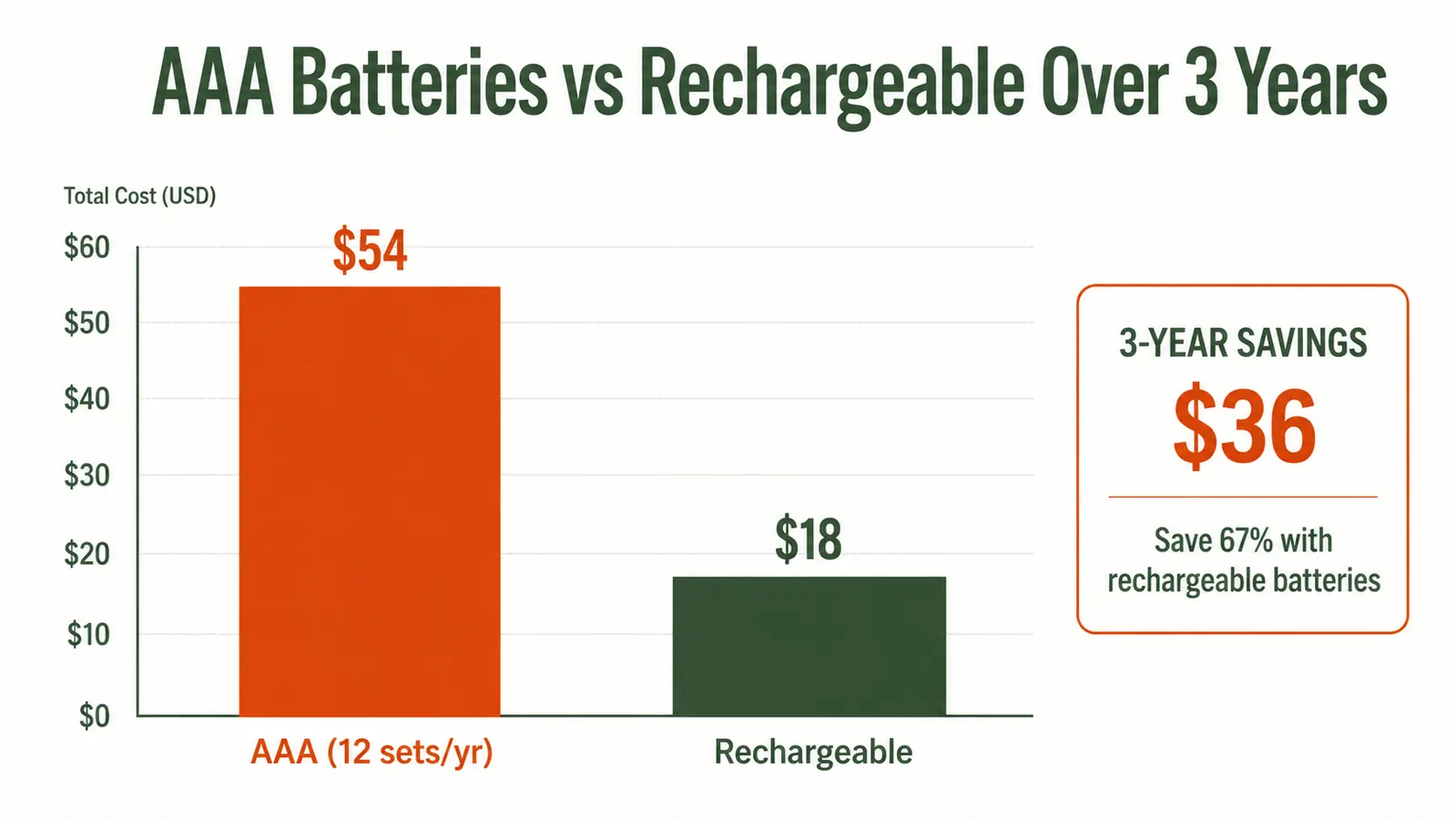
If you camp 15 to 20 nights a year and swap batteries twice per trip, you are spending $30 to $40 annually on AAA cells. The LHKNL 2-pack sits at under $20 at today's price, and you never buy another battery for it. By year two you are ahead on cost even if you bought the cheapest alkalines at the grocery store checkout.
By year two you are ahead on cost even buying the cheapest alkalines at the checkout. The math is not close.
It Works with Solar and Power Banks, Not Just Wall Outlets
This matters more than it sounds. On a five-day backpacking trip, I charge the LHKNL off a 10,000mAh Anker bank at the end of each day. The bank weighs 6.7 oz and keeps phones, headlamps, and a backup GPS charged for the full trip. A battery headlamp would have needed two or three battery swaps over the same stretch.
Less Waste to Pack Out
Leave No Trace applies to batteries too. Used alkalines should not go in a trailhead trash can, and if you are dispersed camping you have no trailhead trash can at all. Carrying dead batteries out of the backcountry in a zip-lock bag is annoying. Plugging in a micro-USB cable back at camp before bed is not.

The 2-Pack Format Solves the "Backup Light" Problem
The LHKNL comes as a two-unit set at the same price most brands charge for one. I keep one on my head and one at camp as a lantern or a spare. On family trips this means two people are lit up properly instead of one person with a headlamp and one person holding a phone. It also makes the LHKNL 2-pack a reasonable gift for someone who camps and doesn't own a real headlamp yet.
Consistent Brightness Through the Full Charge Cycle
Alkaline batteries start dimming the moment you first use them. A rechargeable LED headlamp delivers consistent output until the battery level drops low, then flags you. The LHKNL on high mode gives you the same beam at 90 minutes of use as at the first minute. That consistency matters for reading a trail map or threading a line through a hook in the dark.
It Works as an Emergency Preparedness Item, Not Just Camping Gear
A headlamp that needs batteries is less reliable in a power-outage scenario because the batteries in your junk drawer are almost certainly half-dead. A rechargeable headlamp that you top off monthly as part of a regular prep routine is always ready. I have one LHKNL unit in my truck kit and one in the house emergency bag, both kept charged off a small solar panel on the windowsill.
What I Would Skip
If you are going somewhere with no USB charging access for more than five consecutive days, like a remote float trip with no power bank or solar, a battery headlamp is still a valid backup. Batteries are available at any gas station. A USB port is not. I carry a small battery-powered backup for trips longer than four nights in fully remote areas. But that backup covers the edge case. For everything else, rechargeable is the better choice.
Also worth noting: the LHKNL is not waterproof to IPX8 standards. It handles rain and splashes fine, but I would not submerge it. If you are a kayaker or fishing in heavy rain for extended periods, factor that in.
I carry a battery backup for trips longer than four nights in fully remote areas. But that covers the edge case. For everything else, rechargeable wins.
Two headlamps, one charge cable, no more dead batteries at camp.
The LHKNL 2-pack has 10,000+ reviews, a motion sensor hands-free mode, and charges from any USB source. At today's price it is one of the better gear upgrades per dollar I can point you toward. Check the current price on Amazon before you plan your next trip.
Amazon Check Today's Price on Amazon →