
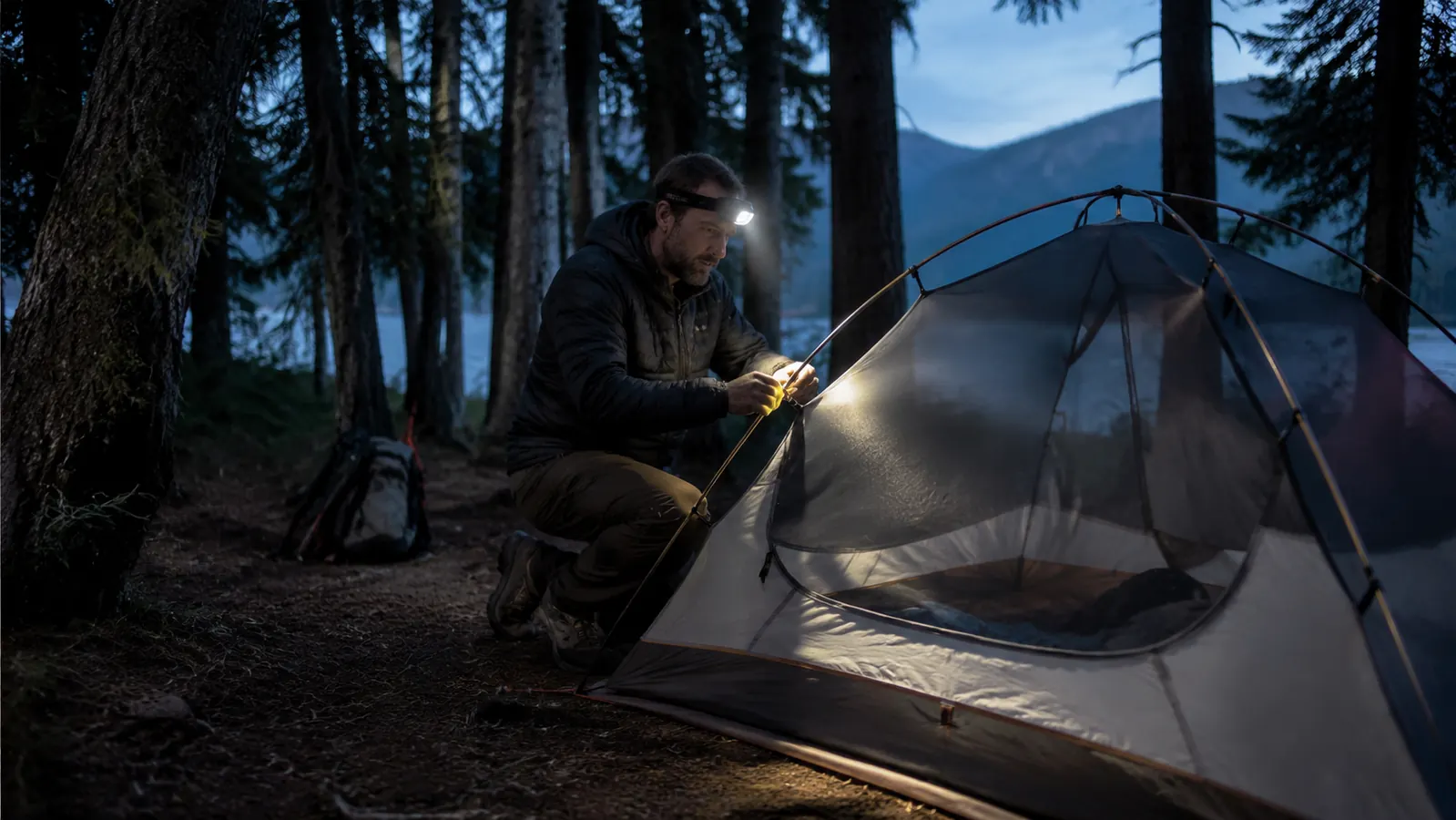
My friend Dave bought one of these after seeing it on my head at a campsite near Moab, Utah. He texted me three weeks later to say the motion sensor kept waking him up inside his tent every time he rolled over. He was not happy. That is a real thing that happens with the LHKNL headlamp, and it is the kind of thing that does not show up in a 60-word Amazon review. I have been using a pair of these for about eight months now, across car camping trips, a couple of backpacking nights in the San Juans, and one emergency that involved a power outage at home. I have a pretty clear picture of what this light does well and what it quietly gets wrong.
The short version: the LHKNL rechargeable headlamp is a genuinely useful piece of kit at its price, but it has specific quirks that nobody in the marketing copy bothers to mention. If you understand those quirks going in, you will be fine. If you don't, you might end up annoyed in the dark like Dave.
The Quick Verdict
A solid budget headlamp that earns its spot in a car camping kit, with a motion sensor you will want to understand before your first trip.
Amazon Check Today's Price →If your old headlamp runs on AA batteries and dies every trip, this rechargeable 2-pack fixes both problems for under $20.
The LHKNL comes as a pair, charges via USB, and has a rated 4.6 out of 5 from more than 10,000 buyers on Amazon. Check today's price before the next stock cycle.
Amazon Check Today's Price on Amazon →What the Motion Sensor Actually Does (and When It Becomes a Problem)
The motion sensor on the LHKNL is proximity-based, not gesture-based. Waving your hand within about six inches of the sensor toggles the light on or off. In theory this is a convenience feature: you can turn the headlamp on without fumbling for a button when your hands are full or wet. In practice, the sensitivity level is fixed. You cannot adjust it. That matters more than it sounds.
At a campsite, the motion sensor works fine. You are moving around, your hands are in range, and an accidental trigger is a minor inconvenience. Inside a tent at night is a different environment. The sensor is close to your pillow. Every time you shift your head or reach for your phone, there is a reasonable chance you cross the trigger zone. Dave's complaint was not unusual. I noticed the same thing on my second camping trip before I figured out the workaround: hold the power button for two seconds when the lamp is on to disable motion sensing for that session. The light stays on button-only mode until you power cycle it. That is not in the instructions in any clear way. I found it by accident.
The motion sensor also triggers if you set the headlamp face-down on a surface and then pick it up. Not every time, but enough times that I started placing it face-up whenever I set it on a tent floor. Small thing, but worth knowing before you are trying to stay quiet in camp at 5am and the lamp fires unexpectedly.
Hold the power button for two seconds while the lamp is on and you disable the motion sensor for that session. It is not in the instructions. I found it by accident on trip two.
The Beam Quality: What the Lumens Number Does Not Tell You
LHKNL claims this headlamp is super bright, and the marketing leans hard on that. What they do not tell you is that the beam color changes between modes. On high, the beam is a cooler, bluer white. On medium, it is noticeably warmer. On low, it is warmer still, with a slight yellow cast. For most campsite use, this does not matter at all. But if you are doing detail work, like reading a paper map or threading a stove valve in the dark, the color shift is noticeable enough that it takes a second to adjust.
The beam spread is wide rather than focused. This is the right call for a general camping headlamp. You are lighting up a campsite or a tent interior, not throwing a beam 100 yards down a trail. If you need a focused spot beam for trail running in the dark or searching for something across a clearing, this headlamp is not the right tool. For moving around camp, cooking, setting up gear, and reading in a tent, the wide flood beam is genuinely comfortable on the eyes.
The red light mode is on the dimmer side. I have seen campers use the red mode as a camp-friendly low-impact light, and it works, but the LHKNL red is not as usable as what you get on a Black Diamond or Petzl. It is more of a token inclusion than a fully developed feature. Good enough for not ruining your night vision in camp. Not good enough to navigate rough terrain.
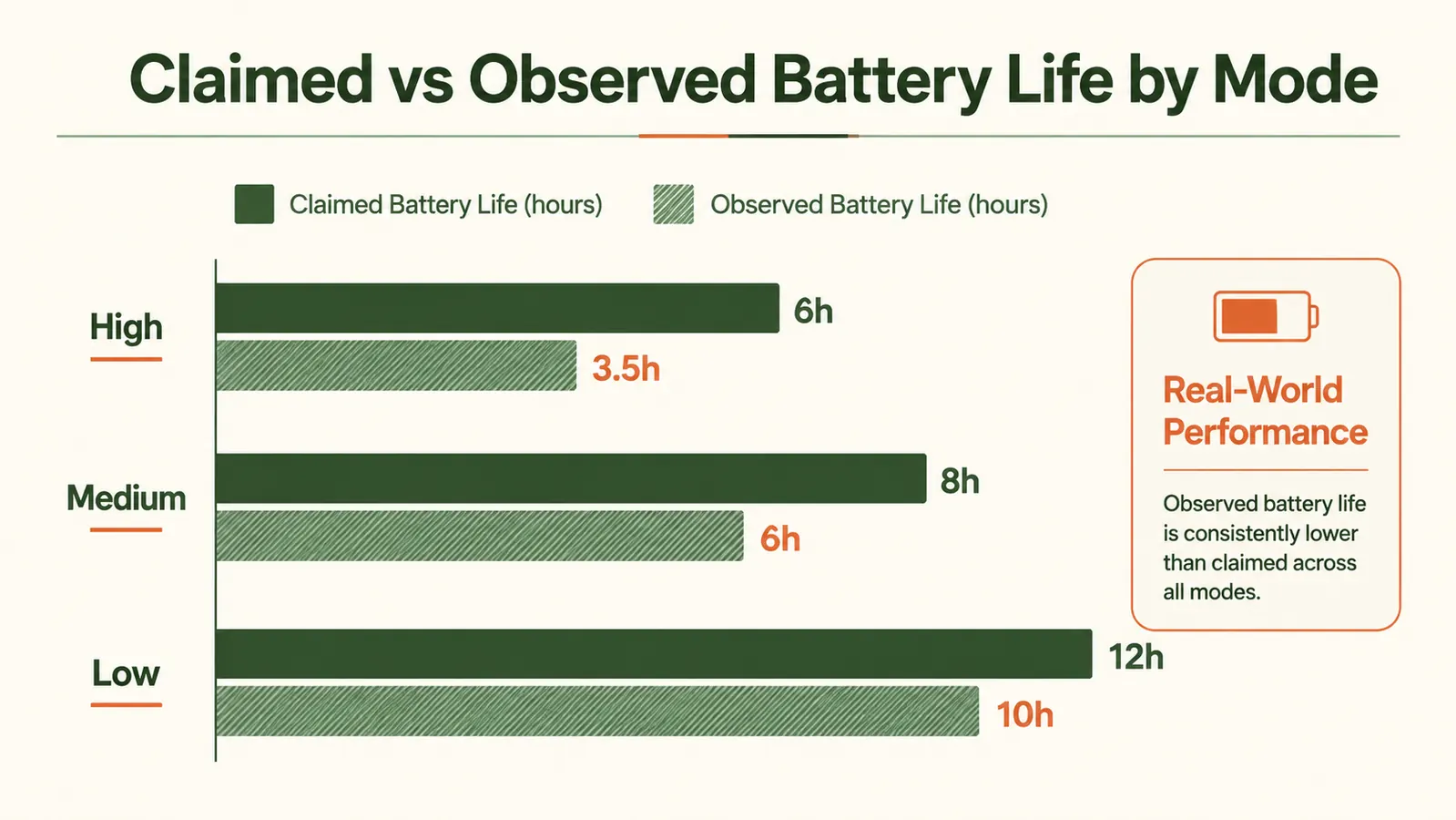
Battery Life: The Claimed Numbers vs What I Actually Measured
LHKNL publishes runtime figures of roughly six hours on high, eight hours on medium, and up to twelve hours on low. My field observations came in under those numbers on high and medium, pretty close on low. On high brightness, I was seeing closer to three and a half hours before the beam dimmed noticeably. On medium, six hours felt about right. On low, the lamp ran for the better part of ten hours before it needed a charge.
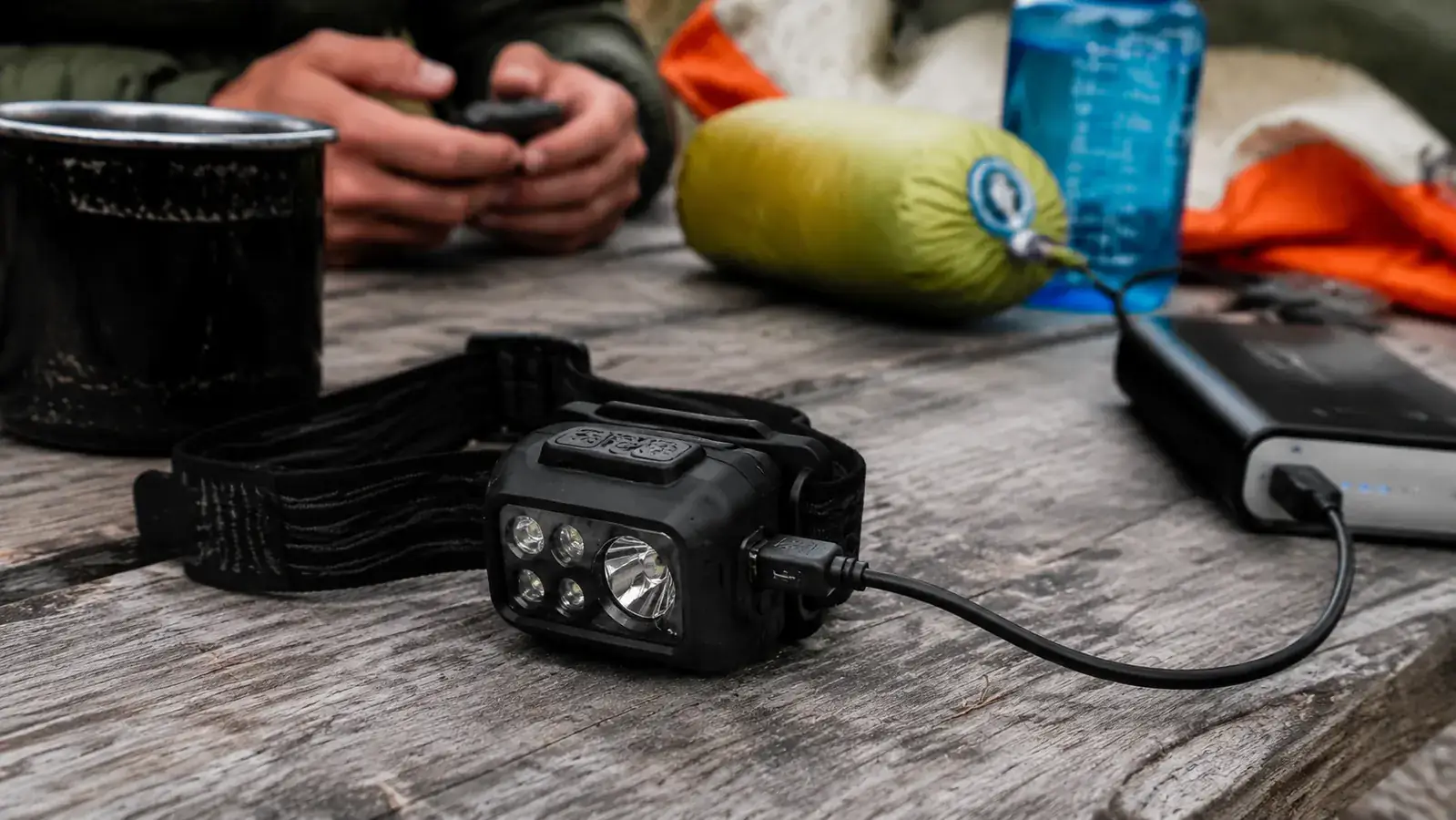
The charging itself is the one part of this headlamp that I have zero complaints about. The micro-USB port is positioned on the side of the housing where it is easy to access. Fully charging from dead takes about two and a half hours from a standard USB wall adapter. I have charged these from a portable battery bank during backcountry trips with no issues. The charge indicator light is a simple red-when-charging, off-when-full system. Nothing fancy, but it works and it tells you what you need to know.
One thing I noticed: the battery indicator does not give you a percentage or even a multi-stage warning. The headlamp does not tell you it is getting low until it starts to dim. There is no blinking low-battery warning. If you are mid-hike and it starts to dim, you are going to be scrambling for the backup in your pack. I now charge both units before every trip regardless of how much I used them, because I have no reliable way to gauge remaining capacity without running them down.
Durability: Eight Months In, Here Is What Happened
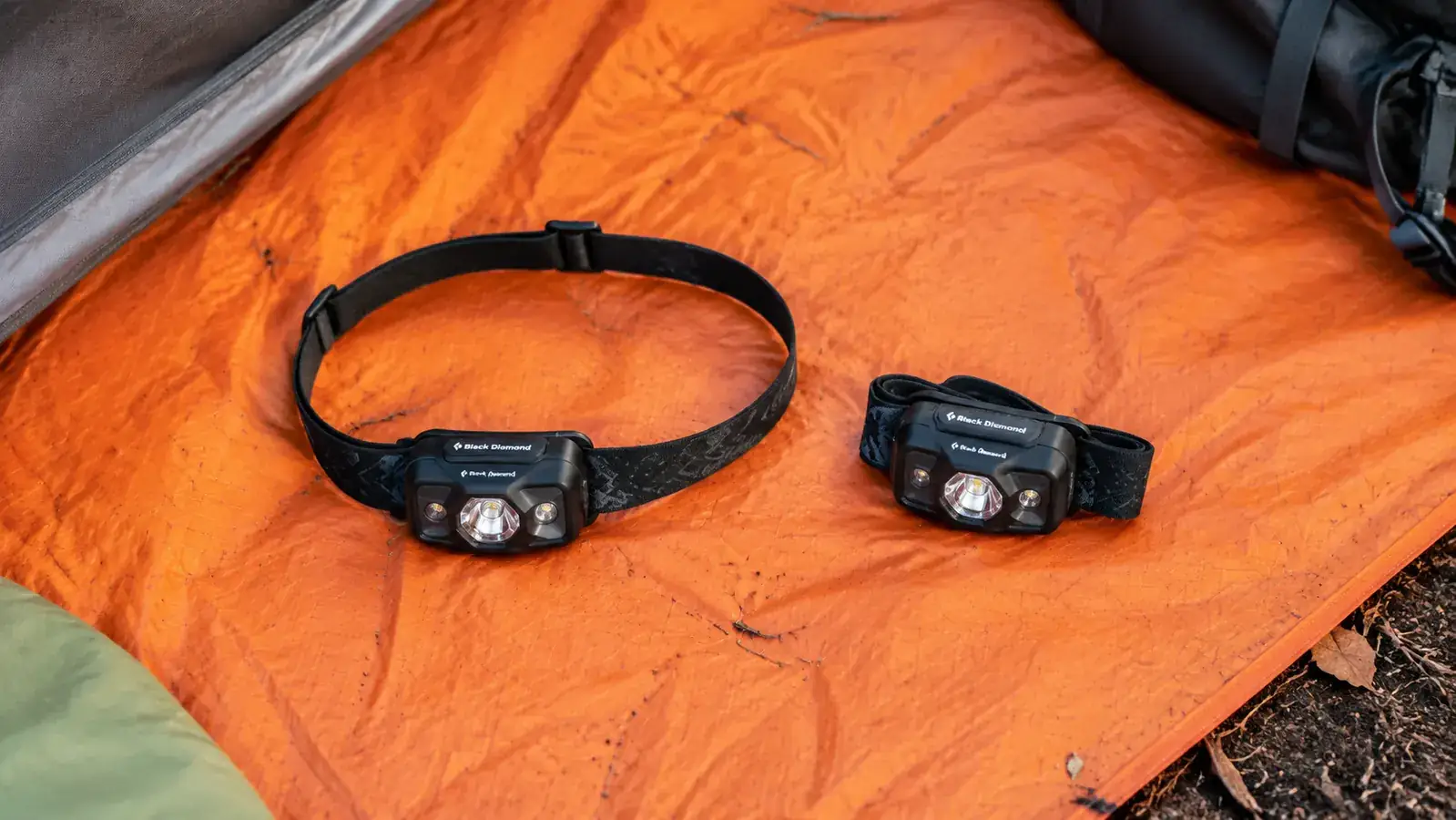
The headband stitching on unit one started to fray at the adjustment slider around month four. Not a structural failure, just a cosmetic wear point. The slider still works. The headband elastic has retained its stretch. I have washed the headband twice in a pillowcase on gentle cycle and it held together fine.
The lamp housing itself has taken some knocks. I dropped unit two on a granite boulder from about waist height and it survived without cracking. The button has a slightly mushy feel compared to newer units I have handled, but it still registers cleanly. The IPX4 water resistance rating means it can handle rain and splashing, and I have used both units in steady drizzle without any issues. I have not dunked either one, and I would not rely on IPX4 for stream crossings, but for typical camping weather, rain resistance has been solid.
The charging port cover is a small rubber flap. On unit two, that flap already sits a little loose after repeated openings. It still closes and covers the port, but it is clearly the most fragile part of the design. If you are in a wet environment frequently, keep an eye on it.
What I Liked
- 2-pack price is hard to beat for giving one to a partner or keeping a backup in the car
- USB rechargeable eliminates the dead-battery-in-the-dark problem
- Wide flood beam is genuinely comfortable for camp tasks and tent reading
- Lightweight enough that you forget it is on after a few minutes
- Motion sensor is actually useful when your hands are full of food or gear
- Charges cleanly from a battery bank, great for multi-day backpacking
Where It Falls Short
- Motion sensor triggers inside a tent if you sleep near it, no sensitivity adjustment
- Beam color shifts between brightness modes, noticeable on detail work
- No low-battery warning, you find out when it starts to dim
- Claimed runtime on high is optimistic by about 40 percent
- Charging port flap shows wear with repeated use
- Red light mode is weak, not reliable for navigation
The 2-Pack Question: Is It an Advantage or Just Marketing?
When I first saw this as a 2-pack, my first thought was that one of them would end up in a junk drawer. That has not been the case. I keep one in my camping daypack and one in the car emergency kit. My wife uses the second one around the house during power outages. For a family or couple camping together, the 2-pack pricing is genuinely a value proposition. You are not paying extra for the second one as a bundle fee. The per-unit cost is about nine dollars at most recent prices.
If you are a solo backpacker counting grams, two headlamps is dead weight. In that case, there are lighter single-unit options worth considering. But for car camping, family camping, or building out an emergency preparedness kit, having two rechargeable headlamps on hand is more useful than it sounds until the moment you actually need the second one.

Who This Is For
This headlamp is well-suited for the car camper or family camper who needs a reliable, rechargeable light source for a long weekend. If you currently run on AA or AAA battery headlamps and keep discovering they are dead when you need them, the LHKNL solves that problem cleanly. It is also a strong choice for home emergency preparedness: two units, both rechargeable, both durable enough to grab in a hurry. The price point makes it easy to put one in every bag without spending real money. If you want a deeper look at long-term durability, check the companion piece at the LHKNL long-term review.
Who Should Skip It
If you are a backpacker who prioritizes beam distance for trail running or technical night hiking, this is the wrong headlamp. The flood beam is comfortable but limited in throw. If you want a focused, long-throw spot beam, look at single-unit headlamps built specifically for running or technical trail use. Light sleepers who camp with a partner should also be aware of the motion sensor issue inside a tent. It is solvable, but it requires knowing the workaround. And if you are the type who reads reviews but not product instructions, the motion sensor will annoy you before you figure out how to handle it. If you are still deciding what specs to prioritize, the guide on how to choose a headlamp for camping walks through the numbers that actually matter in the field.
The motion sensor quirks are real, but once you know the workaround, this is a hard headlamp to beat at this price point.
More than 10,000 Amazon buyers, 4.6 stars, and a 2-pack that costs less than a single mid-tier headlamp. Check today's price and see if they are still running the same pack configuration.
Amazon Check Today's Price on Amazon →