
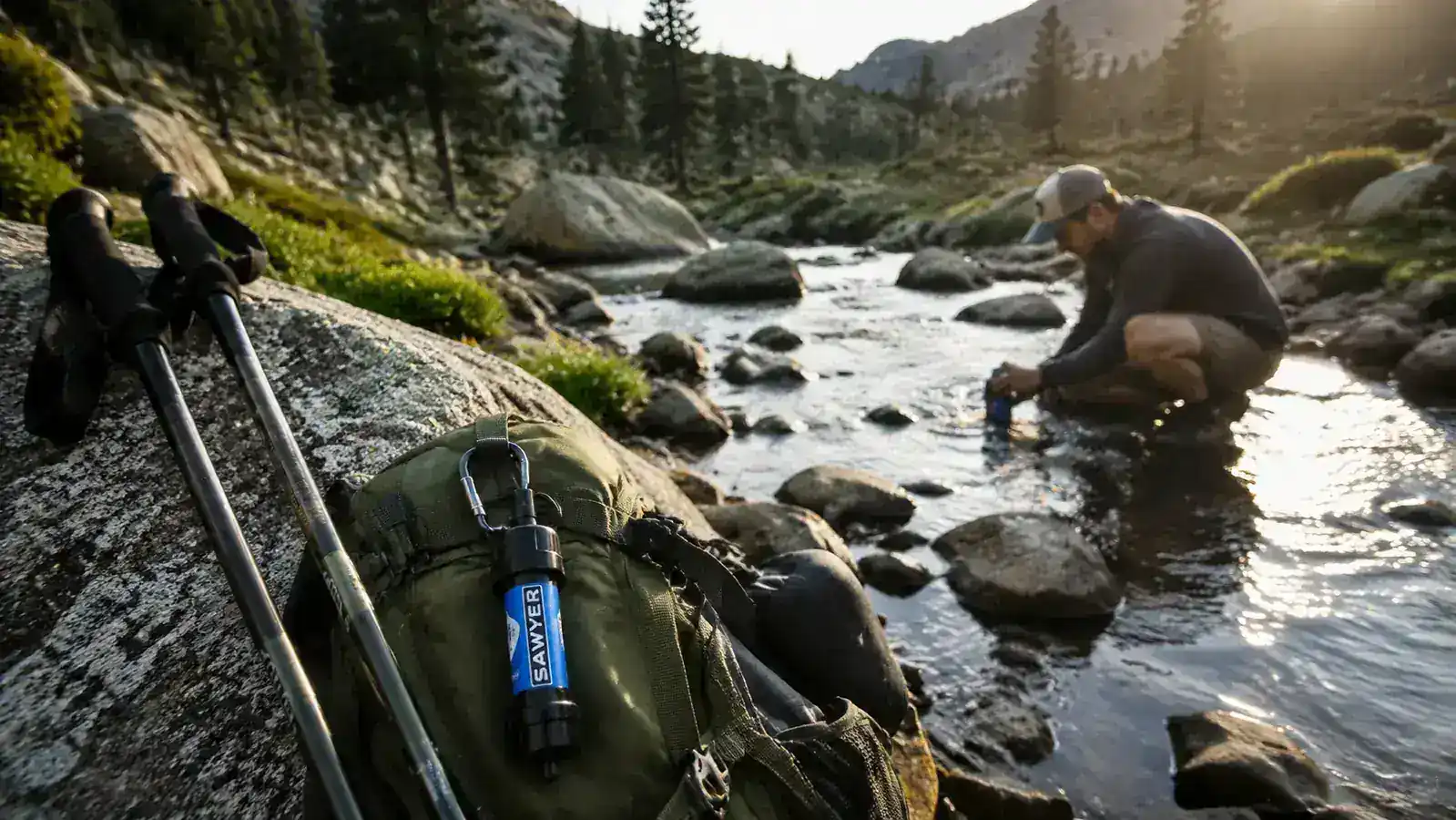
I carried a Sawyer Mini for three months before I understood how it actually works. I hiked with it wrong, stored it wrong, and nearly froze the membrane solid on a November trip in Colorado. The filter still technically functioned afterward, but I got lucky. Most people who hand one of these to a friend before their first backpacking trip are setting that friend up for a slow trickle by mile 10 and no idea why.
The Sawyer Mini is the best-reviewed water filter on Amazon, at 4.7 stars across more than 41,000 ratings. That number is real, and the filter earns it. But the thing nobody says out loud is that the Mini is a precision tool with a short learning curve that most people skip. Skip the learning curve and you get frustration at a water source. Get it right and you have a filter that weighs 2 ounces and genuinely never runs out of fuel or batteries.
The Quick Verdict
Best-in-class weight and filtration for day hikes and short trips, but it demands consistent backflushing and careful cold-weather storage to stay useful for the long haul.
Amazon Check Today's Price →If your current water strategy is 'hope for the best,' the Mini solves that for less than a tank of gas.
The Sawyer Mini filters to 0.1 microns, removes bacteria and protozoa, and weighs 2 oz. It comes with a squeeze pouch, straw, and backflushing syringe. No batteries, no chemicals, no expiration date.
Amazon Check Today's Price on Amazon →How I've Actually Used This Filter
My Sawyer Mini has filtered water on a three-day JMT section out of Tuolumne Meadows, a solo weekend in the Ozarks, and a family campout at a state park where the only running water was a hand pump that nobody trusted. I have used it as a straw directly from a puddle, screwed it onto a standard Smartwater bottle, and inline-threaded it through a Platypus hydration hose. Each setup tells you something different about where the Mini shines and where it slows you down.
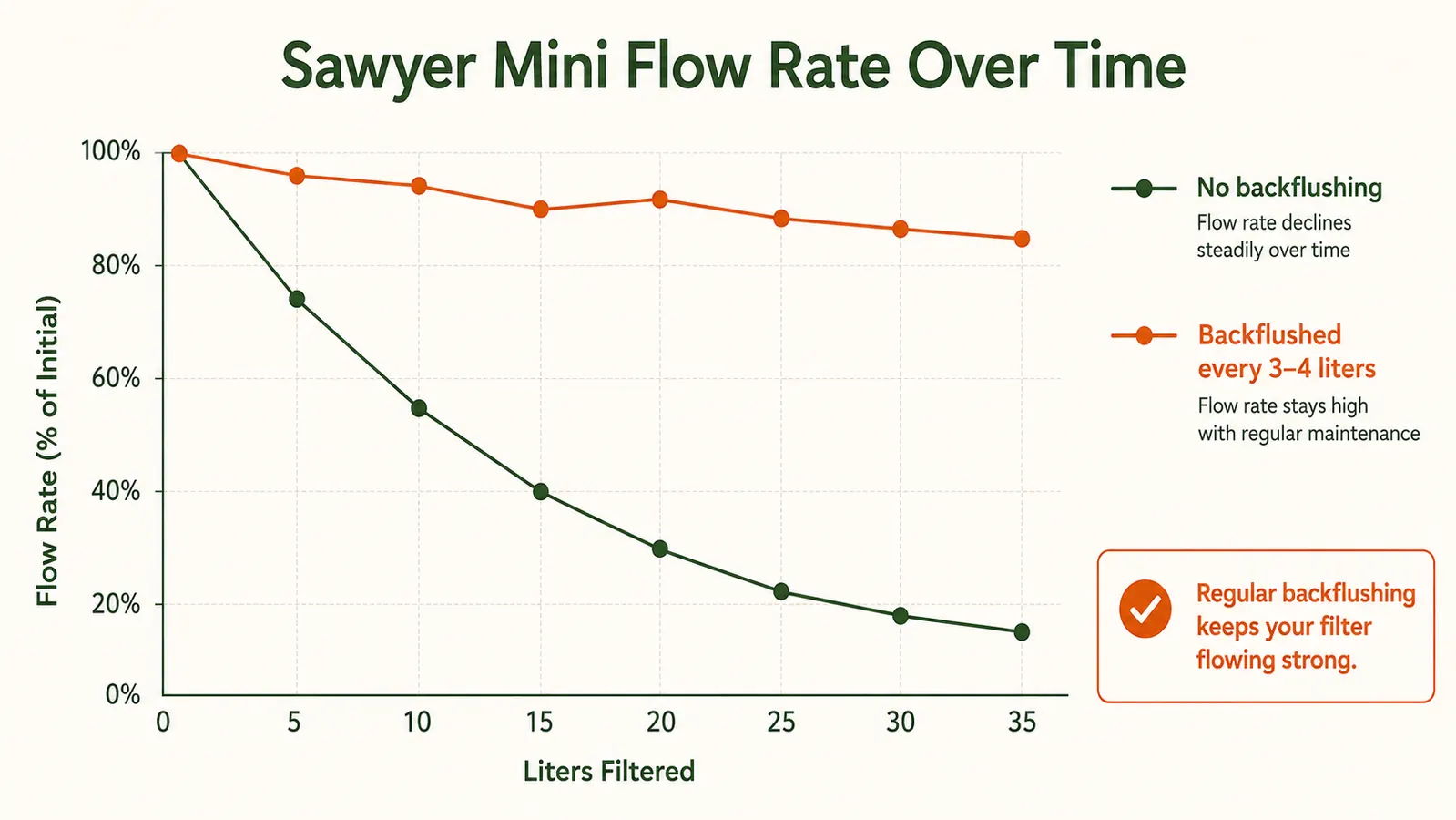
What I noticed most in the first year was how dramatically flow rate changes based on how recently you backflushed. My first trip, I did not backflush once across 22 miles. By day three, filling a half-liter took four minutes of squeezing hard enough to cramp my hand. On the next trip, I backflushed every three or four liters using the included syringe. The filter felt almost new at the end of the weekend. That single habit is responsible for more positive Sawyer Mini reviews than any engineering decision Sawyer made.
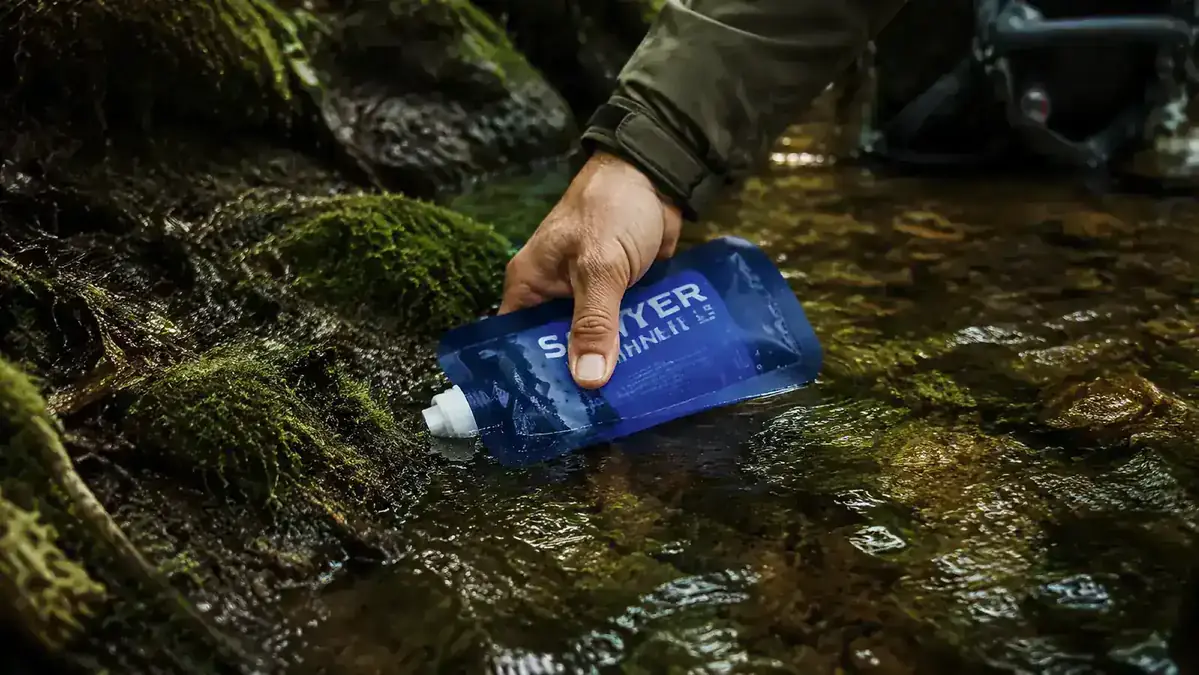
The pouch that comes in the box is the weak link in the whole system. Mine developed a pinhole leak at the seam after about six months. I switched to a Smartwater 1-liter bottle, which threads directly onto the Sawyer Mini, and never looked back. The Smartwater bottle is thinner-walled and easier to squeeze than the stock pouch, and you can pick one up at any gas station if yours gets left at a campsite.
The Backflushing Reality Nobody Warns You About
The marketing language around the Sawyer Mini focuses on its 100,000-gallon lifetime rating. That number assumes you keep the filter clean through regular backflushing. What it does not say loudly enough is that even a single clogged trip can permanently reduce flow rate if particulates dry inside the hollow fiber membrane.
The hollow fiber membrane works by pushing water through microscopic tubes. Sediment and debris collect on the outside of those tubes. Backflushing reverses the flow and pushes that debris out. If you let debris dry inside the filter, some of it will bond to the fiber wall. No amount of backflushing removes it at that point. The filter still works in the sense that it still removes bacteria, but the flow rate is permanently reduced.
The practical takeaway: always backflush before storage. Not after storage. Before. If you finish a trip and the filter sits in your pack for two weeks before you get around to cleaning it, you have probably shortened its useful life. Takes about 30 seconds with the included syringe. Do it at the trailhead before you drive home.
Backflush before storage, not after. Let a dirty filter dry out twice and you will spend the rest of that filter's life squeezing harder than you should have to.
The Freeze Damage Problem Is Real and Irreversible
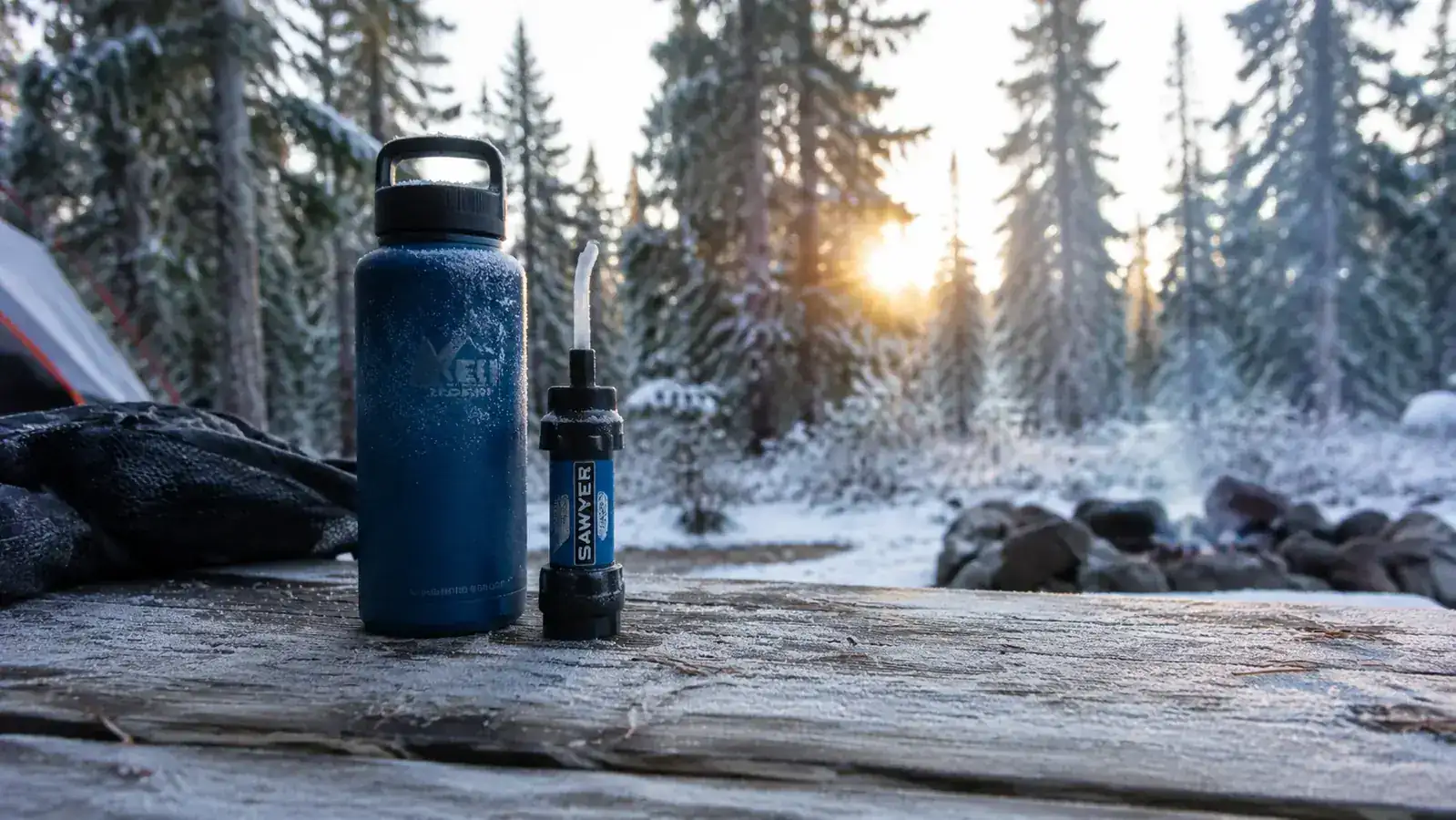
I found out about freeze damage the hard way on a shoulder-season trip to the San Juans in October. Night temps dropped to around 20 degrees. My Sawyer Mini was in the mesh outer pocket of my pack, wet from use that afternoon. By morning the water inside the membrane had frozen. I let it thaw completely before using it, which is what you are supposed to do. The filter looked fine and flowed acceptably.
What I did not realize until later: freezing physically ruptures hollow fiber membranes. The fibers are thin enough that ice crystals expanding inside them create micro-tears. The filter continues to pass water through those tears, which means it no longer filters reliably. You have no way to tell by looking at it or even by drinking the water. Sawyer's own literature says a filter that has been frozen should be replaced, not dried out and reused.
For three-season use, this is not a concern. For anyone camping in temperatures that drop below freezing at night, the Mini needs to sleep in your sleeping bag or inside a jacket pocket against your body. A $29 filter is not worth gambling with. I now put mine in the front pocket of my sleeping bag stuff sack any time there is a freeze risk, and I have had zero issues since.
What the Filter Specs Actually Mean in Practice
The Sawyer Mini filters to 0.1 absolute microns. That removes bacteria (like E. coli and salmonella) and protozoa (giardia and cryptosporidium). Those are the two biological threats you are most likely to encounter in US backcountry water. The filter does not remove viruses. In most domestic wilderness water sources, viral contamination is not a realistic concern. In international travel or disaster response situations where human fecal matter may have entered the water supply, the Mini is not adequate on its own. You would need a chemical treatment step or a different filter class.
The Mini also does not filter out heavy metals, chemicals, or agricultural runoff. It is a biological filter, nothing more. If you are filtering from a source near mining activity, farmland, or industrial areas, look at activated carbon filters or a Sawyer Squeeze with a carbon cartridge. Most mountain and high-country sources are fine. A murky farm pond is a different conversation.
Flow rate fresh out of the box is roughly one liter per minute, which sounds great. In practice, squeezing by hand against a full pouch slows that down to about a liter every two minutes. After 40-50 liters without backflushing, expect 3-4 minutes per liter. After consistent backflushing across the same volume, you stay close to the original rate. The difference is real enough to matter on a water-scarce route where you are filling up once every 6-8 miles.
Setup Variations Worth Knowing
The Mini ships with a bite valve and squeeze pouch, but the most useful configuration most people discover eventually is the Smartwater bottle setup. Thread the Mini directly onto a standard 1-liter Smartwater bottle. Fill the bottle at the source, screw the filter on the top, and squeeze filtered water into your mouth or into a clean container. The thin-walled Smartwater bottle compresses much more easily than the stock pouch, which makes squeezing less fatiguing over a full day.
The inline configuration is the other one worth learning. Sawyer sells an adapter that lets you splice the Mini into a hydration hose. You fill your reservoir with unfiltered water, run the hose through the filter, and drink filtered water directly. The tradeoff is that inline flow rate drops noticeably because you are drawing by suction rather than positive pressure. Some people find it acceptable for moderate hiking. For a fast section hike where you want to drink without stopping, the squeeze bottle method is faster.
One setup to avoid: screwing the Mini directly onto a wide-mouth Nalgene. The thread pitch is different and you can cross-thread the filter, which wears out both the filter and the bottle cap threads. Standard Smartwater-style threads are the match you want.
Honest Tradeoffs Versus Other Filters
The Sawyer Squeeze is the Mini's bigger sibling. It has a faster flow rate and handles silty water better. If you are regularly filtering from glacial runoff or muddy sources, the Squeeze is worth the extra weight and cost. The Mini is optimized for clear-to-moderate backcountry sources where sediment load is low.
Pump filters like the MSR MiniWorks or Katadyn BeFree are faster for group use because you can fill multiple bottles quickly without hand-squeezing each one. If you are filtering for two or more people on a longer trip, the time savings from a pump filter or gravity filter add up. The Mini's strength is solo day-hiking and ultralight packing where every gram and every dollar counts.
Chemical treatment with Aquatabs or iodine tablets is lighter and cheaper. The Mini beats them on taste (no chemical aftertaste), speed (no 30-minute wait), and protozoa coverage (iodine does not kill crypto reliably). Against the LifeStraw, the main advantage is versatility: the Mini can filter into a container, not just drink-through-a-straw. That matters any time you need to cook with filtered water or fill a teammate's bottle. For a deeper comparison of those two options, see the Sawyer Mini vs LifeStraw breakdown.
What I Liked
- 2 oz weight is genuinely ultralight for what it does
- Threads directly onto standard Smartwater bottles with no adapter
- No batteries, no chemicals, no expiration date under proper storage
- 100,000-gallon rated capacity with consistent backflushing
- Comes with syringe, pouch, bite valve, and thread adapter, all useful out of the box
- Filters to 0.1 microns, removing bacteria and protozoa reliably
Where It Falls Short
- Stock squeeze pouch develops leaks at the seam. Replace it early
- Flow rate degrades fast without regular backflushing
- Freeze damage is irreversible and invisible. You won't know the membrane is compromised
- Does not remove viruses, chemicals, or heavy metals
- Slower than pump or gravity filters for group use
- Inline use sacrifices flow rate noticeably versus squeeze setup
Who This Is For
The Sawyer Mini is the right call for solo backpackers and couples doing three-season trips in US wilderness areas. If you are trying to get your base weight under 15 pounds and still want reliable water treatment, nothing beats the Mini's weight-to-function ratio at this price. It also makes sense as a backup filter for anyone doing longer trips with a primary gravity filter, and as a day-hike filter for people who currently carry nothing and are relying on finding tap water or buying at a trailhead store. The learning curve is real but short. Spend 20 minutes reading how backflushing works and you will use this thing correctly for years. For a broader look at water filtration methods and when to use which, see our complete backpacking water filter guide.
Who Should Skip It
Skip the Mini if you are filtering for a group of three or more. Squeeze-by-hand gets tedious fast when you are trying to fill four liters at once. A Sawyer Gravity Filter or a Platypus GravityWorks will handle group volume with less effort. Skip it also if your trips regularly take you below freezing at night and you are not willing to manage the sleeping-bag-storage protocol. And skip it if your water sources are consistently silty or glacially fed. A moderate sediment load turns a 1-liter-per-minute filter into a 4-minute-per-liter chore very quickly in those conditions. The Mini rewards the right application. In the wrong one, it just makes you tired.
Two ounces of protection that filters every creek between here and the trailhead.
The Sawyer Mini comes with the squeeze pouch, backflushing syringe, bite valve, and cleaning coupling. Skip the included pouch and swap it for a Smartwater bottle on day one. Everything else in the kit is worth keeping.
Amazon Check Today's Price on Amazon →