

I have carried both of these filters on real trips, and I want to give you the short answer up front: for most backpackers and campers, the Sawyer Mini is the better tool. It is more versatile, it lasts longer, and it gives you more ways to use it in the field. The LifeStraw is not bad, but it has one structural limitation that makes it awkward for anything beyond day hiking. I will explain that limitation in detail so you can decide for yourself.
If you are standing in a store or browsing online and the two filters look essentially identical to you, that is understandable. They have similar weights, similar filter ratings, and similar prices. What differs is the use model, and that is everything.
| Spec | Sawyer Mini | LifeStraw |
|---|---|---|
| Filter Life | 100,000 gallons | 1,000 gallons (approximately) |
| Weight | 2 oz | 2 oz |
| Filter Rating | 0.1 micron | 0.2 micron |
| Backflush Capable | Yes (included syringe) | No |
| Inline Use | Yes (threads onto hydration bladder or soft flask) | No |
| Gravity Filter Compatible | Yes | No |
| Squeeze Pouch Included | Yes | No (drink-only straw) |
| Water Bottle Threads | Standard 28mm (fits most bottles) | Dedicated mouthpiece only |
| Viral Protection | No (bacteria and protozoa only) | No (bacteria and protozoa only) |
| Approximate Price | Under $30 | Under $20 |
Your water source does not care how prepared you feel. The Sawyer Mini does.
100,000-gallon filter life, backflush-capable, and versatile enough to use inline, squeeze, or gravity-fed. Check today's price and see why it has over 41,000 reviews.
Amazon Check Today's Price on Amazon →The Core Problem with the LifeStraw
The LifeStraw works exactly as advertised. You put one end in a water source, you drink from the other end, and it filters as you sip. That mechanism is simple and reliable. The problem is that it is the only mechanism. You cannot fill a water bottle through a LifeStraw. You cannot attach it inline to a hydration bladder. You cannot use it as a gravity filter hanging from a tree branch while you set up camp. You cannot backflush it to restore flow rate when it clogs. Once the filter slows down from normal use, you are stuck.
In practice, this means the LifeStraw works well for kneeling at a stream and drinking in place. That is genuinely useful on a day hike where you find water when you are thirsty and you drink right there. It is less useful when you need to carry filtered water to camp, cook with filtered water, or share filtered water with a group. On a multi-day backpacking trip, the single-use-mode constraint adds friction every time you need water that is not immediately in front of you.
Where the Sawyer Mini Wins
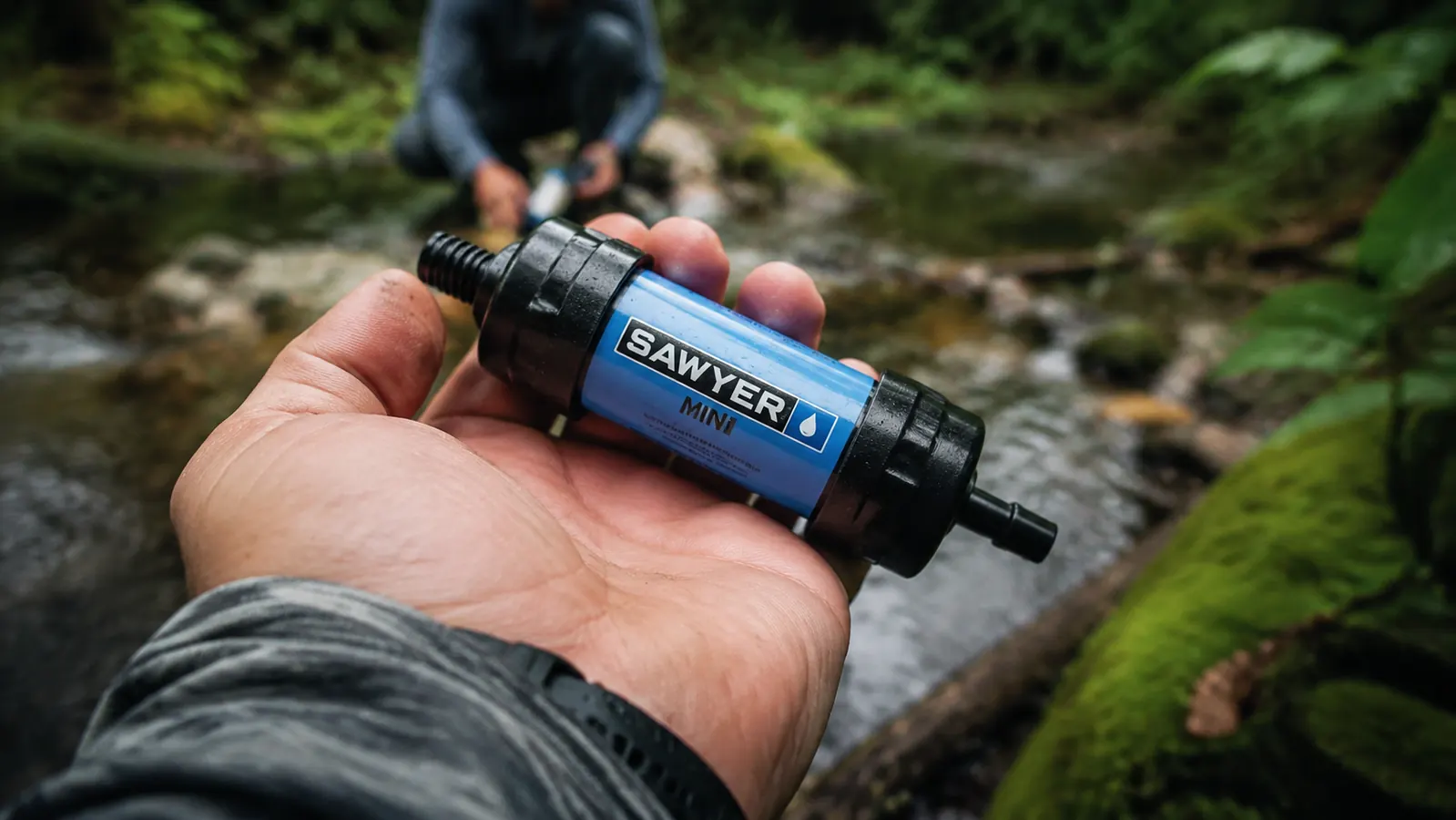
The Sawyer Mini ships with a 16-ounce squeeze pouch and a backflush syringe, which together make it a genuinely flexible piece of kit. You can squeeze water through the filter directly into a Nalgene or pot. You can thread it inline on a hydration bladder hose so you are filtering as you drink on the move. You can hang the squeeze pouch from a branch and let gravity do the work while you cook dinner. And when the flow rate drops after heavy use, you push the syringe backward through the filter to clear it out, which restores most of the original flow.
The filter lifespan difference is also not minor. The Sawyer Mini is rated for 100,000 gallons. The LifeStraw is rated for roughly 1,000 gallons on the personal version, which sounds like a lot until you realize an active backpacker drinking two liters a day goes through about 500 liters per season. The Sawyer Mini is genuinely a buy-it-once filter. I have had mine for four years and it still flows well after backflushing.
The filter rating is also slightly finer on the Sawyer Mini: 0.1 micron versus 0.2 micron on the LifeStraw. Both remove bacteria and protozoa. Neither removes viruses, which matters if you are traveling internationally or using water sources near heavy human activity. But for North American backcountry use, both are effective. The finer rating on the Mini is a marginal win, not a deciding one.
The LifeStraw works fine at the creek bank. The Sawyer Mini works everywhere else too.
Where the LifeStraw Has an Edge
The LifeStraw is typically a few dollars less than the Sawyer Mini, and it is slightly simpler to operate for a first-time user. There is nothing to thread, no pouch to fill, no syringe technique to learn. You pick it up, you put it in the water, and you drink. For a car camper who wants one filter to keep in the emergency kit that anyone in the family can use without a tutorial, that simplicity has real value.
The LifeStraw also has a sealed end cap design that some people find easier to store in a pocket or hip belt pouch without worrying about the filter drying out between uses. On the Sawyer Mini, you need to keep the filter from freezing and make sure it is stored correctly during off-season storage, or you risk cracking the membrane. The LifeStraw has the same freezing vulnerability, but its enclosed design reduces some of the handling fussiness.
If versatility matters on your trip, the Sawyer Mini is the one to grab.
Inline use, gravity filter mode, backflushing, and a 100,000-gallon lifespan. The Sawyer Mini works the way you work, not the other way around.
Amazon Check Today's Price on Amazon →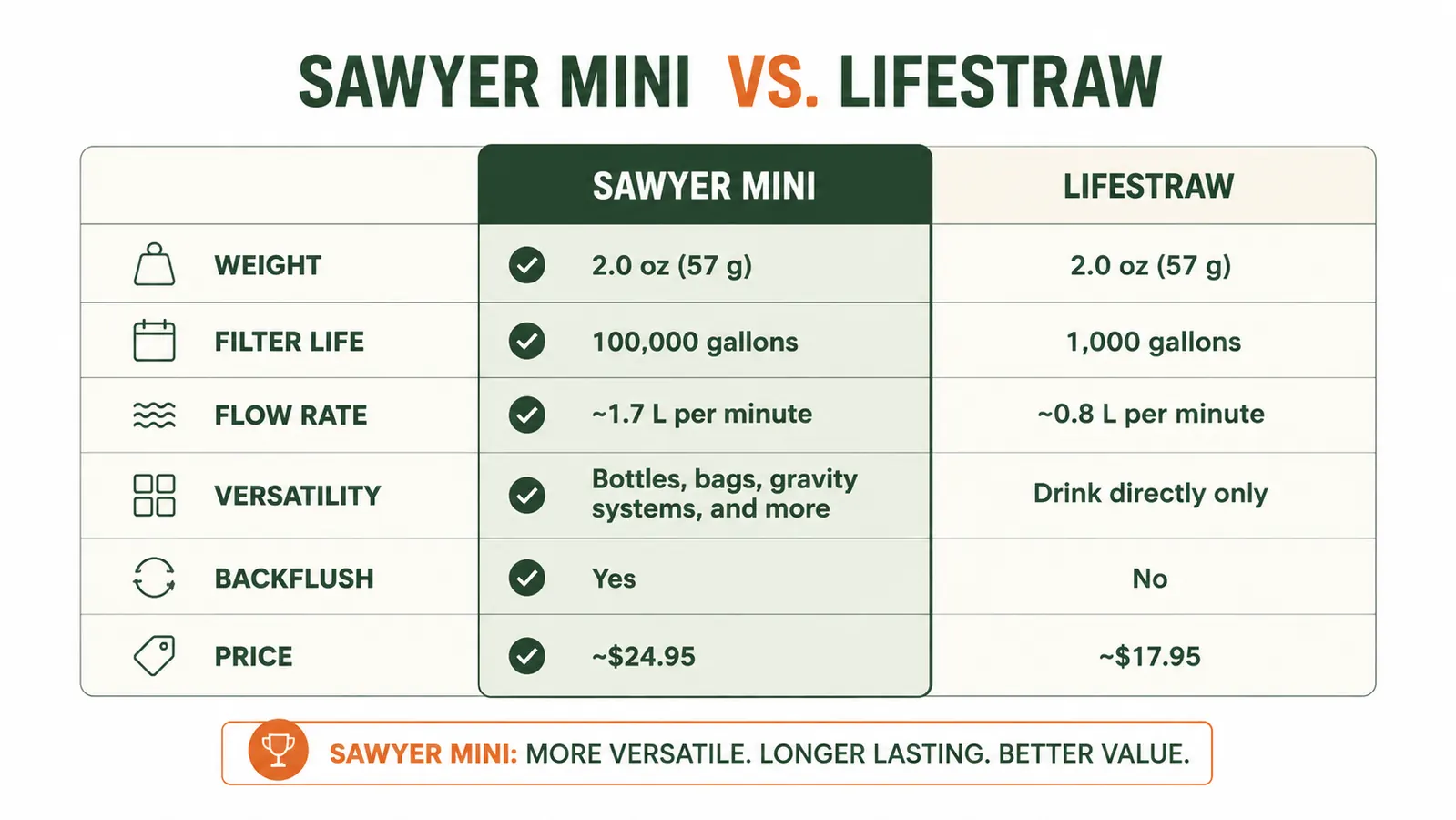
Real-World Use: Three Scenarios Where the Difference Shows Up
Scenario one: you are three miles from camp on a hot August day in the Sierra and you find a cold creek. With the LifeStraw, you drink your fill kneeling there. With the Sawyer Mini, you drink your fill and then squeeze a liter into your bottle for the walk back to camp. This is the scenario where the LifeStraw limitation costs you the most.
Scenario two: you are base-camping and cooking dinner for two people. You need two liters of water for the meal. With the LifeStraw, one person drinks and hands it to the other person to drink. Nobody can fill the cook pot with filtered water through a LifeStraw. With the Sawyer Mini, you fill the squeeze pouch twice and pour it into the pot. Done in about four minutes.
Scenario three: you are day hiking with a kid who needs water. The LifeStraw is great here, because the child can use it directly without any mechanical steps. But the child cannot carry a filled bottle of filtered water using the LifeStraw, so you are managing the filter for them at each water source. The Sawyer Mini lets you fill a kids bottle and hand it over. It is a minor point, but on a long day with tired kids, it adds up.
What About Backflushing?
Backflushing is one of the most practically important features that often gets buried in spec sheets. All hollow-fiber membrane filters slow down over time as particulates collect inside the fibers. The Sawyer Mini comes with a small syringe. You fill the syringe with clean water, attach it to the clean-water end of the filter, and push water backward through the fibers to flush debris out. This restores most of the original flow rate and is how you maintain the filter through its 100,000-gallon life.
The LifeStraw cannot be backflushed. You blow air backward through it to clear it, which helps a little, but does not fully restore flow rate the way syringe backflushing does. Over the life of the filter, a LifeStraw will slow down noticeably in a way that the Sawyer Mini does not have to. For a low-mileage camper this matters less. For a serious backpacker who is filtering several liters a day across a long season, it is a real operational difference.

Who Should Buy the Sawyer Mini
The Sawyer Mini makes sense for backpackers who need to carry water between sources, for anyone using a hydration bladder who wants inline filtration, for camp cooks who need to fill a pot with filtered water, for group trips where one filter needs to supply multiple people, and for anyone who plans to use their filter over multiple seasons without replacing it. It also makes sense as a first filter for someone who wants one piece of kit that will work in most scenarios they are likely to encounter. I point people toward the Sawyer Mini in the long-term review on this site, and my position has not changed after four years of use. See the full breakdown in the Sawyer Mini long-term review for more on durability and backflushing technique.
Who Should Buy the LifeStraw
The LifeStraw makes sense for day hikers who find water and drink immediately without needing to carry filtered water to another location. It also makes sense as an emergency kit backup kept in a car, a go-bag, or a school backpack where the user may not have any training and just needs to drink from a questionable source. It is a solid choice for international travel situations where you are drinking from a tap or a stream and need a personal filter without any fuss. If you are buying for a child who will use it exactly once on a summer hike and then it will go in a drawer, the lower price makes the LifeStraw the right call. But if you are planning to camp more than a few times a year, the Sawyer Mini will serve you better over time.
One more note: if you are uncertain about whether you are using your Sawyer Mini correctly, the honest review on this site covers the most common mistakes people make, including freezing damage and incorrect backflushing technique. Worth reading before your first trip out.
100,000 gallons. Four years. Still flowing. The Sawyer Mini earns its spot in every pack.
Versatile enough for inline hydration, squeeze mode, and gravity filtration. Rated 4.7 stars across more than 41,000 reviews. Check today's price and availability.
Amazon Check Today's Price on Amazon →