
My first Sawyer Mini came in a kit three years ago. I paid almost nothing for it relative to what I was spending on iodine tablets, and I was skeptical in the way you are skeptical of anything small and cheap that promises to keep you from getting giardia. I used it on a five-day loop in the Smokies, then a weekend in Pisgah, then a seven-day trip along a stretch of the PCT near Sierra City. At some point I stopped thinking about it as a gamble and started thinking of it as infrastructure. I now carry one in every pack I own, including my car camping kit, my daypack, and a small go-bag I keep in my truck. That is not a sales pitch. That is just what happens when a piece of gear earns trust incrementally over twenty-two trips.
This review covers what the Sawyer Mini actually does over time, not just out of the box. Flow rate degradation is real and most reviews skip it entirely. Freeze damage is a known failure mode that will cost you the filter if you are not paying attention. And the backflushing routine, which takes about ninety seconds and extends the filter's life dramatically, is something a surprising number of people never do. I will get into all of it.
The Quick Verdict
The best combination of weight, cost, and reliability in water filtration for backpacking and camping. Not perfect in cold conditions and requires real maintenance, but nothing else at this price comes close.
Amazon Check Today's Price →Still carrying tablets? The Sawyer Mini weighs 2 oz and lasts 100,000 gallons.
At the current price, it costs less than a three-day supply of iodine tablets. Check today's price and what is in the kit on Amazon.
Amazon Check Today's Price on Amazon →How I Have Used It
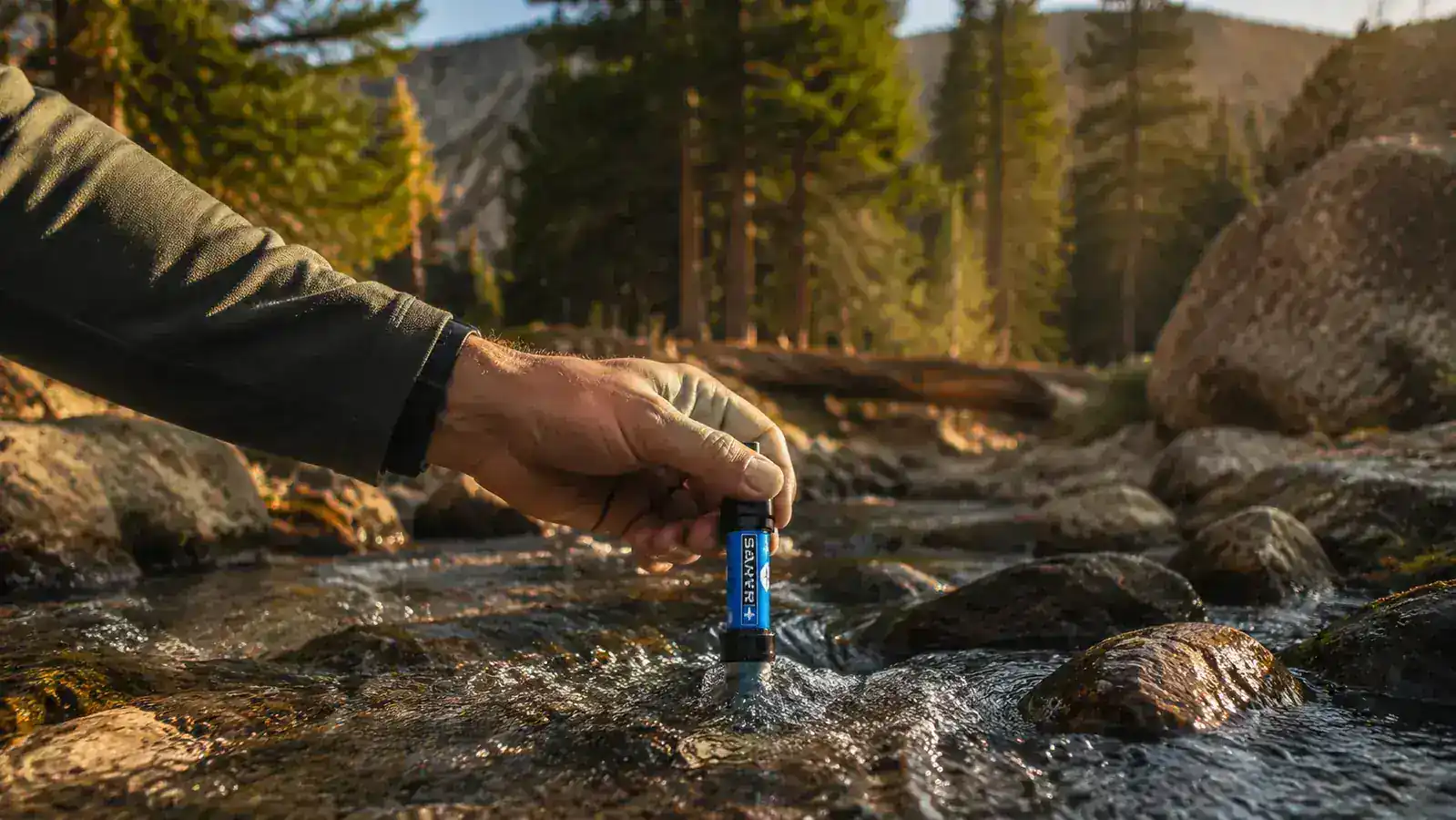
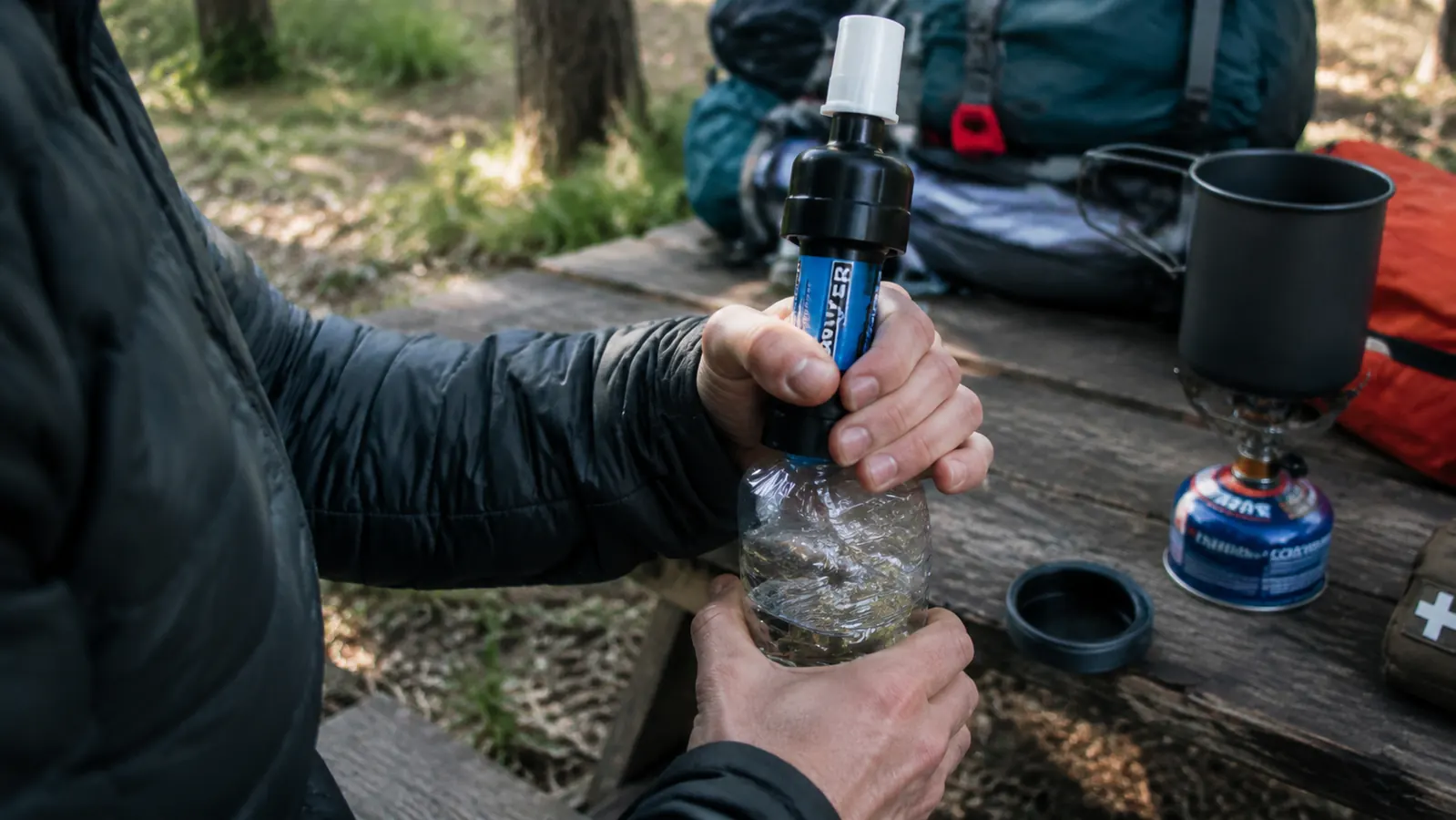
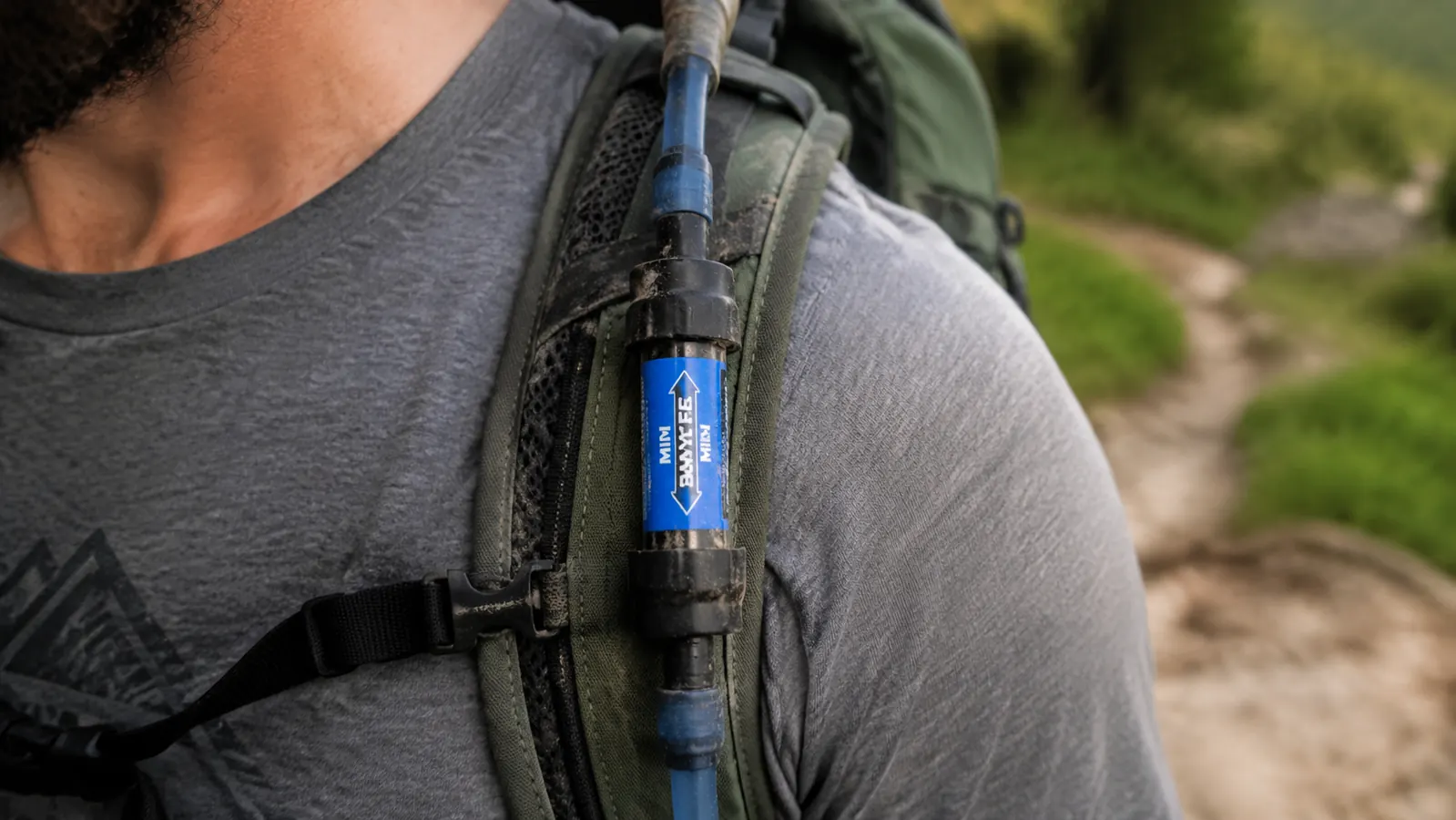
Over three years I have used the Sawyer Mini in four distinct modes. The most common is squeeze-filter: screw the Mini onto a Sawyer or compatible pouches or a standard 28mm bottle, squeeze water through the hollow-fiber membrane into a clean vessel. I use 1-liter Smartwater bottles for this because they are lighter than the included pouches, thread perfectly onto the filter, and are easy to find at gas stations when I forget to prep. The second mode is inline, where I splice the Mini into the drink tube of my hydration bladder using a short length of tubing. This is the setup I use on longer days when I want to drink while moving without stopping to squeeze. Third is gravity-feed, attaching the Mini to the bottom of a hanging dirty bag and letting it drip into a clean vessel over ten to twenty minutes, which I use at camp when I want my hands free. Fourth is as a drinking straw directly from a stream, which I do rarely and mainly as a backup when I have lost or forgotten my bottle.
In that time I have filtered water from snowmelt streams in Northern California, silty creek water in Tennessee, murky puddles in coastal Georgia, and a tap in Oaxaca, Mexico where I did not trust the municipal supply. The filter has never made me sick. The water has always tasted clean, with no chemical aftertaste the way tablets leave. That is the baseline, and it holds.
I have also gone through one complete filter replacement. My original Mini lived for roughly two years of active use before backflushing stopped recovering flow rate adequately. I could still squeeze water through it, but slowly enough that it was becoming a friction point on long trips. I replaced it, kept the old one as a true backup emergency filter, and the new one has been running clean for about fourteen months now.
What Actually Gets Filtered and What Does Not
The Sawyer Mini filters to 0.1 microns, which removes bacteria like E. coli, salmonella, and cholera, and protozoa like giardia and cryptosporidium. Those are the primary threats in most North American backcountry water. What it does not remove is viruses. Norovirus and hepatitis A are smaller than 0.1 microns and pass through hollow-fiber filters including the Mini. In the continental US backcountry, viruses in water are rare enough that most experienced hikers accept that risk without chemical backup. In areas with higher human impact, like popular international destinations or heavily trafficked US trails near grazing land, I add a Steripen or two iodine tablets as a second stage when I am filtering questionable sources.
The filter also does not address heavy metals, chemicals, or turbidity. For extremely silty water, a brief settle time in the dirty bottle helps, but it will not make cloudy water crystal clear and trying to force silty water through the membrane clogs it faster. Pre-filtering through a bandana folded twice removes the worst of it before you start squeezing.
The Sawyer Mini has a rated capacity of 100,000 gallons. For context, if you filtered 2 liters per day every day of your life, it would take you 136 years to reach that limit. The filter itself will outlast the cartridge in your car by a comfortable margin.
Flow Rate Over Time: The Thing Most Reviews Get Wrong
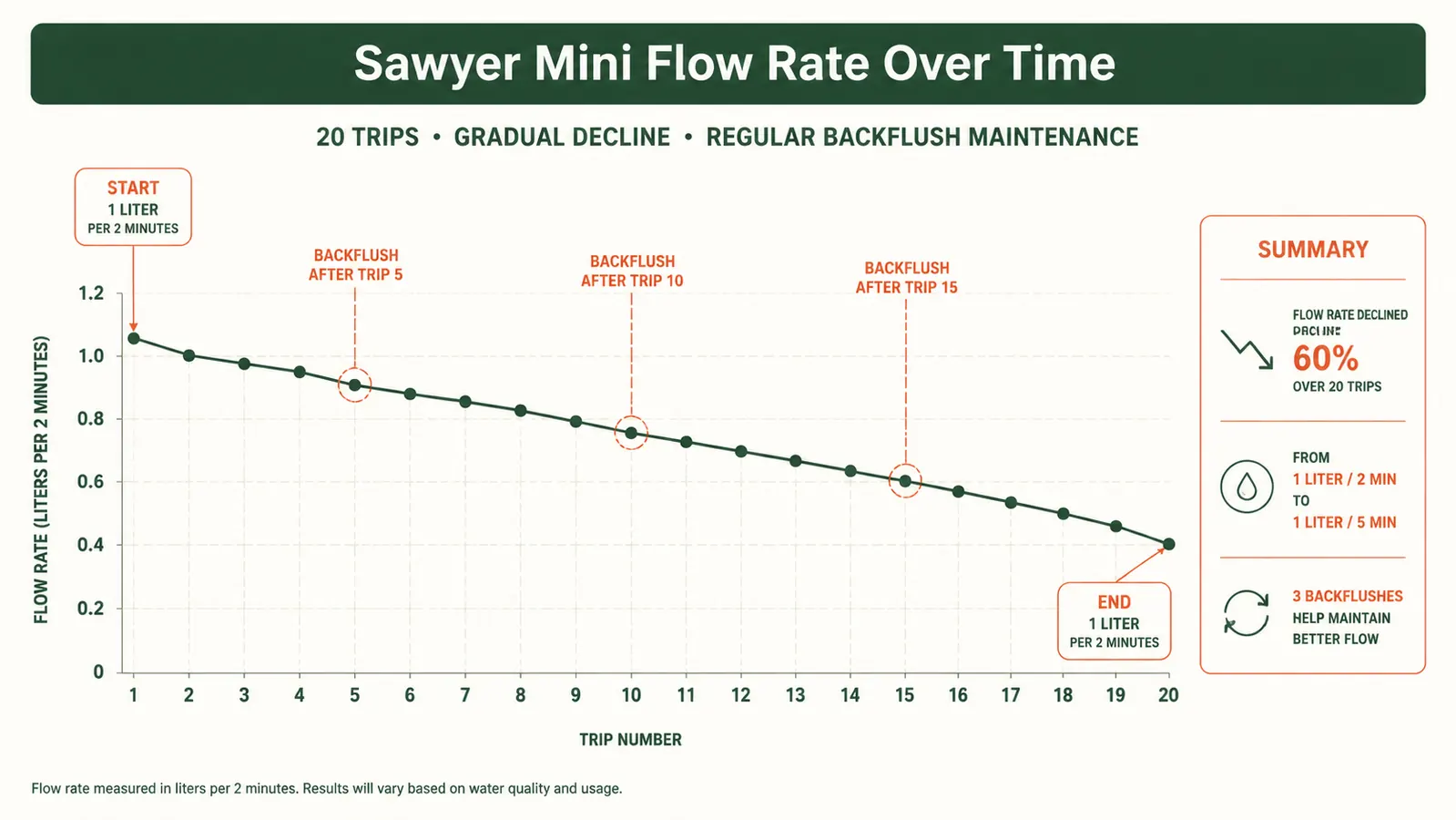
The most common complaint about the Sawyer Mini is that flow rate slows down after initial use. This is real, predictable, and largely manageable if you understand what is happening. New out of the box, a properly wet Mini flows about 1 liter in roughly two minutes with moderate squeeze pressure. After twenty or thirty filter cycles without backflushing, that slows to maybe 1 liter in four to six minutes. After extended use without any maintenance, some people report nearly unusable flow, which is where the 'this filter is garbage' one-star reviews come from.
The fix is backflushing, and it works. Sawyer includes a syringe in the kit specifically for this. You draw clean water into the syringe, attach it to the clean end of the filter, and push water backward through the membrane to dislodge particulate buildup. Takes about ninety seconds. I do it at the end of every trip as part of my gear-clean routine, and I do it mid-trip after filtering obviously turbid water. My current Mini flows almost as fast as it did new, fourteen months in. The chart below shows what my flow data looked like over the first year: a gradual decline between cleanings, a significant recovery after each backflush, with a slowly declining ceiling over time. That last piece is honest. The filter does not reset to factory-new with each backflush. But it stays usable for a very long time if you maintain it.
The Freeze Damage Problem
This is the failure mode I wish someone had warned me about clearly before I started winter camping. The hollow-fiber membrane inside the Sawyer Mini is saturated with water once you have used it. If that water freezes, it expands inside the membrane channels and can crack them. A cracked membrane no longer filters. The filter looks exactly the same from the outside. You cannot tell by squeezing or by looking. But water now passes through without being filtered, and you have no idea.
Sawyer is clear in their documentation that freezing voids the warranty and destroys the filter. On winter trips, I keep the Mini in an inside pocket of my jacket during the day and in my sleeping bag overnight. Some people put it in a small neoprene pouch. The point is to keep it above freezing at all times once it has been wetted. An unused, dry Mini can be stored at any temperature. Once you have filtered with it, temperature management is non-negotiable. If you suspect your filter may have frozen, Sawyer recommends replacing it. There is no reliable field test for membrane integrity short of a lab test.
Weight, Packability, and the Kit That Comes With It
The filter itself weighs 2 oz. The full kit comes with the filter, a 16-oz reusable squeeze pouch, a drinking straw attachment, a backflush syringe, and a cleaning coupling. I use the syringe and discard or leave home the squeeze pouch (replaced by a Smartwater bottle) and the straw attachment (redundant in my setup). In practice the filter and syringe together weigh about 2.3 oz. For what it does, that is extraordinarily light. The Katadyn BeFree and Platypus GravityWorks both weigh more, and both cost significantly more. The BeFree has better flow rate, but at 3x the price with a smaller capacity rating.
Packability is excellent. The Mini is about the size and shape of a thick marker. It fits in a hip belt pocket, a mesh side pocket, or clipped to a shoulder strap with a small carabiner. I have run it inline through a 3-liter Platypus bladder hose without any modification beyond a short adapter tube, which Sawyer sells separately and is worth adding to the kit if you use a hydration system.
What I Liked
- Filters to 0.1 microns, removing bacteria and protozoa reliably
- 2 oz is genuinely ultralight for a filter with 100,000-gallon capacity
- Backflushing with the included syringe restores most flow rate loss
- Works with standard 28mm thread bottles (Smartwater, most Nalgenes)
- Inline, squeeze, straw, and gravity modes give versatile use options
- Under $30 makes it the best value per ounce in backcountry filtration
Where It Falls Short
- Does not filter viruses, a real limitation in international use or high-impact areas
- Freezing after wetting permanently destroys the membrane, silently
- Flow rate degrades noticeably without consistent backflushing
- Squeeze filtering takes real effort with clogged or cold-water sources
- Included squeeze pouch is fragile and develops pinholes with hard use
Who This Is For
The Sawyer Mini is the right filter for three-season backpackers and campers in North America who want the lightest viable filtration option at the lowest price. If you are doing weekend trips to Appalachian Trail shelters, car camping in national forests, or section hiking anywhere in the continental US, the Mini covers your filtration needs with zero redundancy required. It is also a strong choice for anyone building a get-home or emergency kit, where the combination of small size, long shelf life when dry, and broad filtration capability makes it hard to beat. I also recommend it as a first filter for new backpackers who do not yet know what setup they prefer, because it works across so many configurations and costs little enough that replacing it later is not painful.
Who Should Skip It
If you are camping in winter conditions and do not want to manage freeze protection, the Sawyer Mini is genuinely more trouble than a pump filter or a chemical system that handles cold better. If you are traveling internationally or camping in areas with high viral load risk (crowded international trekking routes, developing-world water supplies), you need a filter that handles viruses or a chemical backup, and the Mini alone is not enough. If you are group camping and need to filter large volumes fast, the flow rate of the Mini under squeeze mode is frustrating. A gravity filter like the Platypus GravityWorks or Sawyer's own Squeeze set in gravity mode will serve a group camp better. If you want a direct comparison between the Mini and the LifeStraw, which is the other filter in this price range, I broke that down fully in Sawyer Mini vs LifeStraw. Short answer: the Mini wins on versatility and the LifeStraw wins on simplicity.
For most backpackers and campers reading this, the Mini is the right answer. The reasons it is worth adding to every pack are covered in detail in 10 Reasons the Sawyer Mini Belongs in Every Camping Pack. The short version: it is light, it is cheap, it lasts longer than you will need it to, and it has kept me drinking clean water from every source I have put it against for three years without a single illness. That track record is what earned it a permanent spot in all of my packs.
Three years in, I would buy it again today without hesitating.
The Sawyer Mini is the water filter I recommend to every new backpacker and experienced hiker who asks. Check current availability and pricing on Amazon.
Amazon Check Today's Price on Amazon →