
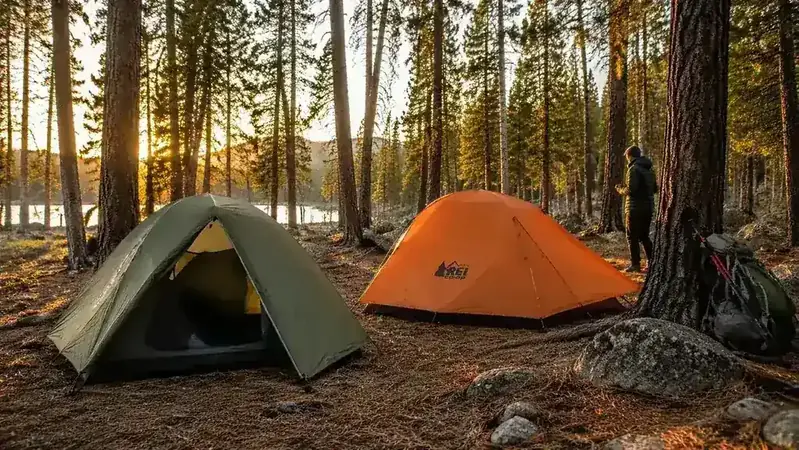
I get this question from hikers all the time at the trailhead: should I save up for an MSR Hubba Hubba NX or just grab the Naturehike Cloud-Up for now? The short answer is that for most weekend backpackers, the Cloud-Up does the job well enough that 'for now' turns into 'for a few seasons.' The long answer is in the numbers and in the field experience, which is what this comparison is about.
I have used the Naturehike Cloud-Up across fourteen trips this season, ranging from a shoulder-season night in the Cascades to a three-night loop in the Sierras at around 9,000 feet. I have not owned an MSR Hubba Hubba myself, but I have slept in one on a group trip and borrowed a friend's for a rainy weekend in Olympic National Park. The comparison below is based on side-by-side time with both shelters, not just spec-sheet reading.
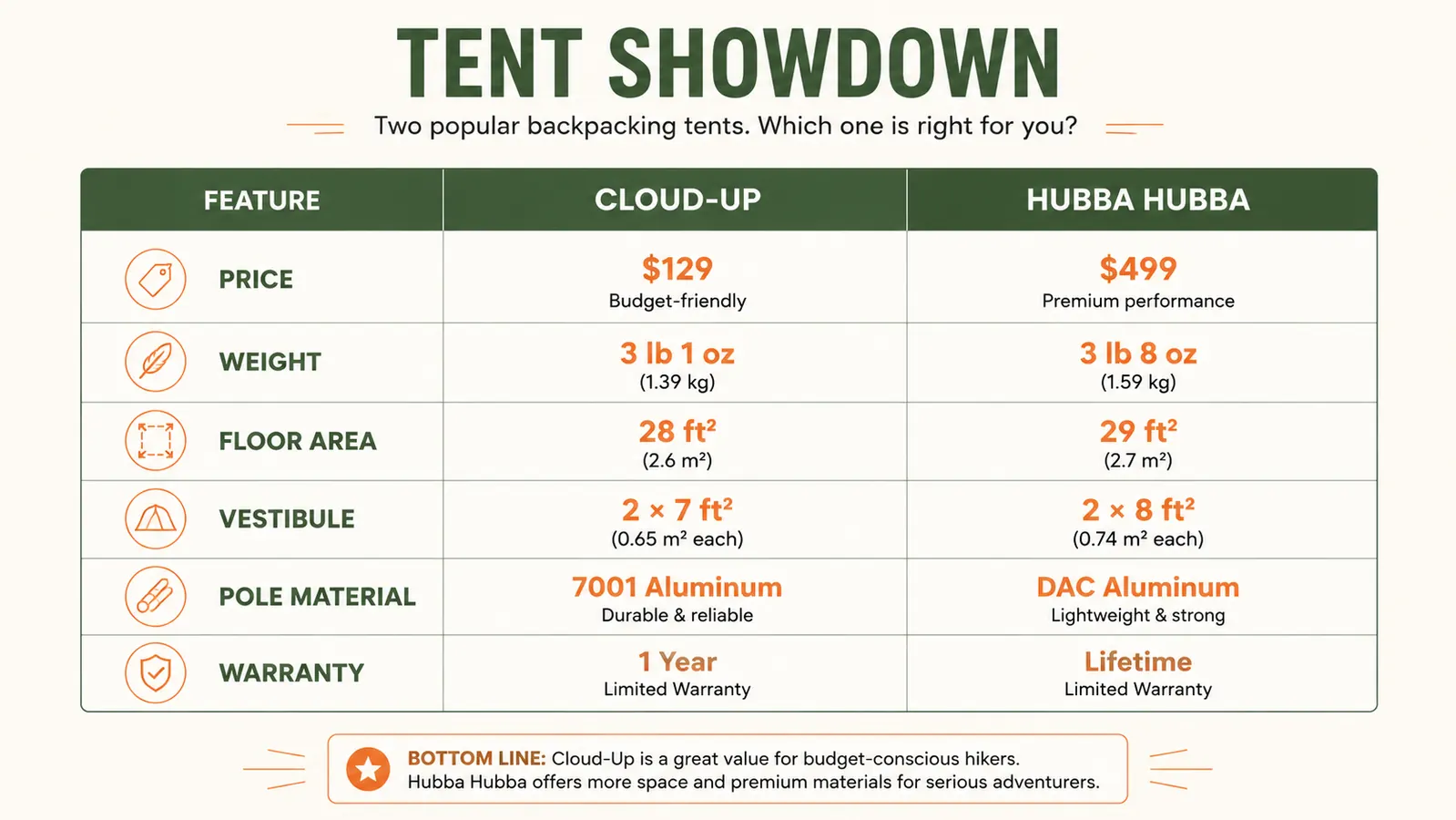
| Spec | Naturehike Cloud-Up 2P | MSR Hubba Hubba NX 2P |
|---|---|---|
| Price | ~$119 | ~$350+ |
| Packed Weight (2P) | 3 lbs 9 oz | 3 lbs 8 oz |
| Floor Area | 29 sq ft | 29 sq ft |
| Vestibule Area | 11 sq ft (single) | 17 sq ft (dual) |
| Pole Material | Aluminum alloy | DAC Featherlite NSL aluminum |
| Fly Waterproofing | 3000mm HH | 1500mm HH (DWR-treated) |
| Floor Denier | 20D ripstop nylon | 30D ripstop nylon |
| Freestanding | Yes | Yes |
| Footprint Included | Yes | No ($55 extra) |
| Warranty | 1 year limited | Lifetime limited |
| Peak Height | 43 inches | 40 inches |
The Naturehike Cloud-Up includes a footprint. The MSR does not. That alone covers a big chunk of the price gap.
If you are heading out this season and do not want to spend $400+ on a shelter system, the Cloud-Up is ready to go out of the box at a fraction of the cost.
Amazon Check Today's Price on Amazon →Where the Naturehike Cloud-Up Wins
The price gap is the obvious place to start, but it is not the only advantage. The Cloud-Up ships with a full footprint included. MSR sells the Hubba Hubba footprint separately for around $55. By the time you outfit the Hubba Hubba properly, you are looking at $400 or more. The Cloud-Up arrives ready to pitch.
The fly waterproofing spec also goes in the Cloud-Up's favor on paper: 3000mm hydrostatic head versus 1500mm on the Hubba Hubba. In practice, the MSR's DWR coating sheds light rain efficiently so its lower HH number rarely matters in mild conditions. But in a sustained downpour, I noticed the Cloud-Up's fly held water out more aggressively. If you camp in the Pacific Northwest or at altitude where storms blow in hard and fast, that extra HH headroom is real.
Peak interior height also edges to the Cloud-Up at 43 inches versus the Hubba Hubba's 40 inches. Three inches sounds minor until you are sitting up to put on your boots in the morning. The Cloud-Up feels slightly more livable inside, which matters on a rest day when you are tent-bound for a few hours waiting out a squall.
Where the MSR Hubba Hubba Wins
The Hubba Hubba's pole system is in a different class. MSR uses DAC Featherlite NSL aluminum, which is lighter per inch, stiffer under load, and significantly more flexible before breaking than standard aluminum alloy. On a windy exposed ridge at 8,500 feet in the Sierras, that pole quality translates directly into confidence. The Cloud-Up's poles are competent, but they flex more in gale conditions. That difference is not academic if you are doing exposed high-route camping.
The dual vestibule setup is also a genuine advantage for two-person use. The Hubba Hubba gives each occupant their own door and a roughly 8-9 square foot storage pocket on their side. Wet boots, a rain jacket, and a day pack on each side of the tent without stepping over your partner. The Cloud-Up's single vestibule works fine for solo use but becomes a negotiation when two people are both trying to access gear in the rain. If you two-person tent camp regularly with a partner, that dual-door layout has real daily value.
Durability over the long term is where the MSR's premium construction earns its price for heavy users. The 30D floor, the factory seam tape quality, and the lifetime warranty reflect a tent engineered to handle five to ten years of use. The Cloud-Up's 20D floor is lighter but more prone to abrasion damage on rocky ground, which is why the included footprint matters so much. Use it every time.
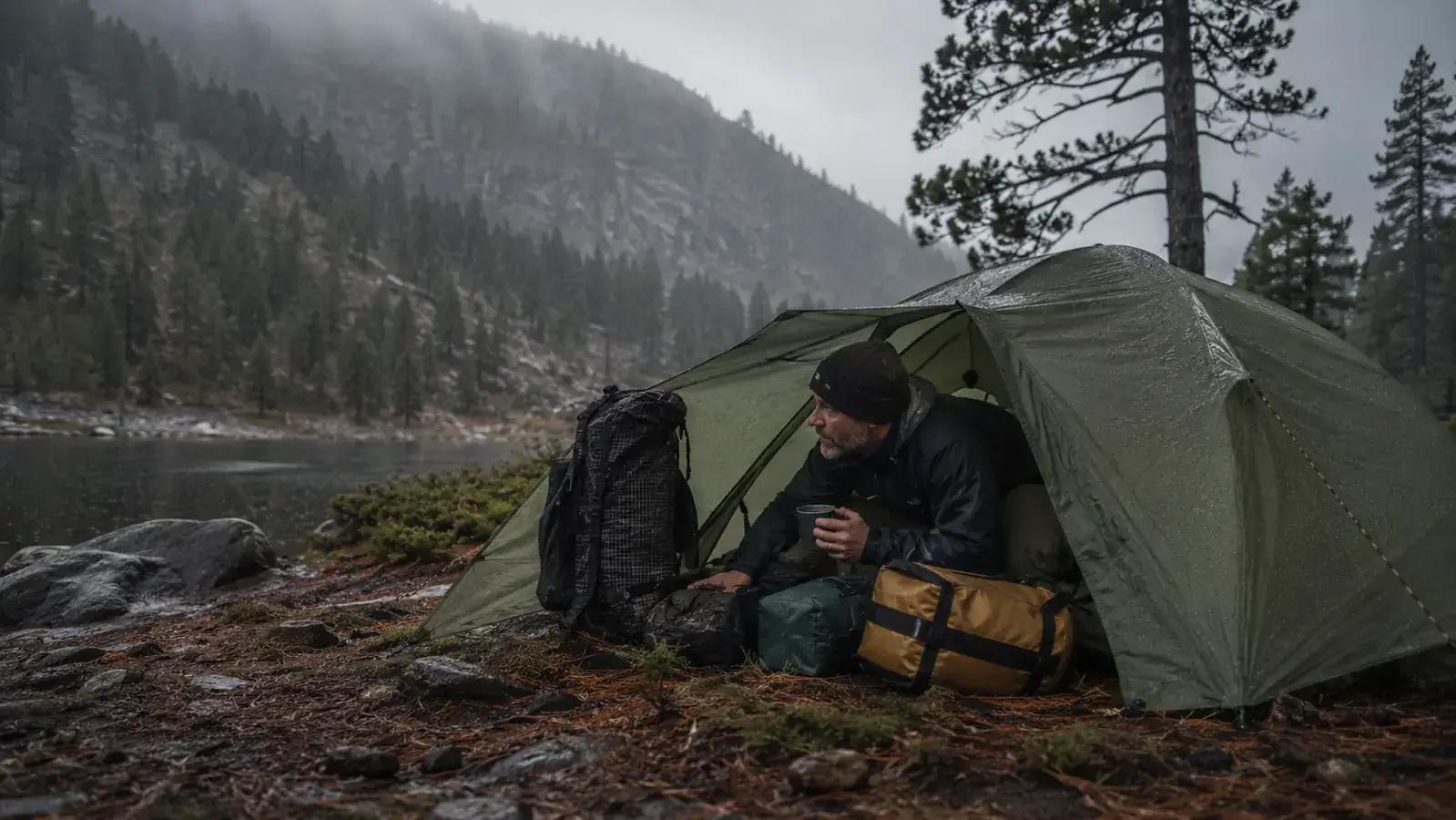
If you are doing three-season weekend trips and want a shelter that will not embarrass you in the rain, the Cloud-Up does that job at $119. The Hubba Hubba does it slightly better at three times the price.
Setup and Pitching in the Field
Both tents use a similar hub-and-sleeve pole architecture that makes setup genuinely fast once you have done it a couple of times. The Cloud-Up clips its fly on, the Hubba Hubba wraps it. Neither approach is faster than the other by a margin that matters. On my third trip with the Cloud-Up, I had the shelter up in under four minutes on flat ground in calm conditions. In wind, the Hubba Hubba's stiffer poles make it slightly easier to wrestle into position solo, which is a real-world edge.
One thing that trips up first-time Cloud-Up owners: the pole clips at the base of the tent need to stake out to get the floor taut. If you skip the stakes and just freestand it, the floor buckles and you lose interior room. The Hubba Hubba has the same requirement but the stakes are more intuitive to place. Read the Cloud-Up instructions once before your first pitch and it becomes second nature.
Weight and Packability
The packed weight numbers are remarkably close: the Cloud-Up at 3 lbs 9 oz with footprint included, and the Hubba Hubba at 3 lbs 8 oz without footprint. Add the MSR footprint and the Hubba Hubba system weighs more and costs significantly more. For a gram-counting ultralight hiker who is already over the $300 gear budget, a tarp and bivy still make more sense than either tent. For a three-season weekend backpacker carrying a 30-35 lb pack, one ounce is not a meaningful difference.
Condensation Management
Both tents use a double-wall design, which means the inner mesh ceiling and the fly are separate. That gap lets moisture vapor from your breath travel out through the mesh and collect on the fly rather than dripping back on your sleeping bag. In practice, both tents manage condensation similarly well when you leave the vents open. The Cloud-Up has a single roof vent; the Hubba Hubba has two. On cold mornings, two vents means more airflow and slightly less interior condensation buildup. Not a deal-breaker, but noticeable on cold nights below 30 degrees.
Who Should Buy the Naturehike Cloud-Up
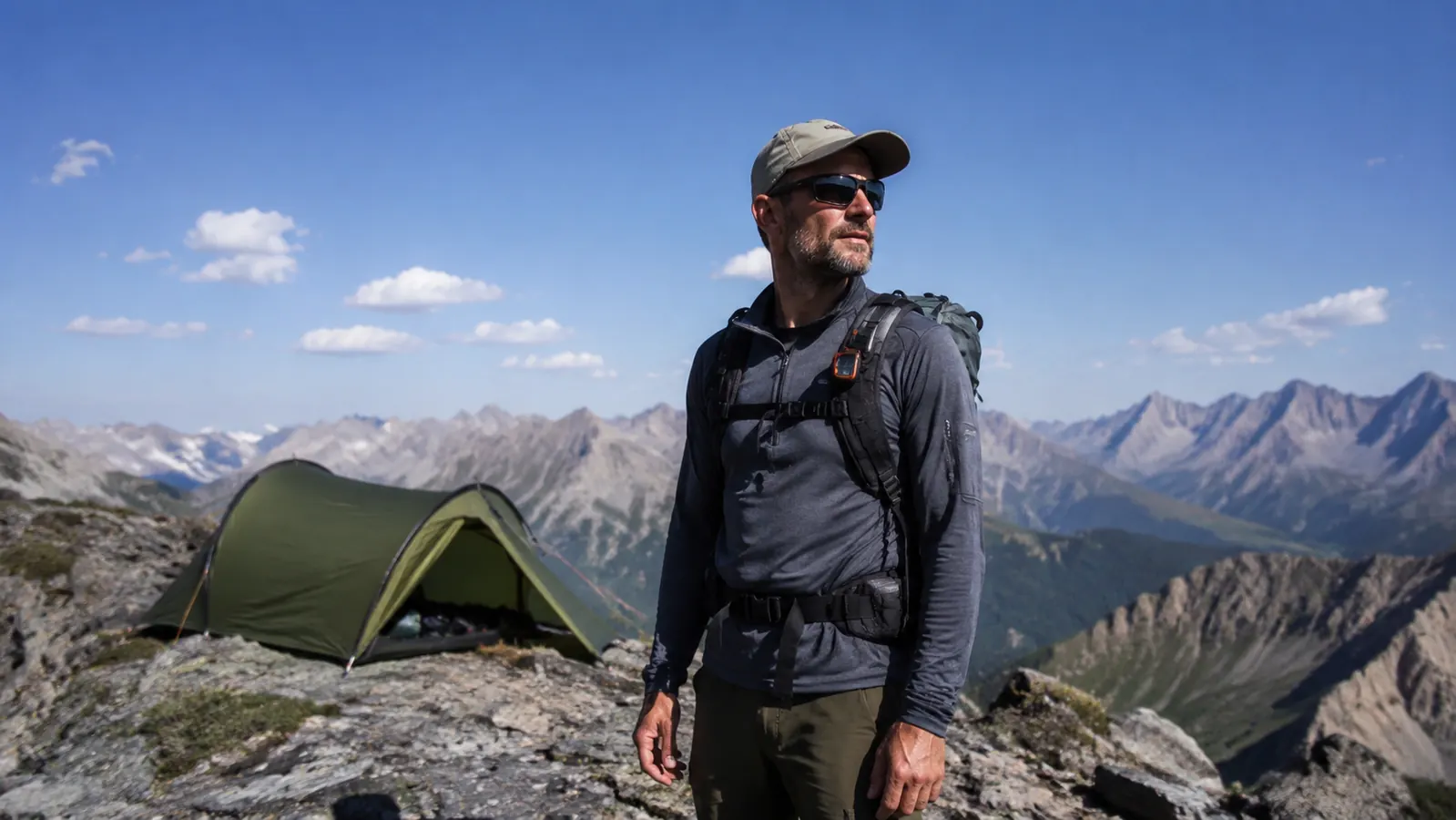
The Cloud-Up is the right choice if you are doing three-season backpacking on established trails, camping below treeline most of the time, and want a shelter that handles rain, wind, and cold without costing more than your plane ticket to the trailhead. It is also the right call if you are new to backpacking and want to find out whether you love it before committing $350 to a shelter. The Cloud-Up gives you real capability at a price where the answer to 'was that worth it?' is almost always yes. It comes with the footprint, sets up fast, and has held up through a full season of hard use on my end. Rated 4.5 stars across more than 2,000 Amazon reviews, it is not a sleeper. People who have actually slept in it like it.
Who Should Skip It and Buy the MSR Instead
If you are doing exposed high-route alpine camping where pole strength in sustained winds is genuinely important, the MSR Hubba Hubba's DAC pole system is worth the premium. If you regularly two-person camp and both occupants want their own door and storage vestibule, the dual vestibule layout justifies a lot of the cost difference. And if you are planning ten or more years of hard use on rugged terrain, the MSR's lifetime warranty and heavier floor denier will pay dividends over time. The Hubba Hubba is a genuinely great tent. It is just great in ways that matter most to a specific kind of hiker, not the average weekend backpacker.
The Cloud-Up ships with a footprint. The Hubba Hubba does not. Check current pricing and availability before you decide.
The Naturehike Cloud-Up is the pick for most weekend backpackers who want real three-season performance without the premium tier price tag. Rated 4.5 stars across 2,266 Amazon reviews.
Amazon Check Today's Price on Amazon →