
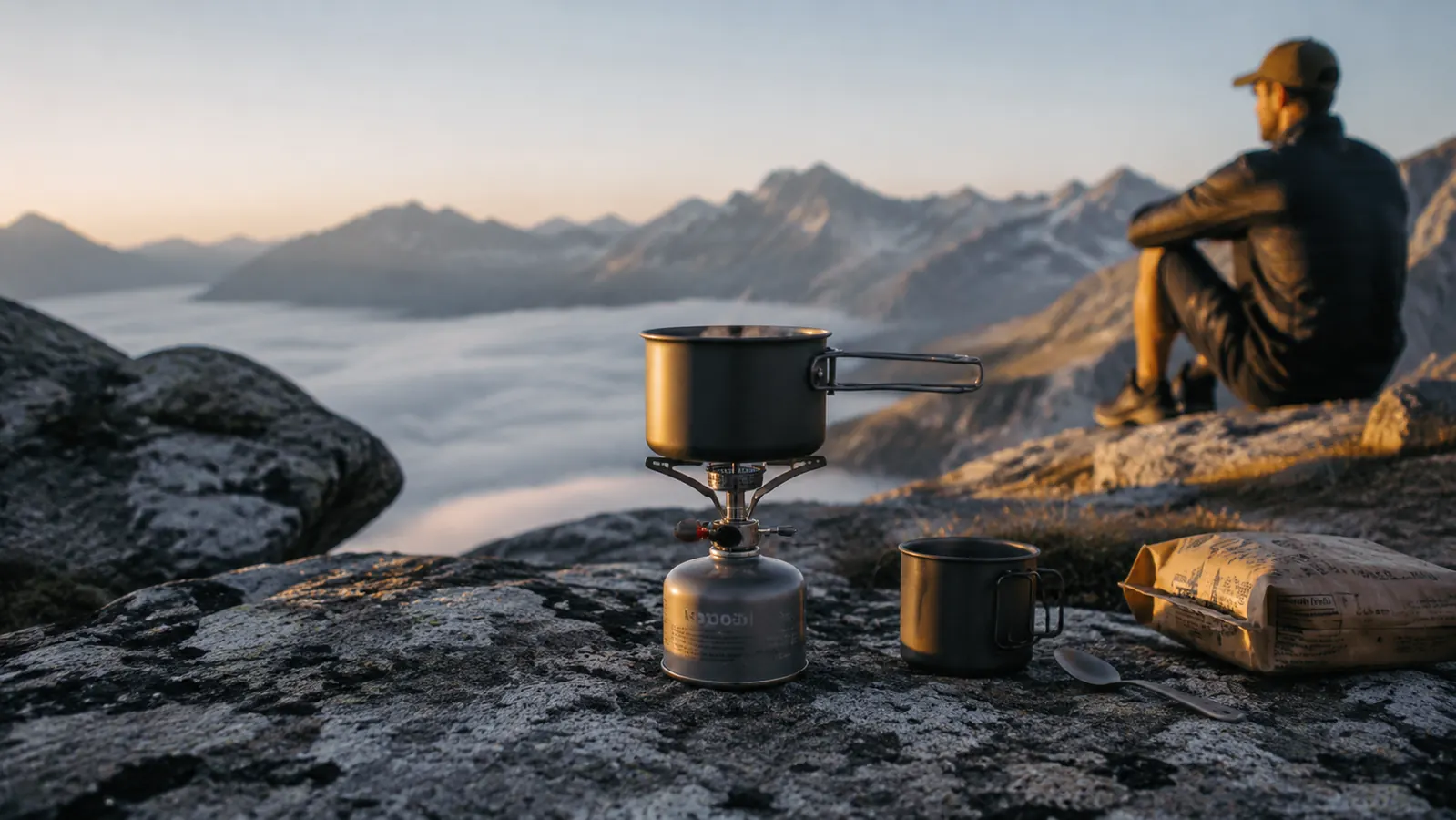
I weigh everything I put in my pack. Not because I am obsessive about it, but because I have carried too many heavy packs up too many steep trails and at some point the math becomes personal. So when I found a titanium backpacking stove that comes in at 26 grams, I did not trust it. I assumed it was fragile or inefficient or would fall apart after three trips. I ordered the BRS-3000T anyway, mostly out of curiosity, and I have now cooked on it at four-season campsites in Colorado, Utah, and the Pacific Northwest. What I found was not what most reviews told me to expect.
This is the review I wish I had read before buying. It covers the things that matter day-to-day on the trail and the one situation where this stove will genuinely fail you. If you want the short version: the BRS-3000T is one of the most impressive pieces of budget outdoor gear I have ever tested. It also has a specific, real weakness that most reviews bury in paragraph nine or skip entirely. I am going to lead with it.
The Quick Verdict
An exceptional ultralight stove for calm-condition cooking that earns every penny of its price, with one hard limit you need to know before you rely on it above treeline.
Amazon Check Today's Price →If you cook above treeline or in exposed sites, read the wind section first. If you cook in sheltered spots, you can stop thinking and buy this stove.
The BRS-3000T is 26 grams and comes with a carrying case. It works with any standard isobutane canister. Check the current price and availability below before you plan your next trip.
Amazon Check Today's Price on Amazon →What Nobody Tells You: The Wind Problem Is Real and Specific
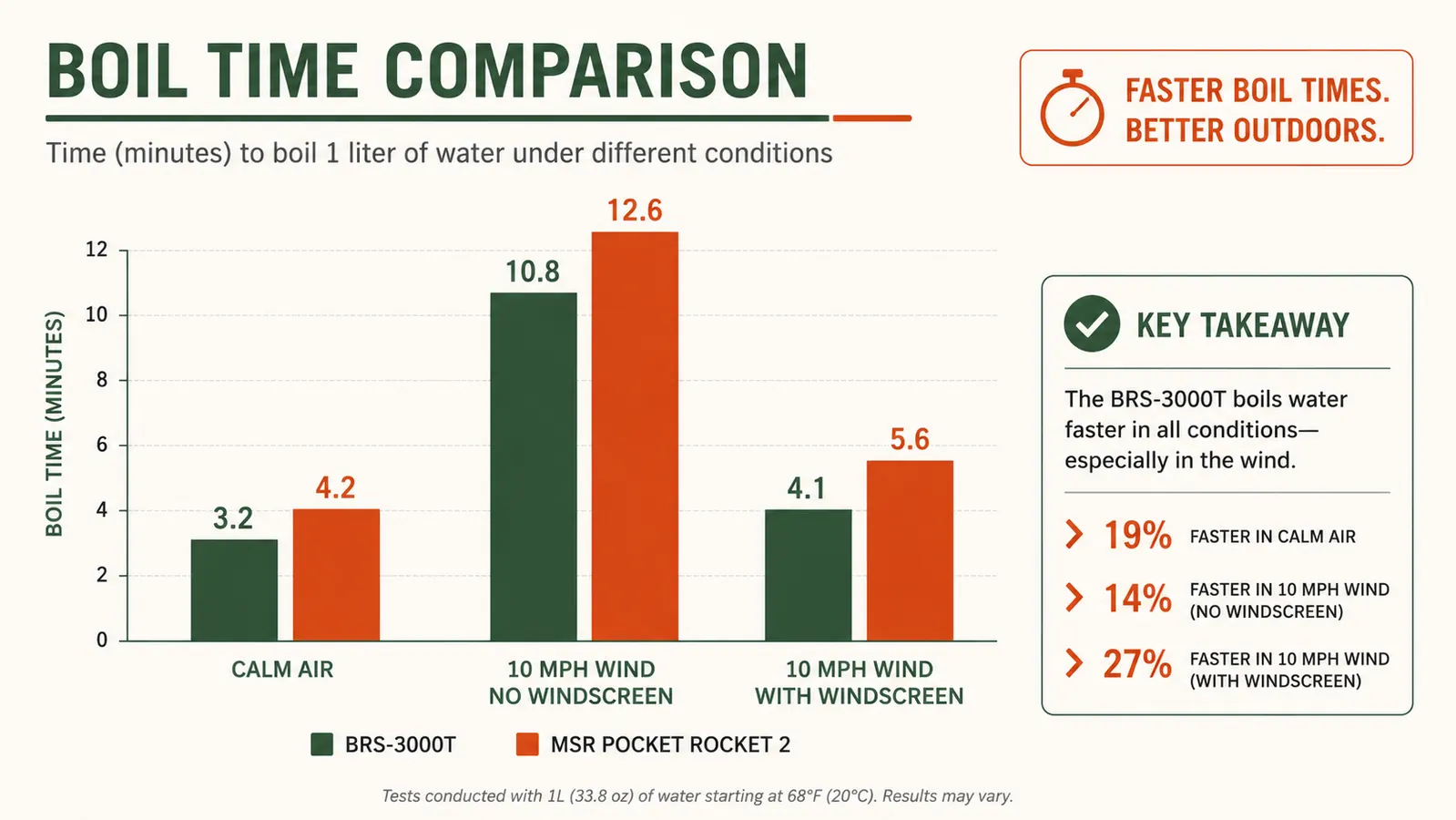
Every stove review mentions wind. Most of them treat it as a minor asterisk. With the BRS-3000T, it is not minor. The burner head is small and the pot supports are short and narrow, which means the stove sits your cookpot low but also means there is very little mass to stabilize the flame. In calm air, the burner runs hot and steady. The moment you get above 8 to 10 mph of consistent wind, the flame deflects badly and your boil time goes from around 3.5 minutes per 500ml to 7 or 8 minutes. In a sustained 15 mph alpine wind without a windscreen, I failed to boil 500ml of water in 12 minutes before the canister ran cold in my hand.
That is not a catastrophe if you know it going in. I now carry a simple foil windscreen cut from a disposable oven liner. It weighs 14 grams, costs almost nothing, and brings boil times back to near-calm performance in winds up to about 15 mph. Without it, cooking at exposed alpine campsites or on ridgeline sites is frustrating. The MSR Pocket Rocket 2, by comparison, has a regulator and a slightly recessed burner that manages wind noticeably better. You pay roughly $45 more for that wind tolerance. Whether that is worth it depends entirely on where you camp.
How I Have Used It: Six Months of Actual Cooking
My name is Cal and I camp about 25 nights a year, mostly solo backpacking with occasional car camping. I used the BRS-3000T as my only stove from June through November of last year, covering trips in Weminuche Wilderness in Colorado at 11,000 feet, the Enchantments in Washington at 7,000 feet, and a series of car camping weekends at lower elevation sites in Utah where I prioritized speed over weight. My usual cook kit is a 700ml titanium pot, the BRS-3000T, and either a 100g or 230g isobutane canister depending on trip length.
I cooked oatmeal, ramen, freeze-dried backpacking meals, and coffee on this stove. I boiled water for water treatment on one trip where my filter was too slow. I used it in temperatures ranging from 28 degrees Fahrenheit on a September night in Colorado to warm 75-degree evenings in Utah. Total fuel canisters burned: eight 100g canisters and three 230g canisters. The stove has not bent, cracked, or shown any sign of wear at the joints. The piezo igniter stopped working reliably around month three, which was not surprising and is not a real problem since I carry a lighter anyway.
What It Does Brilliantly: Weight, Setup, and Simmer Control
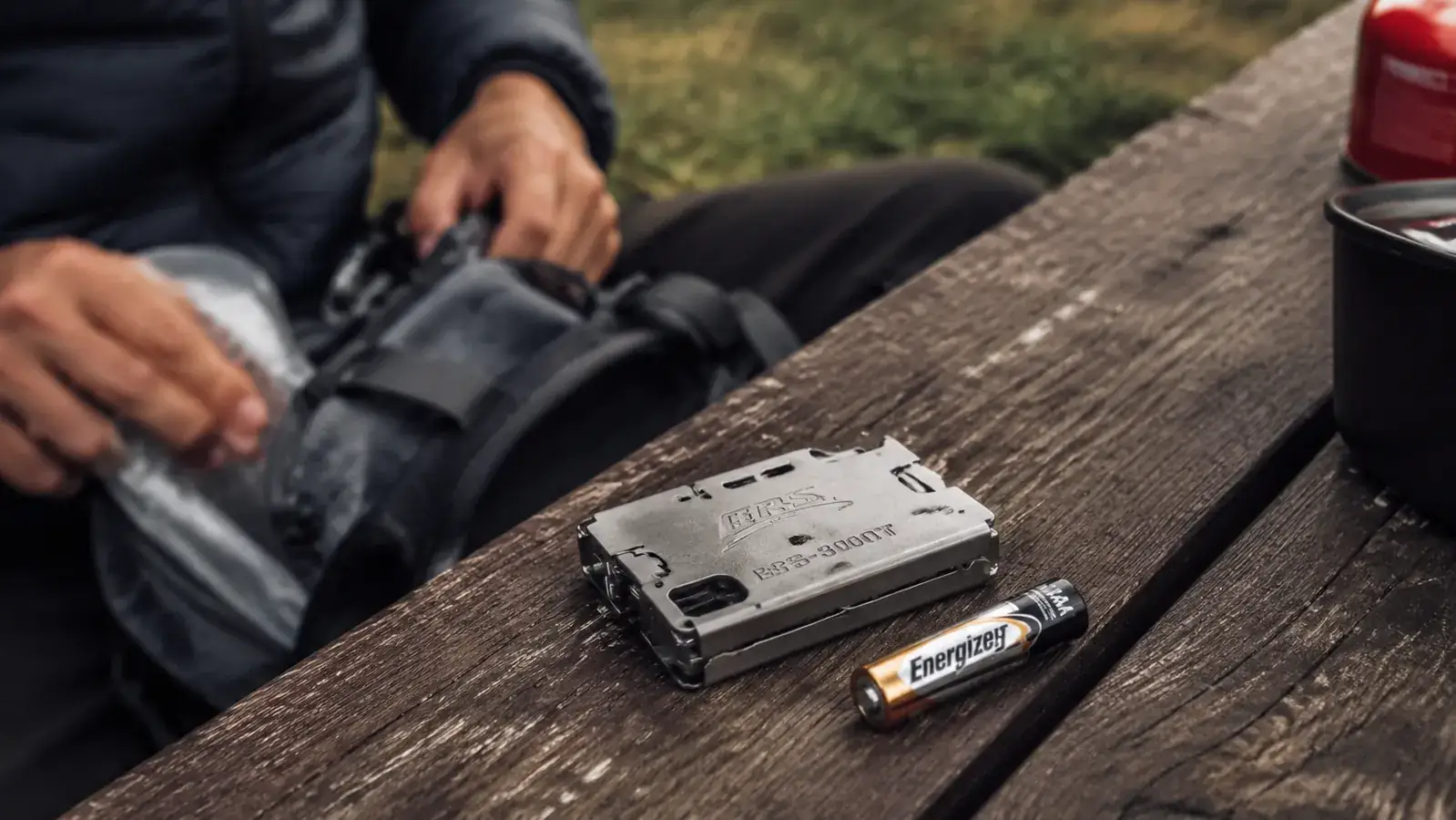
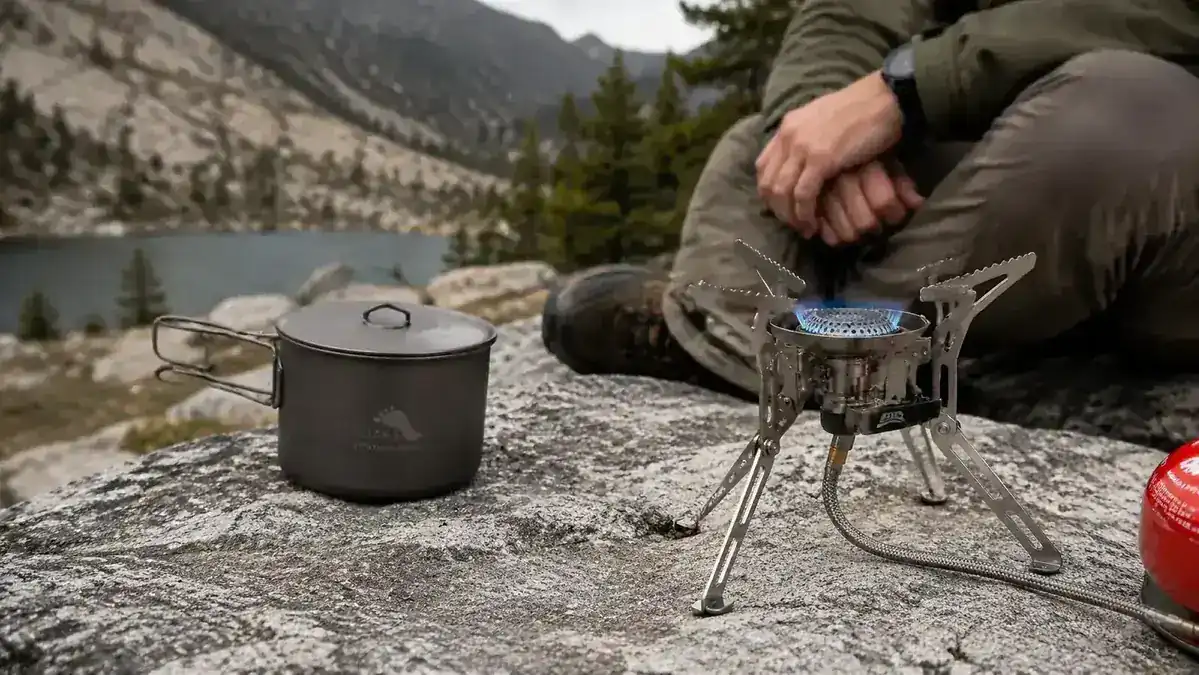
Twenty-six grams. That is approximately the weight of four sheets of printer paper. When I put it on my kitchen scale, I kept second-guessing the reading. The stove packs into a small drawstring case that fits in the palm of my hand. Setup takes about 10 seconds: unfold the pot supports, thread the stove onto a canister, and you are cooking. There are no clips, no secondary mechanisms, no parts to lose in the dark. After a 14-mile day when I am setting up camp by headlamp, the simplicity of this design is something I genuinely appreciate.
Simmer control is better than I expected. The valve turns smoothly and gives you a real range from low flame to full blast. I was able to rehydrate freeze-dried meals without scorching them, which is something I could not reliably do with a cheaper stove I used a few years ago. At full flame, water in a 700ml titanium pot hits a boil in about 3 minutes 30 seconds in calm air at sea level. At 10,000 feet in calm air, that stretches to about 4 minutes 15 seconds, which is in line with what every other canister stove at this price point delivers.
Stability is the one geometry concern I had before buying. The pot supports fold out to about 3.5 inches across, which is fine for a standard 700ml pot but starts to feel marginal with a 1-liter pot. I never tipped anything over, but I was careful about where I placed the canister on uneven ground. On rocky alpine terrain, I found myself spending an extra 30 seconds making sure the canister was on a flat spot before putting a full pot of water on. That is a reasonable tradeoff for the weight savings.
At 26 grams, this stove weighs less than the cap on my Nalgene. That is an absurd engineering achievement for something that actually works.
The Titanium Frame: What Holds Up and What You Should Know
Titanium is the right material for ultralight cookware and stoves. It does not corrode, it holds up under heat cycles, and it is strong relative to its weight. The BRS-3000T's frame is thin, and the folding pot support arms look delicate when you first handle them. After six months of use, none of those arms have bent or loosened at the pivot point. The finish is the same matte silver it was when new. The valve threads are still tight.
The piezo igniter is the weak point. It is a standard push-button igniter mounted on the side of the burner head and it produced reliable sparks for about 60 uses before becoming intermittent. It still clicks but does not always produce a spark on the first press. I spoke with three other BRS-3000T owners who reported the same pattern: somewhere between 50 and 100 uses, the igniter becomes unreliable. The fix is simple, just carry a lighter, but you should know this before your first trip so you are not caught unprepared. Treat the igniter as a convenience, not a system.
Fuel Efficiency at Cold Temperatures: The Canister Pressure Issue
All isobutane stoves, including this one, slow down as temperature drops. Below 40 degrees Fahrenheit, the canister pressure drops and your stove underperforms. This is not a BRS problem, it is an isobutane problem. But because the BRS-3000T has no pressure regulator (unlike some premium stoves), the performance drop at cold temperatures is more noticeable than on a regulated stove. In my September Colorado trip with overnight lows of 28 degrees, morning boil times were around 6 minutes instead of 3.5 minutes, and the flame was visibly weaker until the canister warmed up from the burner's own heat.
The workaround is simple: sleep with your canister inside your sleeping bag. A 230g canister is not big, and waking up to a warm canister in the morning makes a noticeable difference. The other option is to carry a canister that uses a propane blend, which performs better at lower temperatures. Most isobutane canisters on the market now use a propane-isobutane mix specifically because of this issue. I have had good results with both MSR IsoPro and Jetboil JetPower in cold conditions on this stove.
How It Compares to What I Used Before
Before the BRS-3000T, I used an MSR Pocket Rocket 2 for three years. The Pocket Rocket 2 weighs 73 grams, nearly three times as much. It also has a folding windguard built around the burner and a slightly more stable base. Over the course of a five-day backpacking trip, carrying the Pocket Rocket 2 instead of the BRS costs you 47 grams. That is not nothing, especially if you are already close to your target base weight. The Pocket Rocket 2 wins on wind performance and cold-weather consistency. The BRS wins on every other metric: price, weight, size when packed. If I am camping in a protected forest or valley site, I take the BRS. If I am doing a high-route trip above treeline in variable weather, I still reach for the Pocket Rocket 2.
I also briefly tested a cheap $8 stove from a brand I will not name. It lasted two trips before the valve started leaking. That experience is worth mentioning because some people assume all budget canister stoves are the same. They are not. The BRS-3000T is built to a genuinely different standard than the lowest-tier options. The quality shows in how the valve feels, how the pot supports lock into position, and how it has held up over dozens of cook cycles.
What I Liked
- 26 grams is genuinely, usefully light. Not a spec number, a real trail advantage.
- Setup takes 10 seconds with no clips or secondary mechanisms to fumble with.
- Simmer control is smooth and gives a real range from low to full heat.
- Titanium frame has held up through six months and dozens of cook cycles without any loosening or deformation.
- Price is low enough that carrying a second one as a backup on a long trip is realistic.
- Packs smaller than most camp spice kits.
Where It Falls Short
- Wind performance drops sharply above 8 to 10 mph without a separate windscreen.
- Piezo igniter becomes unreliable after 50 to 100 uses. Carry a lighter.
- No pressure regulator means noticeable performance drop at temperatures below 40 degrees Fahrenheit.
- Pot support spread is marginal for pots larger than 1 liter.
- The carrying case is a thin fabric drawstring bag, not a hard case. Fine for a pack, less good for a gear bin.
Who This Stove Is For
The BRS-3000T is the right stove for backpackers who cook in forests, at valley campsites, and at sheltered high sites where you can get out of the wind. It is the right stove for anyone who counts grams and cooks simple meals: boiling water for freeze-dried food, making coffee, heating a single pot. It is a solid choice for weekend trips and five-day trips alike, assuming you pair it with a foil windscreen for any exposed site. It is also an easy recommendation as a second stove for longer trips where you want redundancy without adding meaningful weight.
It is also the right stove if you are new to canister stoves and do not want to spend $60 to learn the basics. The learning curve is zero. If you have ever used a kitchen gas burner, you know how to use this stove. The only habit to build is checking that your canister is on a level surface before putting a full pot on it.
Who Should Skip It
If you camp primarily above treeline on exposed ridges and peaks where wind is a constant, invest the extra money in a stove with a built-in windscreen or a regulated burner. The MSR Pocket Rocket 2 and the Snow Peak LiteMax are both worth looking at if that describes your camping. Similarly, if you camp in consistently cold conditions, below 20 degrees regularly, a four-season stove with a remote canister and inverted-canister capability will serve you better.
If you cook complex meals that require sustained low heat for longer than a few minutes, a wider pot support and a stove with better stability at the base are worth the extra weight. The BRS-3000T is optimized for the most common backpacking cook task, which is boiling water, and it does that extremely well. It is not trying to be a backcountry kitchen.
The Bottom Line After Six Months
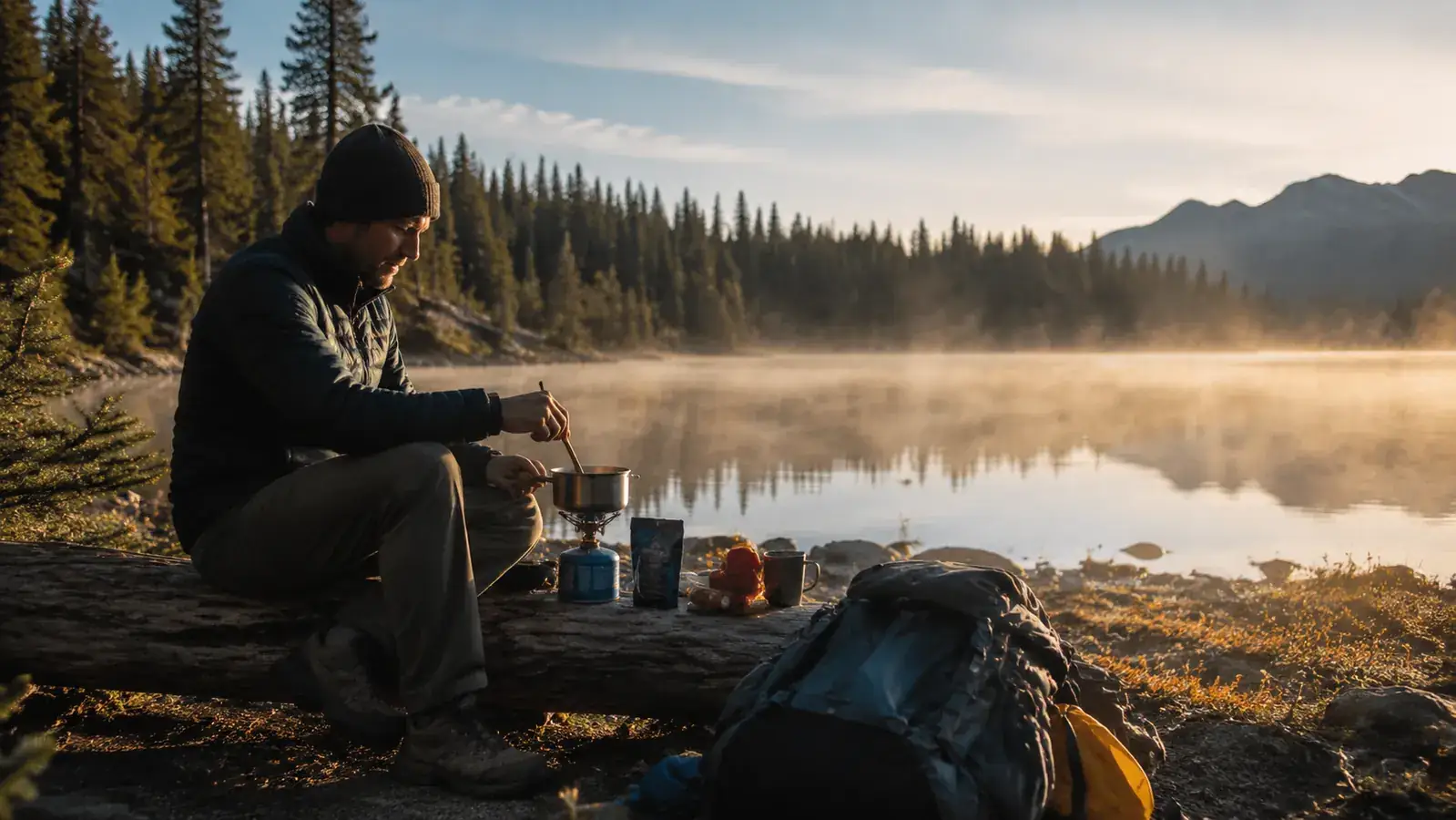
The BRS-3000T does what it says it does, at a weight that sounds impossible until you hold one. The frame is solid, the valve is smooth, and after six months of use I have no reason to stop trusting it for sheltered and semi-sheltered camping. The wind limitation is real and specific, and now that you know it, you can plan around it. Add a foil windscreen to your kit and the stove covers 80 to 90 percent of backpacking scenarios without compromise.
I still own my Pocket Rocket 2 for alpine trips. But the BRS-3000T goes in my pack for everything else, which is most of my camping. At current price, it is one of the easiest recommendations I make. See the long-term review for notes on how this stove performed across a full season of consecutive trips, including some specifics on fuel consumption across different elevations. If you are planning your first canister stove meal on the trail, the how-to cooking guide walks through the setup and techniques that make the most of a lightweight stove like this one.
You are already carrying too much weight. This is 26 grams that cooks your food.
The BRS-3000T is one of the lightest canister stoves made. It ships with a carrying case and works with any standard isobutane canister. Check today's price and current stock on Amazon.
Amazon Check Today's Price on Amazon →