
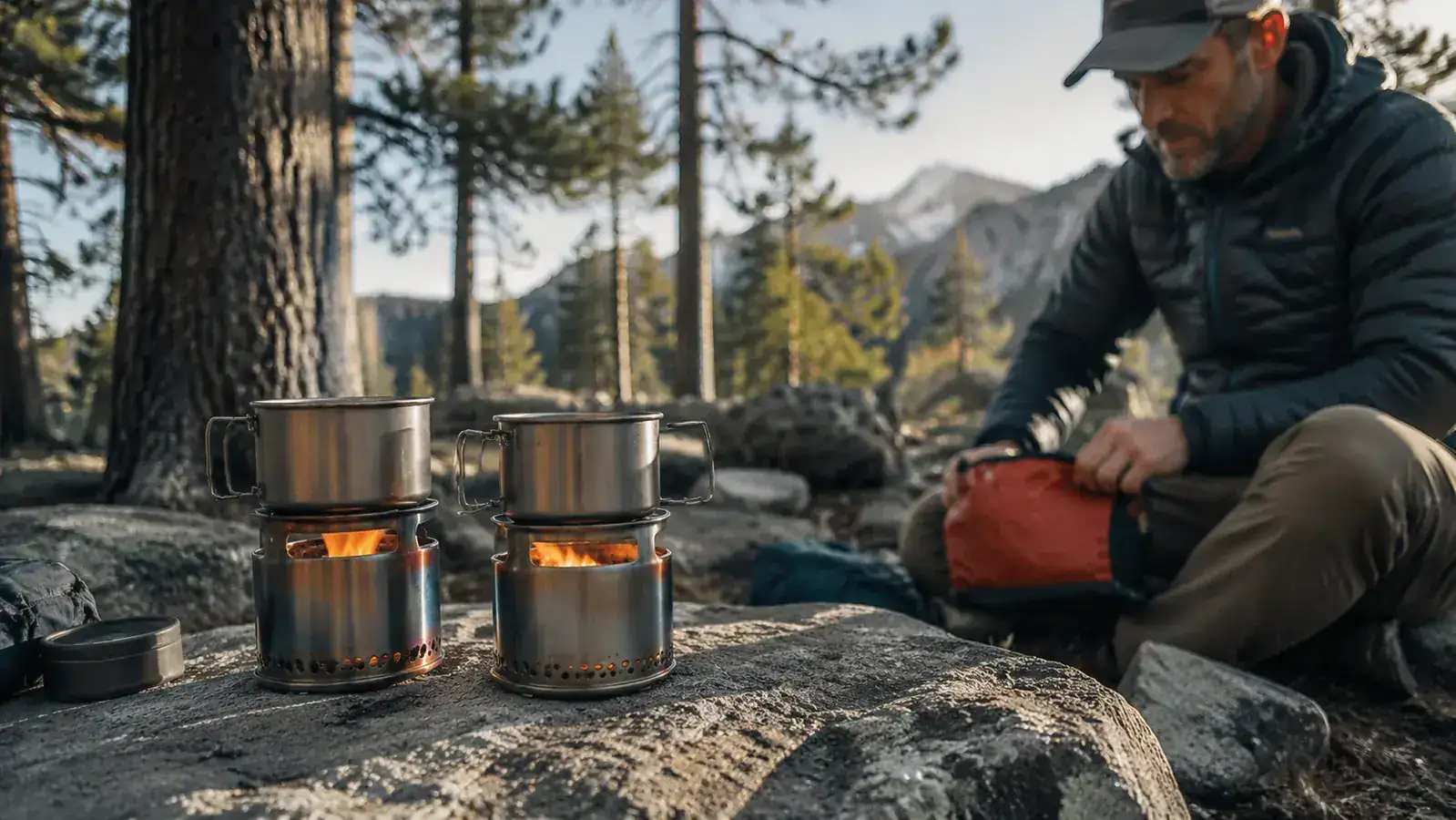
If you are shopping for an ultralight canister stove, you will eventually land on these two. The BRS-3000T is a 26-gram titanium burner that costs around $17. The MSR Pocket Rocket 2 is a 73-gram stainless steel burner that costs around $60. Both screw onto a standard isobutane-propane canister. Both will boil 500ml of calm-air water in roughly three and a half minutes. The question is not which one boils faster. The question is whether the MSR's extra weight, extra build quality, and extra cost matter for your specific trips.
I have put serious miles on both. The BRS lives in my ultralight kit. I borrowed a friend's Pocket Rocket 2 for two weeks of Sierra Nevada hiking last August so I could run them back to back with the same fuel canisters and the same pots. What follows is what I actually found.
| Spec | BRS-3000T | MSR Pocket Rocket 2 |
|---|---|---|
| Weight (stove only) | 26g (0.9 oz) | 73g (2.6 oz) |
| Current Price | ~$17 | ~$60 |
| Material | Titanium alloy | Stainless steel |
| Folded footprint | Roughly a half-dollar coin | Larger than a golf ball |
| Max BTU output | ~9,900 BTU/hr | ~8,200 BTU/hr |
| Wind resistance | Poor without a windscreen | Better, built-in pot supports angle inward |
| Simmer control | Usable but coarse | Precise, fine-grained valve |
| Build durability | Legs can spread or bend under heavy pots | Robust, no flex under any camp cookware |
| Warranty | No stated warranty | Limited lifetime warranty |
| Packability | Fits inside a 100g canister | Does not fit inside canister |
Going ultralight? The BRS-3000T ships with a carrying case and fits inside a fuel canister.
For thru-hikers and ounce-counters, this is the stove that is almost impossible to beat on a per-gram basis. Rated 4.6 stars across more than 4,400 reviews.
Amazon Check Today's Price on Amazon →Where the BRS-3000T Wins
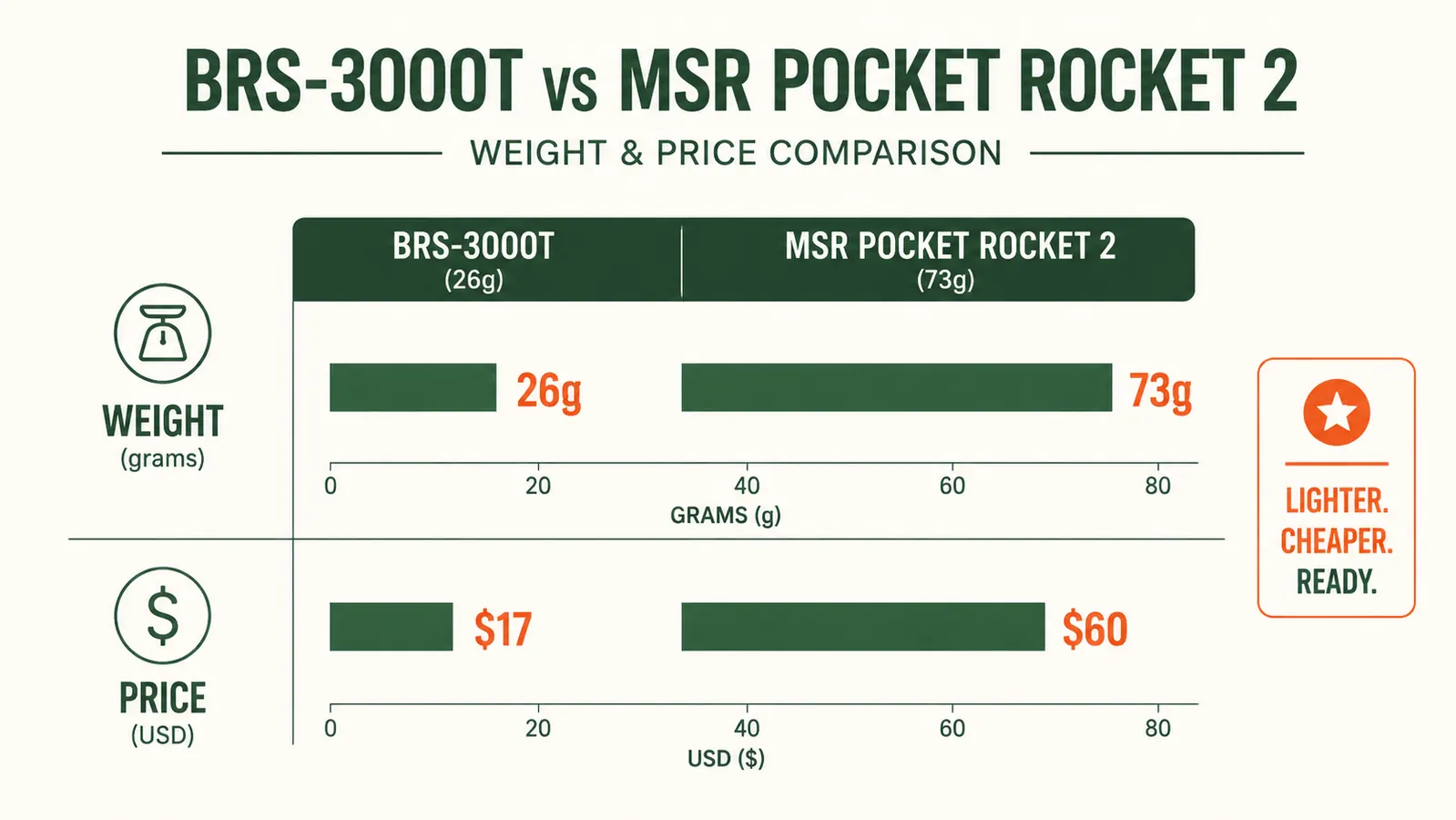
Weight is the obvious one. The BRS-3000T weighs 26 grams. The Pocket Rocket 2 weighs 73 grams. That is a 47-gram difference, which is roughly the weight of five quarters. That may sound meaningless in isolation, but on a multi-day backpacking trip where you are shaving grams from every category, 47 grams is significant. I did a full eight-day PCT section with the BRS in my kit and my stove-and-cookpot system came in at 132 grams total, including the pot. That would not have been possible with the Pocket Rocket 2.
Cost is the other clear win. At around $17, the BRS costs less than a dinner in a trail town. If you are brand new to backpacking and not sure whether you will stick with it, spending $17 to test whether you enjoy cooking on the trail before committing to a $60 stove is a completely reasonable decision. And if you are a veteran who already has a windscreen and wants a backup stove for your partner's pack, the BRS at this price is essentially disposable. I have bought two of them.
Packability also goes to the BRS. The folded stove fits inside a standard 100-gram fuel canister when the canister is empty, which means you can nest the stove inside the canister to save space. The Pocket Rocket 2 does not fit inside a canister. For ultralight setups where you are stuffing everything into a 35-liter bag, that nesting ability matters more than it sounds.
The BRS-3000T weighs 26 grams. My old car keys weigh more. That is the whole case for it, right there.
Where the MSR Pocket Rocket 2 Wins
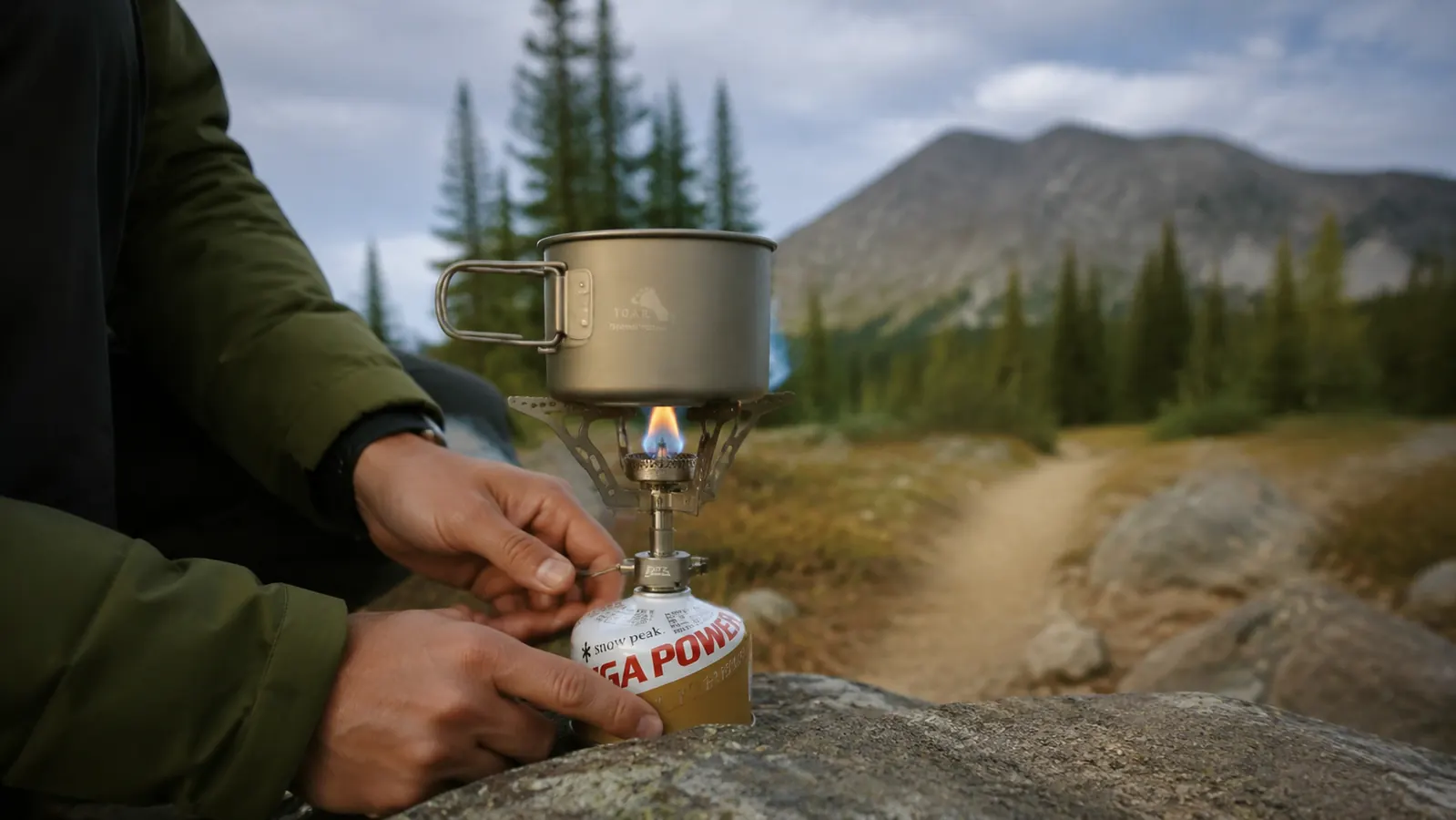
Wind resistance is real and it matters. The BRS-3000T is extremely sensitive to wind. Even a light breeze, maybe five to eight miles per hour, will extend your boil time significantly and can blow the flame out entirely. I carry a titanium windscreen when I use the BRS, which adds a few grams but is non-negotiable. The Pocket Rocket 2 handles moderate wind noticeably better. The pot supports are angled slightly inward, which creates a more sheltered flame zone. You can get away without a windscreen in light wind. On exposed ridgelines or in the desert where wind is constant, that difference matters.
Simmer control is where the Pocket Rocket 2 earns its price for certain cooks. The BRS valve is a quarter-turn job: full open, half, quarter, barely cracked. It works fine for boiling water and rehydrating freeze-dried meals, which is 90 percent of backcountry cooking. But if you want to actually cook, as in simmer a sauce or heat soup without scorching it, the BRS requires patience and baby-sitting. The Pocket Rocket 2 has a finer valve with a longer range of motion, which lets you hold a real simmer. If you cook actual backcountry meals rather than just rehydrating pouches, you will appreciate the difference.
Durability is the third leg. The BRS-3000T's folding legs are a known weak point. They are thin titanium, and they will spread under a heavy pot, specifically anything over roughly 750ml at full capacity with water inside. I have had a leg fold outward mid-boil, which tipped the pot and dumped my coffee. It did not happen again after I learned to set the canister on a flat surface and not bump it, but the Pocket Rocket 2's legs have never given me any concern regardless of how heavy the pot is. It also comes with a limited lifetime warranty. The BRS has no stated warranty.
Boil Time: Closer Than the Specs Suggest
In calm air at around 6,500 feet elevation with the same 450ml titanium pot and the same MSR fuel canister, the BRS-3000T boiled 500ml in 3 minutes 22 seconds on average across five tests. The Pocket Rocket 2 boiled the same volume in 3 minutes 41 seconds on average. The BRS has a slightly higher BTU rating and the titanium pot responded to it. The difference is under 20 seconds in calm air. In wind, the advantage disappeared entirely and sometimes reversed. Do not choose between these stoves based on boil time.
Fuel efficiency was essentially identical across my testing. Both stoves ran a 100-gram canister to empty cooking two meals and one coffee per day for three days of moderate use. Efficient combustion comes from the canister and fuel mix as much as from the burner design, so this comparison was roughly a wash.
What I Would Tell a First-Time Buyer
If you are coming from no stove at all and want to try canister cooking, start with the BRS-3000T. Buy a small windscreen at the same time, either titanium foil or the cheap aluminum kind. Use it every time. You will have a functional, capable ultralight stove for the cost of a hiking lunch. If after a season you find yourself wishing for better simmer control, or if you are regularly cooking in windy exposed terrain, that is the time to consider stepping up.
If you have been backpacking for a few years and you cook real meals in the backcountry, and especially if you do a lot of high-route or ridgeline camping where wind is a given, the Pocket Rocket 2 is a justified upgrade. It is not a $60 stove that performs like a $17 stove with a logo on it. It is a noticeably more refined piece of kit.
Who Should Buy the BRS-3000T
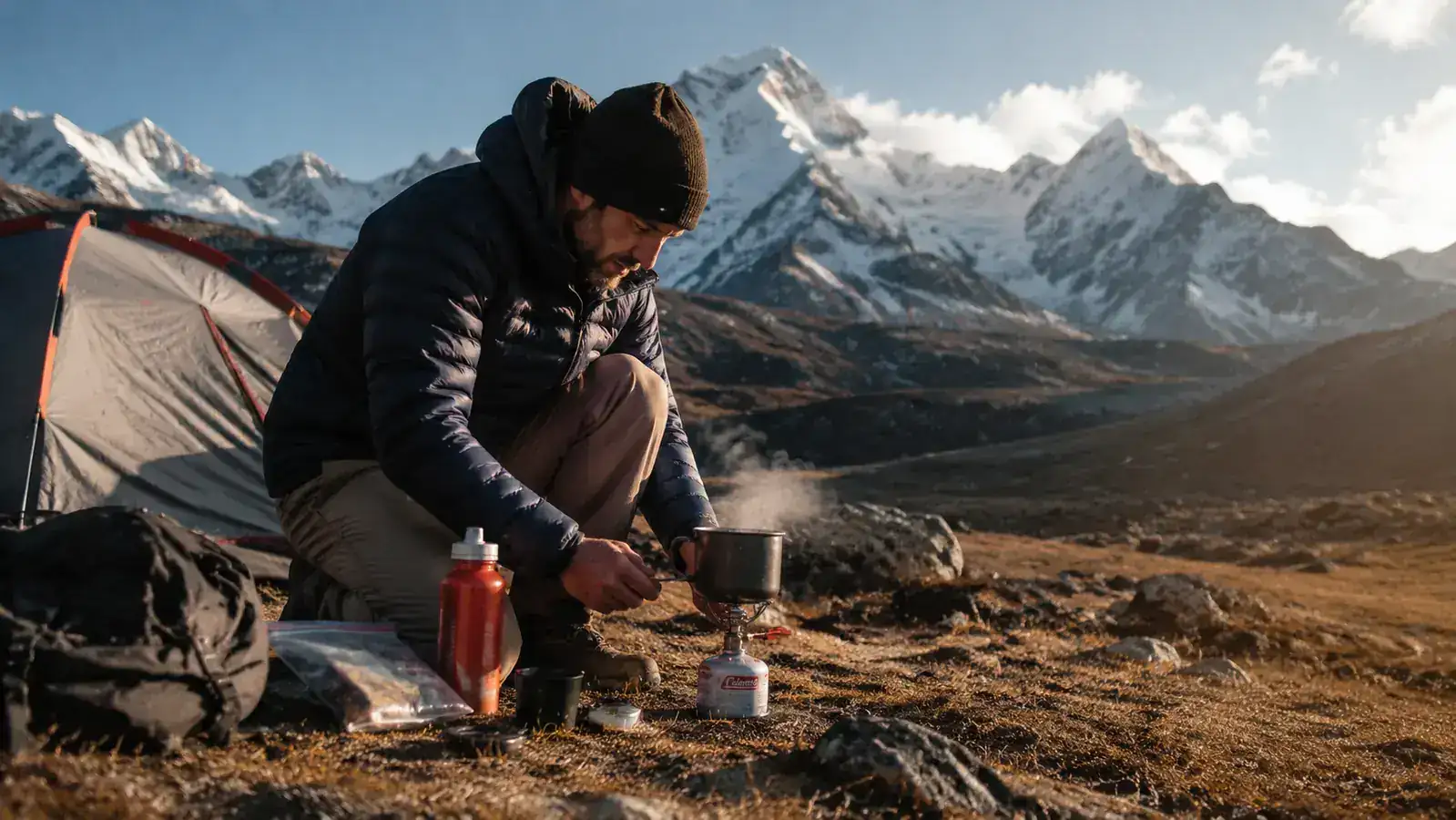
Buy the BRS-3000T if you are an ounce-counter building an ultralight kit where every gram is negotiated. Buy it if you are new to backpacking and not ready to commit to premium stove pricing. Buy it if you already own one stove and want a lightweight backup for a partner or for resupply box insurance. Buy it if your cooking on the trail consists mainly of boiling water for coffee, instant oatmeal, and freeze-dried dinners. That is most backpackers, by the way. The BRS will handle all of that without complaint for years if you treat the legs gently and always cook with a windscreen. It has 4.6 stars across more than 4,400 Amazon reviews for a reason.
Who Should Skip the BRS-3000T
Skip the BRS if you regularly cook in consistently windy conditions and do not want to fuss with a windscreen. Skip it if you cook actual meals that require a sustained, adjustable simmer. Skip it if you are rough on gear or if you use a large-capacity pot, something in the one-liter-plus range. The legs were not designed for heavy loads and they will show that over time. And skip it if the absence of a warranty keeps you up at night: the Pocket Rocket 2 has one, the BRS does not.
The BRS-3000T: 26 grams, $17, and it boils water. Most backpackers do not need anything else.
Over 4,400 reviews and a 4.6-star rating. Comes with a nylon carrying case. Fits inside an empty 100g canister.
Amazon Check Today's Price on Amazon →