
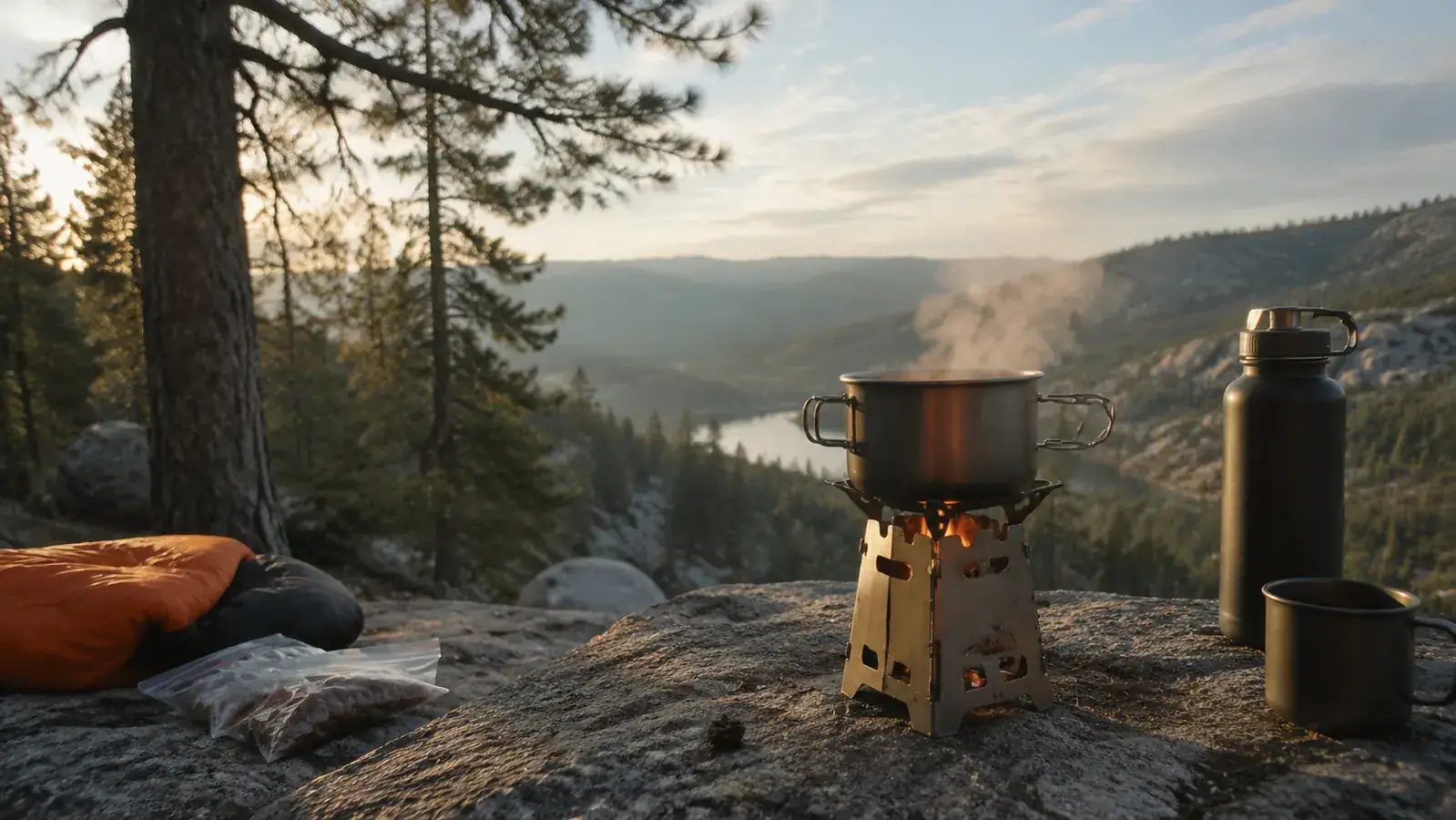
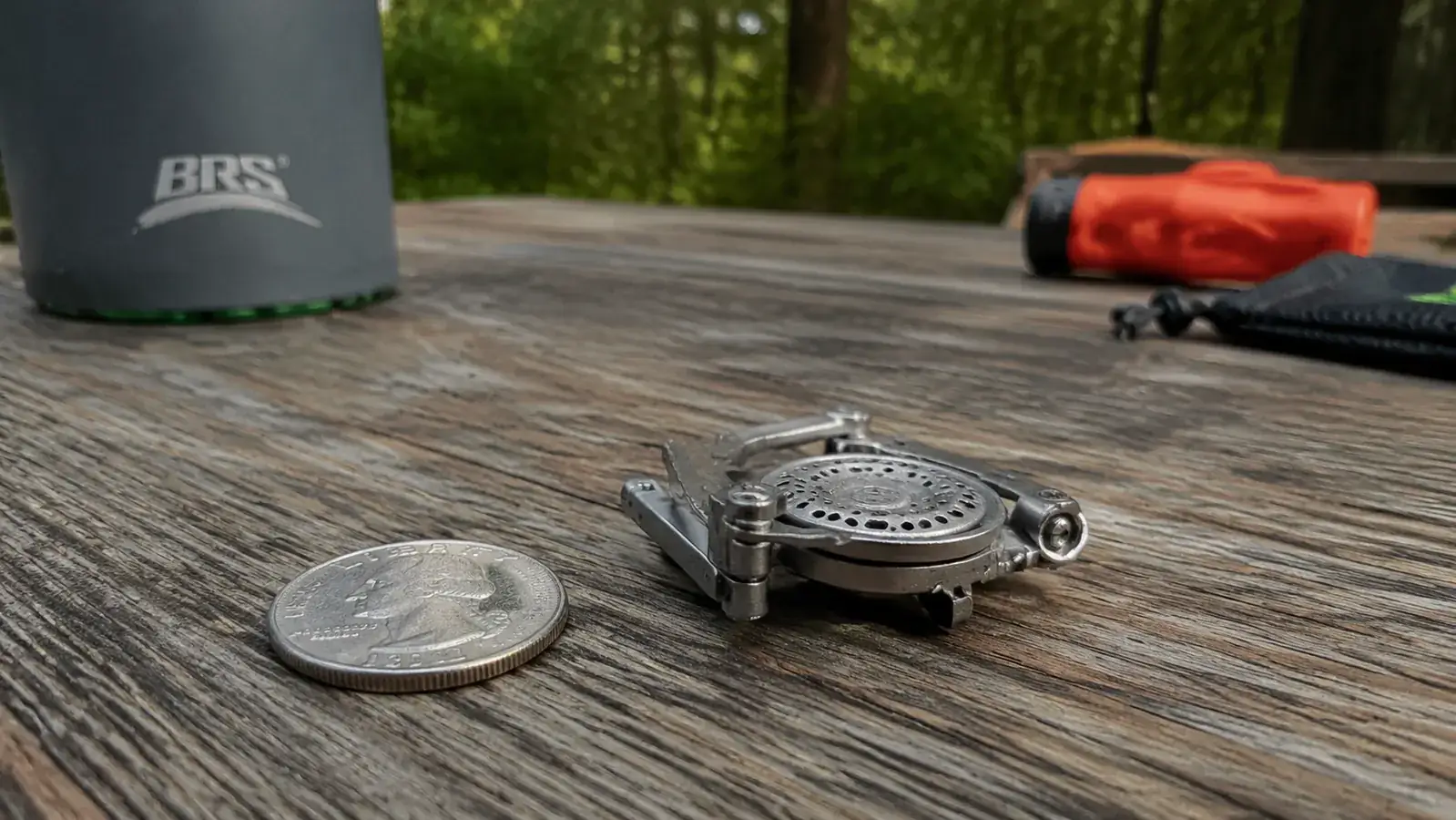
I picked up the BRS-3000T last spring after a buddy showed me his at the trailhead. He dropped it into my palm and I laughed. It felt like holding a paper clip. The thing weighs 26 grams, which is less than a AAA battery. I had been carrying an MSR PocketRocket Deluxe for three years and never thought twice about the weight, but watching him boil water in four minutes while I was still digging through my pack changed my thinking. So I ordered one, and I spent the next five months putting it through real trips: three overnight backpacks in the North Cascades, two car-camping weekends in Olympic National Forest, and one early-October solo at about 5,200 feet where the temperature at night dropped to 29 degrees.
The short version: the BRS-3000T does exactly what a backpacking stove needs to do, and it does it at a weight and price that make most competitors look overbuilt. But it has two real weaknesses that matter more on some trips than others, and I want to be clear about both of them before you order.
The Quick Verdict
The lightest canister stove you can buy that actually works well in calm to moderate conditions. Wind and cold are its limits. Know those limits and it earns its spot in every pack.
Amazon Check Today's Price →If pack weight is your bottleneck, a 26-gram stove changes the math fast.
The BRS-3000T consistently sells for under $20. Check today's price and availability on Amazon before the next trip.
Amazon Check Today's Price on Amazon →How I Tested It
I cooked two meals a day on every trip: coffee or oatmeal in the morning, a dehydrated dinner at night. I used a 450ml titanium pot on the BRS and measured boil times with a phone stopwatch. Water temps at the start of each test were roughly 55 to 60 degrees F, which is cold-tap-water temperature and a reasonable simulation for water pulled from a stream or filtered through a Sawyer Mini after sitting in a pack for a few hours. I kept a 110g isobutane canister as my reference canister across early-season tests, then switched to a fresh 230g when I wanted to rule out low-fuel variables in the October trip.
I also deliberately did not windscreen every test. Some mornings I cooked in dead-calm conditions in a tent vestibule. Others I set the stove on a rock at a ridge camp where there was a consistent 8 to 10 mph breeze. I wanted to see the actual difference, not optimized lab conditions. Those wind tests told me a lot more about this stove than the calm-weather tests did.
For comparison context, I ran the same boil tests on my MSR PocketRocket Deluxe during the same season. Weight of the MSR: 83 grams. It's the direct apples-to-apples. I'll reference those numbers throughout.
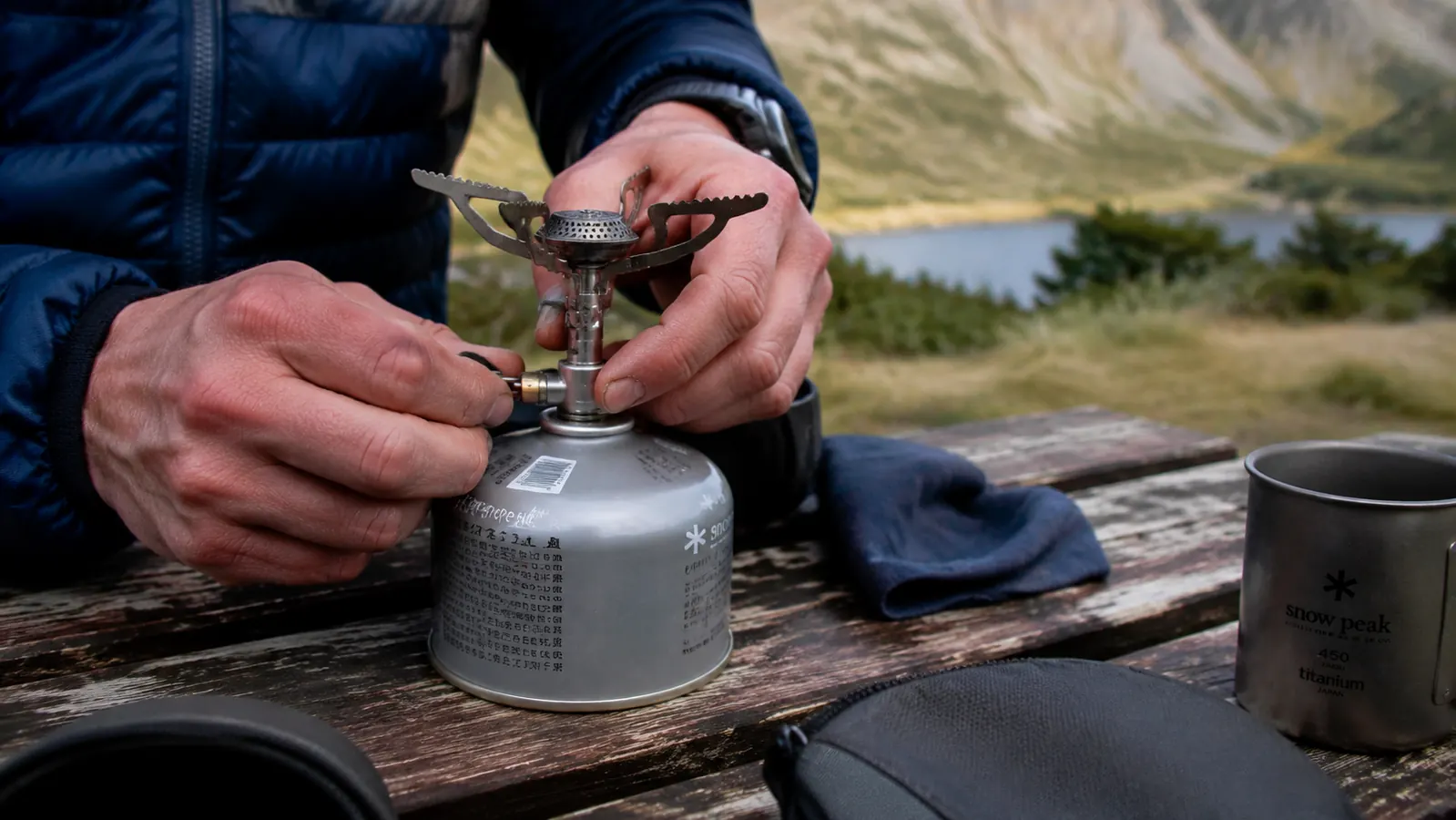
Boil Times and Flame Control: Better Than You'd Expect for the Price
In calm conditions, boiling 500ml of 58-degree water, the BRS-3000T averaged 3 minutes 44 seconds across six tests. My MSR averaged 3 minutes 29 seconds under identical conditions. That 15-second gap is not meaningful in the field. You are not going to notice it.
The flame valve is precise enough for simmering, which surprised me. I made scrambled eggs from a freeze-dried bag on two trips and was able to hold the flame low without everything scorching. Cheaper canister stoves tend to have a dead zone between full blast and off, but the BRS valve gives you enough granularity to actually cook, not just boil.
The pot supports fold out into a three-arm configuration that holds a pot up to about 700ml without any wobble I could detect. I never had a pot tip on flat ground. On uneven granite I picked my spots carefully, same as I would with any stove. The wire arms are thin, which does make you nervous the first time, but they held firm across five months.
Wind Performance: The Honest Part Most Reviews Skip
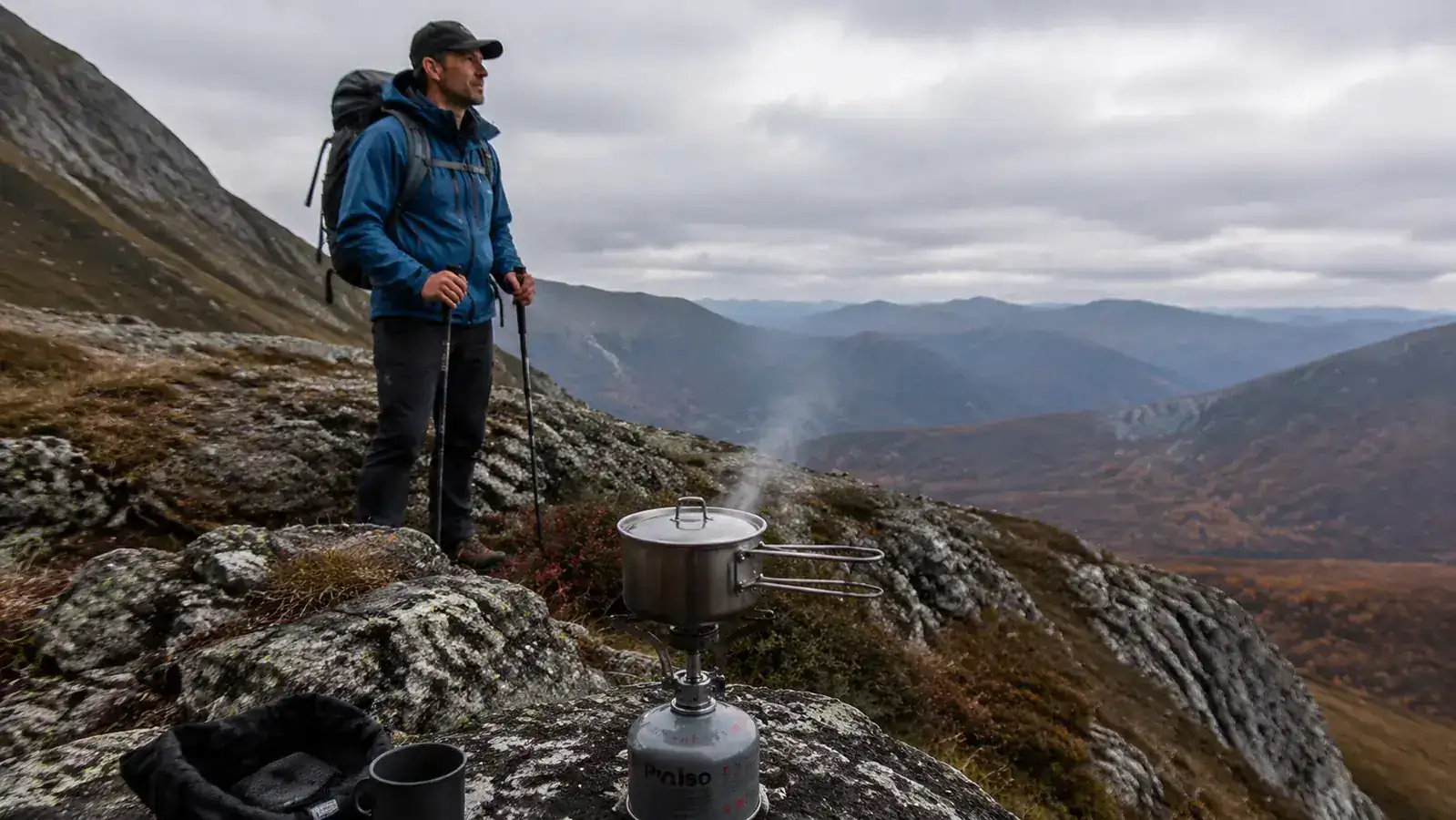
Here is where the BRS-3000T shows its limits. In an 8 to 10 mph crosswind, boil time stretched to 6 minutes 20 seconds and fuel consumption jumped noticeably. The flame was blowing sideways and wrapping around the pot inefficiently. The MSR, with its built-in windshield around the burner head, went from 3:29 to 4:05 in the same conditions. That is the real cost of the minimalist design: no integrated wind protection at all.
The fix is simple and cheap. A foil windscreen that wraps around the pot and canister costs almost nothing and adds roughly 8 grams to your kit. With a windscreen, the BRS-3000T's windy-day performance comes back to near-calm numbers. I started keeping one folded in my cook kit and stopped thinking about wind as a problem. But if you are expecting to just set the stove down and light it in any conditions without a windscreen, this stove will frustrate you.
In dead-calm air the BRS-3000T is as capable as stoves that cost three times as much. The gap only opens when the wind does.
Cold-Weather Performance: One Real Concern
The October solo at 5,200 feet was a real test. At 29 degrees overnight, I woke up to a canister that had been sitting outside the sleeping bag. Isobutane-propane blends (the standard for most canisters) lose pressure as temperature drops, and a cold canister means reduced output. This is not unique to the BRS, it is a property of canister fuel in general. But because the BRS has no regulated output (unlike pricier stoves with pressure regulators), you feel the drop immediately. Boil time at 29 degrees with a cold canister was 7 minutes for 500ml, with the flame visibly weak.
The easy workaround is to sleep with your canister in the sleeping bag when temps are near or below freezing. A 100g canister is small enough that this is not a hardship, just a habit. I do it now automatically. But if you frequently camp in sub-freezing conditions and do not want to think about canister management, a stove with a pressure regulator (like the MSR Reactor or the Soto Windmaster) handles this more gracefully.
For three-season backpacking, which covers most weekend warriors in the continental US, this is a non-issue. The October trips were the edge of what I would call reasonable BRS conditions, and it performed fine with the sleeping-bag canister habit.
Build Quality and Durability After a Full Season
The stove is titanium alloy, which means it is light and corrosion-resistant but not indestructible. The pot support arms are the part I watched most carefully. After five months and roughly 60 cook sessions, they are still straight, still lock into position, and show no cracks or deformation. The igniter, if you get a version with one, is not worth trusting. Light it with a lighter every time and skip the igniter entirely.
The thread connection to the canister is the other thing to monitor. Canister stoves live and die by that connection, and the BRS threads have been consistent across every canister brand I used, including Jetboil, MSR, and Optimus canisters. No cross-threading, no leaks detected with a lighter flame swept around the connection before lighting.
One real fragility: the folded stove is small enough that it can shift inside a stuff sack and bend a pot arm if you pack it loose with heavy items on top. I keep mine in a small nylon pouch from a stuff sack and have never had an issue. The stove does not come with a case, which is a minor omission at this price point.
What I Liked
- 26 grams is genuinely remarkable, lightest canister stove class available
- Boil times match stoves costing 3x more in calm conditions
- Precise flame valve for actual simmering, not just boiling
- Titanium construction shows no corrosion or wear after a full season
- Under $20 street price makes it low-risk to try
- Screws onto standard Lindal-valve canisters from any brand
Where It Falls Short
- No integrated wind protection, requires a separate windscreen in any breeze
- Cold-canister output drops sharply below freezing without sleeping-bag storage habit
- Pot support arms are thin enough to feel fragile, though mine held fine
- No included storage case, small enough to lose easily in a pack
- Built-in igniter (on some versions) is unreliable, always carry a lighter
How It Compares to the MSR Pocket Rocket 2
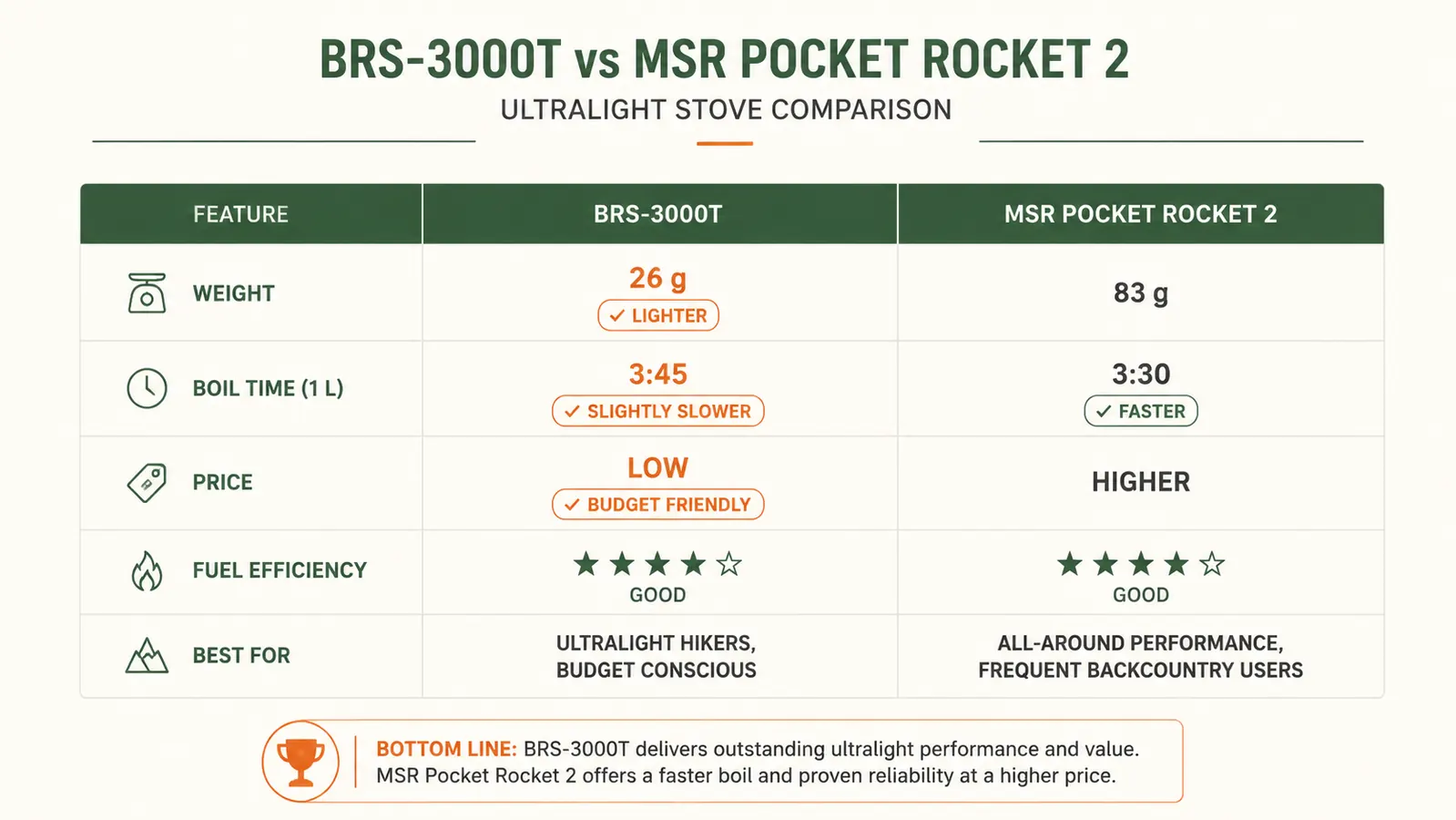
I want to give this comparison honest numbers because it is the question everyone asks. The MSR Pocket Rocket 2 weighs 83 grams, the BRS-3000T weighs 26 grams. That is a 57-gram difference, which sounds small until you multiply it by everything else you are trying to shave. If you are running a base weight under 12 pounds, 57 grams on a stove matters.
The MSR wins on wind performance thanks to a partial integrated windshield around the burner. It also has a slightly better cold-weather track record because the burner design puts the flame closer to the pot bottom for more efficient heat transfer. But in calm to light-wind conditions with a fresh or warm canister, a side-by-side test produces boil times within 15 seconds of each other. That is not a meaningful real-world gap.
The MSR costs roughly $60 at current retail. The BRS runs around $17. If you camp in calm weather, at lower elevations, or in three seasons, the BRS is the rational choice. If you regularly do high-altitude, exposed-ridge camping in variable weather and want a stove that demands less management, the extra weight and cost of the MSR or the Soto Windmaster is justified. There is no single right answer, but there is a right answer for each person's specific trips.
Who This Is For
The BRS-3000T is the right stove for the backpacker who cooks boil-and-eat meals (dehydrated dinners, instant oatmeal, coffee), camps in three seasons at elevations below 9,000 feet, and is willing to use a foil windscreen in breezier conditions. It is also the right first canister stove for someone moving away from car-camping propane setups who wants to learn ultralight cooking without spending $60 to start. At this price, you are not taking a big financial risk on a new skill.
Who Should Skip It
If you regularly camp above 10,000 feet in shoulder seasons, deal with sustained wind regularly, or sleep in sub-freezing temps without the discipline to babysit canister temperature, the BRS-3000T will require more management than you want. The Soto Windmaster at 67 grams gives you pressure regulation and a better windscreen for about $80. The added weight is still light by any measure, and the reduced fussiness on exposed terrain is worth it for that type of trip. Also skip the BRS if you cook anything that requires actual sustained low-heat simmering, such as real meals from a pot rather than rehydrated bags. The valve is better than most at this price, but not as precise as a dedicated cooking stove.
Still the best 26-gram answer to 'what stove should I carry?'
Five months and dozens of cookouts later, the BRS-3000T is still in my pack for every trip where wind is not the main factor. Check today's price and current availability on Amazon.
Amazon Check Today's Price on Amazon →