
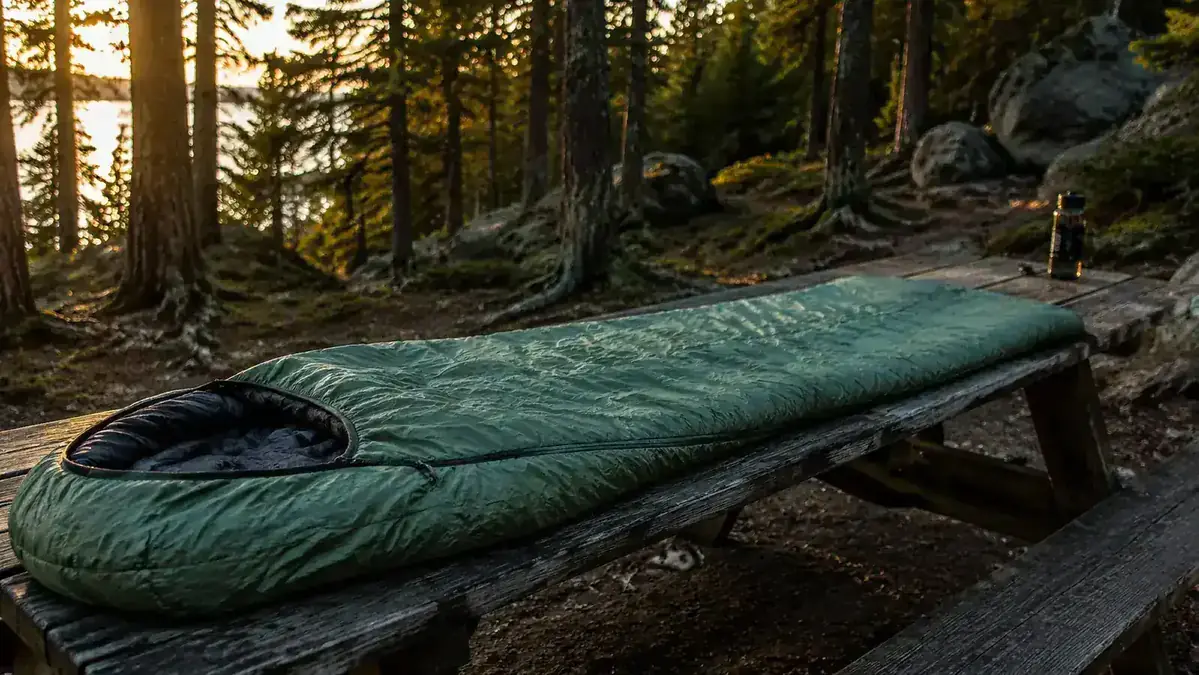
Here is what I noticed before I bought the Teton Sports Celsius 20F: the Amazon listing had 3,579 reviews and a 4.3-star average. Here is what I also noticed: a meaningful chunk of the one- and two-star reviews mentioned the same three complaints. The zipper snags on the liner fabric. The bag runs warm in the 30s but leaves you shivering when temps actually touch 20. And it weighs more than the listing suggests once you factor in the compression sack. I flagged all three of those things before I ordered it. Then I bought it anyway, because I needed a spare bag for a car camping trip to the Uintas in early October, and the current price made it the obvious call for that use case. Two seasons later, I can tell you which of those complaints held up and which ones were people misunderstanding what a bag in this price category is built to do.
This review is not going to tell you the Teton Sports Celsius is the best sleeping bag ever made. It is not. It is a synthetic-fill mummy bag that is widely available, reasonably priced, and designed for people who car camp in shoulder seasons. If you buy it expecting it to perform like a $300 down bag at genuine 20-degree temperatures, you are going to be cold and annoyed. If you buy it for what it actually is, you will probably be happy with it. That distinction is the whole review.
The Quick Verdict
A competent, durable synthetic mummy bag for car camping in the 28-to-45 degree range. Not a true 20F performer for cold sleepers, heavier than it looks, but the zipper issue is overblown if you know how to work it.
Amazon Check Today's Price →If you sleep cold, read the temperature section below before you buy.
The Celsius 20F is a good bag in the right context. Check today's price on Amazon and verify the size options available.
Amazon Check Today's Price on Amazon →What I Actually Tested and How
I bought a large-size Teton Sports Celsius 20F in the green colorway. I am 6-foot-1, 195 lbs, and I run cold. I tested the bag across two trip types: car camping in Utah with overnight lows in the high 20s to mid-30s, and a single hammock camping night in the Ozarks in late November where temps dropped to 24 degrees by 4 a.m. I also loaned it to two friends on different trips: one who runs warm and sleeps in a t-shirt, one who is a notoriously cold sleeper who piles on base layers.
I am not a lab. I did not use a core temperature monitor or run controlled sleep studies. What I can tell you is what I experienced across a dozen nights and what my two test subjects reported back. That is the kind of data that is actually useful when you are trying to decide if a bag is right for you.
I also want to be clear that I used the bag without a sleeping bag liner, which is an important variable. A fleece liner adds roughly 5 to 10 degrees of warmth. Anyone who finds themselves too cold in this bag should try a liner before concluding the bag is wrong for them.
The Temperature Rating: What 20 Degrees Actually Means Here
Temperature ratings on sleeping bags are standardized using the EN 13537 or ISO 23537 protocol. Teton Sports does not publish a standardized EN rating for the Celsius line. The 20F figure is a manufacturer's comfort estimate, which is a different thing. In plain terms: the 20F is probably a survival rating, not a comfort rating. You will not die at 20 degrees in this bag, but you will likely be cold.
My personal experience: at 28 degrees, I was comfortable in a base layer and light fleece midlayer. At 24 degrees in the hammock, I was cold enough that I woke up twice and eventually added a synthetic puffy over my torso on the inside of the bag. My warm-sleeping friend reported being comfortable at 25 degrees with nothing but briefs. My cold-sleeping friend reported being too cold at 30 degrees. That spread tells you everything you need to know. If you sleep warm, this bag might genuinely perform near its rating. If you sleep cold, add 10 to 15 degrees to whatever the label says and buy accordingly.
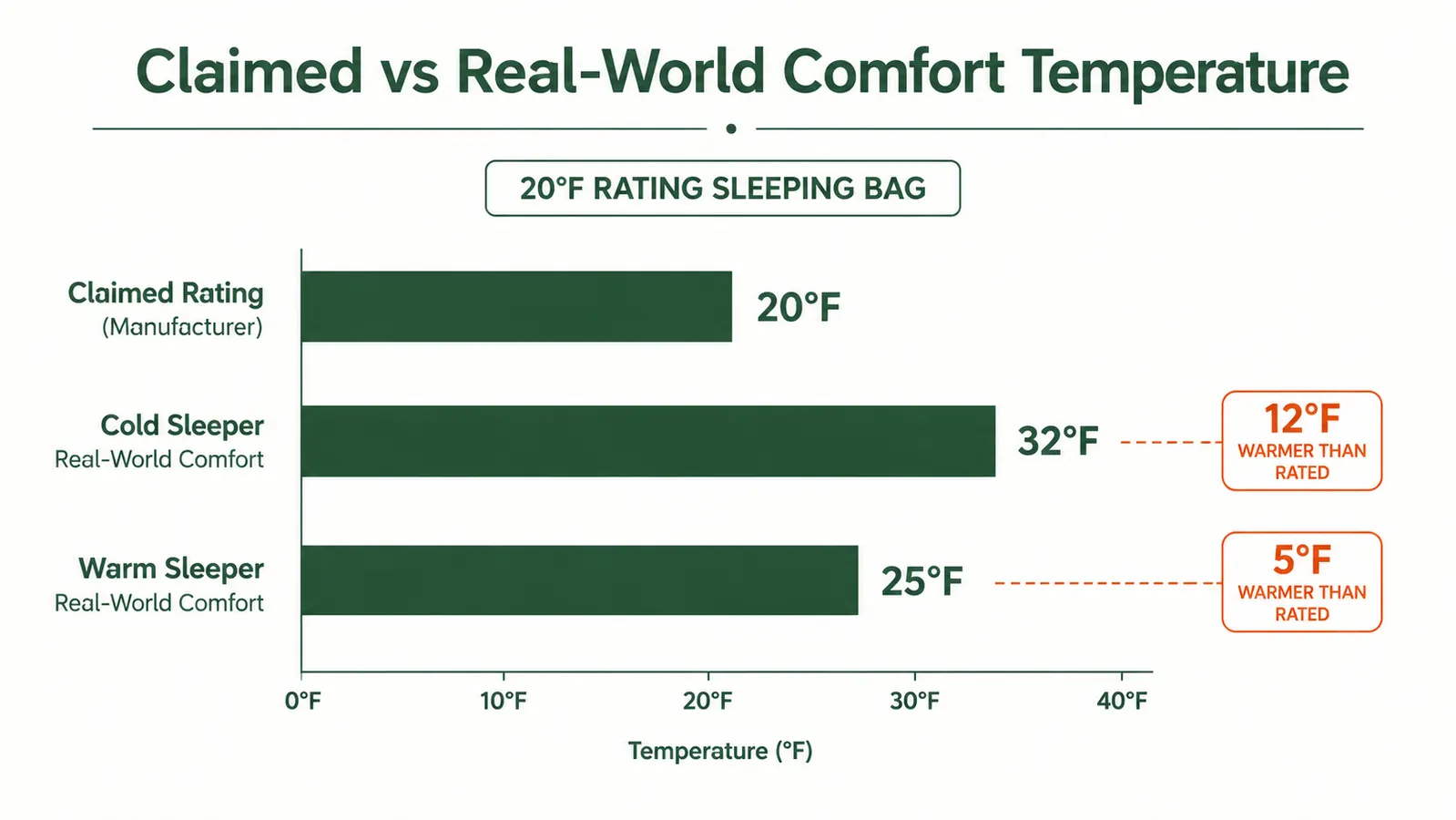
The practical upshot: for most car campers in the 28-to-45 degree range, this bag does the job. It is excellent for spring and fall camping where nights dip into the low 30s but rarely go below freezing. Use it for summer in the Rockies, shoulder season in the Southeast, or family camping where you are not pushing your limits. Do not use it as your primary bag for sub-20 winter camping unless you are stacking a liner, wearing full base layers, and accepting that you might be uncomfortable.
The Zipper Situation: Overblown or Legitimate Problem?
The zipper complaints in the one-star reviews are real, but they are also partly a technique problem. The YKK-style zipper on the Celsius runs along the left side of the bag and has a dual-pull design so you can zip from head to foot or foot to head. The liner fabric inside the bag is not cut back far enough from the zipper track, which means if you yank the zipper quickly, you will catch fabric in the teeth. I did this twice. Once, I freed the fabric by pulling the slider back toward the foot of the bag and working it loose. The second time, I had to use a toothpick and two minutes of patience.
After those two incidents, I changed my approach: zip slowly, keep slight tension on the inner liner with your free hand, and pull the zipper just fast enough to keep moving. Zero snags since then across a couple dozen more zipper cycles. The bag also has an anti-snag guard along the interior zipper track that is useful once you know to use it. The honest verdict: the zipper is the weakest part of the bag, and it requires a little attention. People who expect to yank it open at 2 a.m. half-asleep without incident will be frustrated. People who learn the technique will not have a problem.
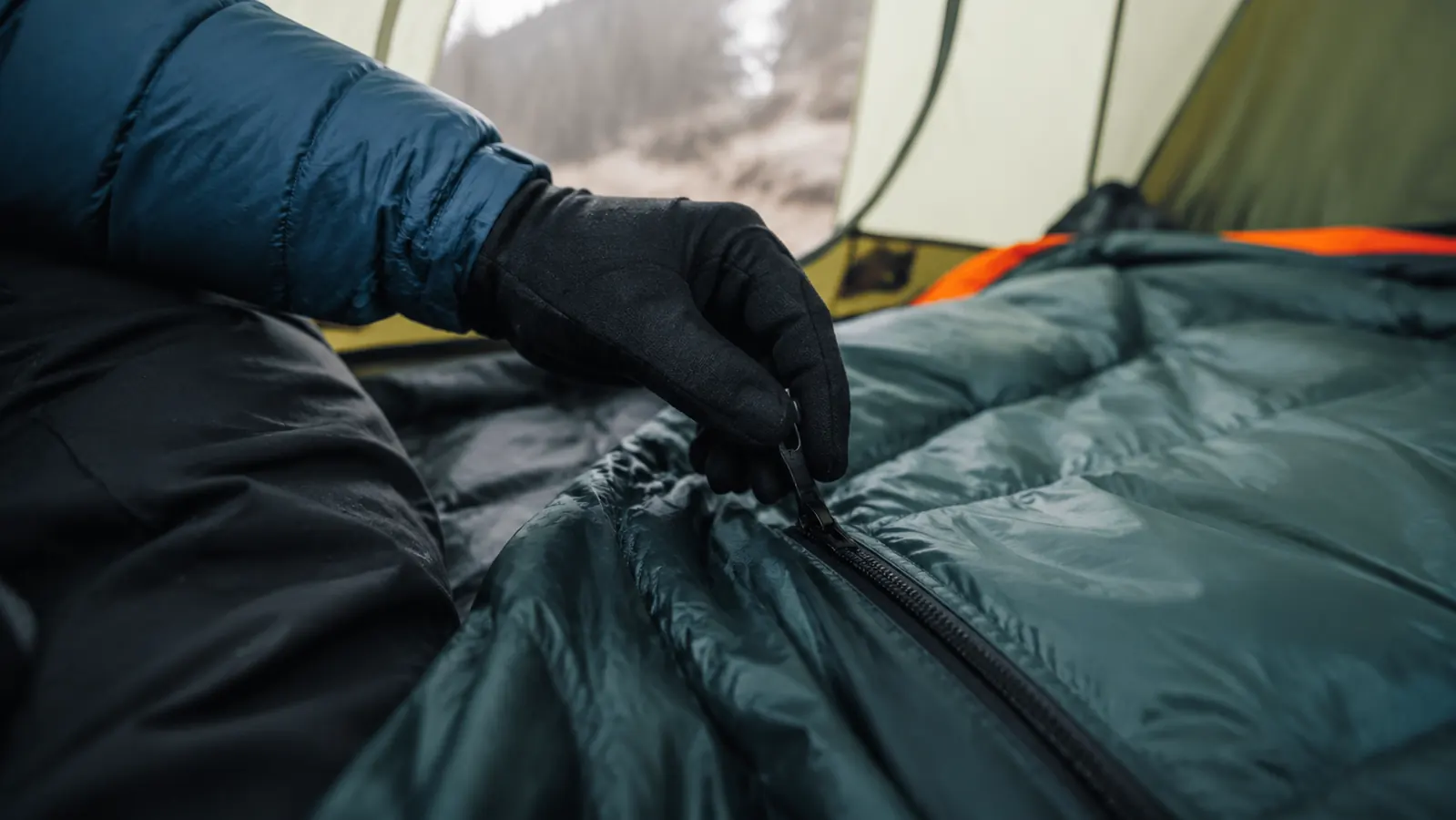
The zipper requires a little technique. Once you learn it, I have not had a single snag in two seasons. The people who hate this zipper are yanking it. Stop yanking it.
Weight and Packability: The Part Nobody Talks About Enough
The Celsius 20F in the large size weighs 4 lbs 7 oz on my kitchen scale. The listing says 4 lbs 6.6 oz, so Teton is being honest about the weight. What they do not emphasize is that this is a heavy bag for a mummy design. For context, a comparably warm down mummy bag from a mid-tier brand would come in around 2.5 to 3 lbs. You are carrying nearly two extra pounds compared to a down alternative.
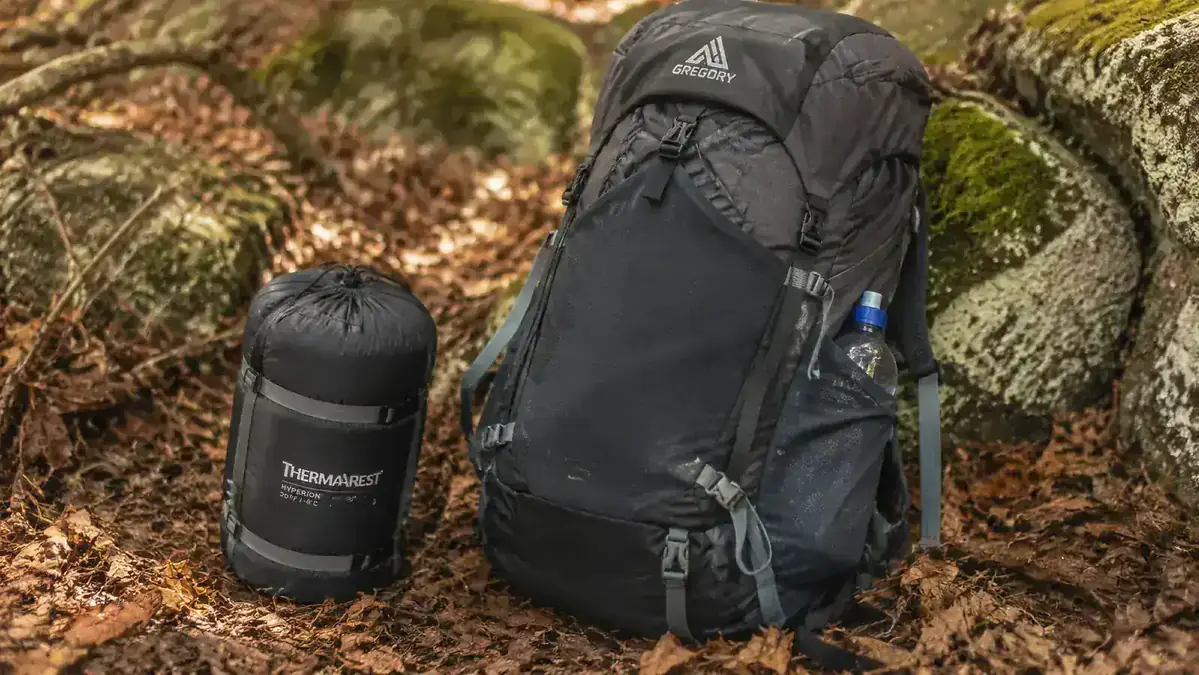
The compression sack brings it down to a manageable size for a car camping duffel or a rooftop cargo carrier, but do not expect to stuff it into a backpack's sleeping bag compartment and have room for anything else. I tested it in the main compartment of a 60-liter pack and it took up roughly a third of the interior. For a backpacking trip, this is the wrong bag. For car camping, the weight is completely irrelevant because you are not carrying it on your back.
The synthetic fill does have a meaningful advantage over down that is worth noting for car campers specifically: it stays warm when wet. If you camp somewhere humid, condensation is a real issue, and a down bag that gets damp loses warmth fast. The polyester hollowfiber fill in the Celsius holds most of its loft even when the outer shell picks up moisture. That is a genuine advantage for the Pacific Northwest, the Southeast in spring, or anywhere you are camping with high humidity or rain risk.
Construction Details Worth Knowing
The shell is a 250T diamond weave polyester that feels durable without being stiff or crinkly. After two seasons, I have no snags, no delamination, and no visible wear on the shell. The hood is adjustable via a simple drawcord and fits snugly around my head without pressing against my face. The foot box is boxed stitched, which matters for warmth because non-boxed stitching creates cold spots at the seams where fill is compressed to nothing. Teton gets this right.
The internal pocket near the top of the bag is useful for a phone or small flashlight. It is about the size of a credit card folded over, so do not expect to store anything bulky in there. The shoulder collar has a nice amount of fill and cinches decently, which helps retain heat around the neck area where most body heat escapes in a mummy bag.
One small thing I appreciated: the stuff sack compresses from both ends using a dual-cinch system. This makes it faster to get the bag tightly packed compared to single-end stuff sacks. Not a major feature, but it is the kind of small-detail decision that tells you the designers actually use camping gear.
How It Compares to the Coleman Brazos (Without Buying Both)
The Coleman Brazos is the other budget cold-weather bag that comes up in the same searches. I have not personally owned a Brazos, but two friends have, and I have slept in one. The Brazos is a rectangular bag with a fleece lining. It is more comfortable if you are a restless sleeper who kicks around, because a mummy bag will spin with you and the hood positioning gets disrupted. The Brazos also zips fully open to use as a blanket, which is genuinely useful for family camping and car camping where you want flexibility.
What the Celsius does better: it is warmer per pound because the mummy shape retains more body heat. It packs down smaller. The shoulder collar and hood are meaningfully better for cold nights. If you are camping in genuinely cold temperatures and warmth is the priority, the Celsius wins. If you are car camping in mild temperatures and want versatility and comfort, the Brazos is a reasonable alternative. You can find a full comparison in my Teton Sports Celsius vs Coleman Brazos breakdown.
What I Liked
- Holds warmth even when damp, unlike down bags in humid conditions
- Boxed foot construction eliminates cold spots at toe seams
- Shell fabric shows no wear after two full seasons of use
- Dual-end compression sack packs faster than single-end designs
- Shoulder collar and hood actually cinch down well for heat retention
- Available in multiple sizes including long and large-long for taller campers
Where It Falls Short
- Zipper snags on liner fabric if pulled too quickly, requires technique
- Not a true 20F comfort bag for cold sleepers, add 10-15 degrees for realistic planning
- 4 lbs 7 oz is heavy for a mummy bag, not suited for backpacking
- No EN or ISO temperature certification, so the 20F rating is unverified
- Compresses to a cylinder that is too bulky for most backpack sleeping bag compartments
Who This Is For
Car campers who need a reliable mummy bag for shoulder-season use. People who camp in humid or rainy environments where down is a liability. Families outfitting a spare bag for a kid or a guest who joins a trip once or twice a year. Anyone who needs a functional cold-weather sleeping bag and is not willing to spend $200 for one. Cold-weather car campers who sleep warm. Folks who do a mix of car camping and cabin stays where the bag might sit in a corner for weeks at a time before getting used again.
Who Should Skip It
Backpackers who care about weight and pack volume. Cold sleepers who need genuine sub-25-degree warmth from the bag alone. Anyone who wants to yank a zipper open in the dark without thinking about it. People doing winter camping below 20 degrees with any regularity. Anyone who needs an EN-rated bag to plan a serious mountaineering trip. If you are in any of those categories, look at bags in the $150 to $250 range with verified temperature ratings and down fill in the 600 to 800 fill-power range. You can also read my longer guide on how to stay warm camping in cold weather for help putting together a complete sleep system instead of relying on one bag to do everything.
Good bag for the right trip. Wrong bag for winter backcountry.
If you are car camping in the 30s and want a synthetic bag that holds warmth when damp, the Celsius makes sense. Check today's price and see if it is in stock in your size.
Amazon Check Today's Price on Amazon →