
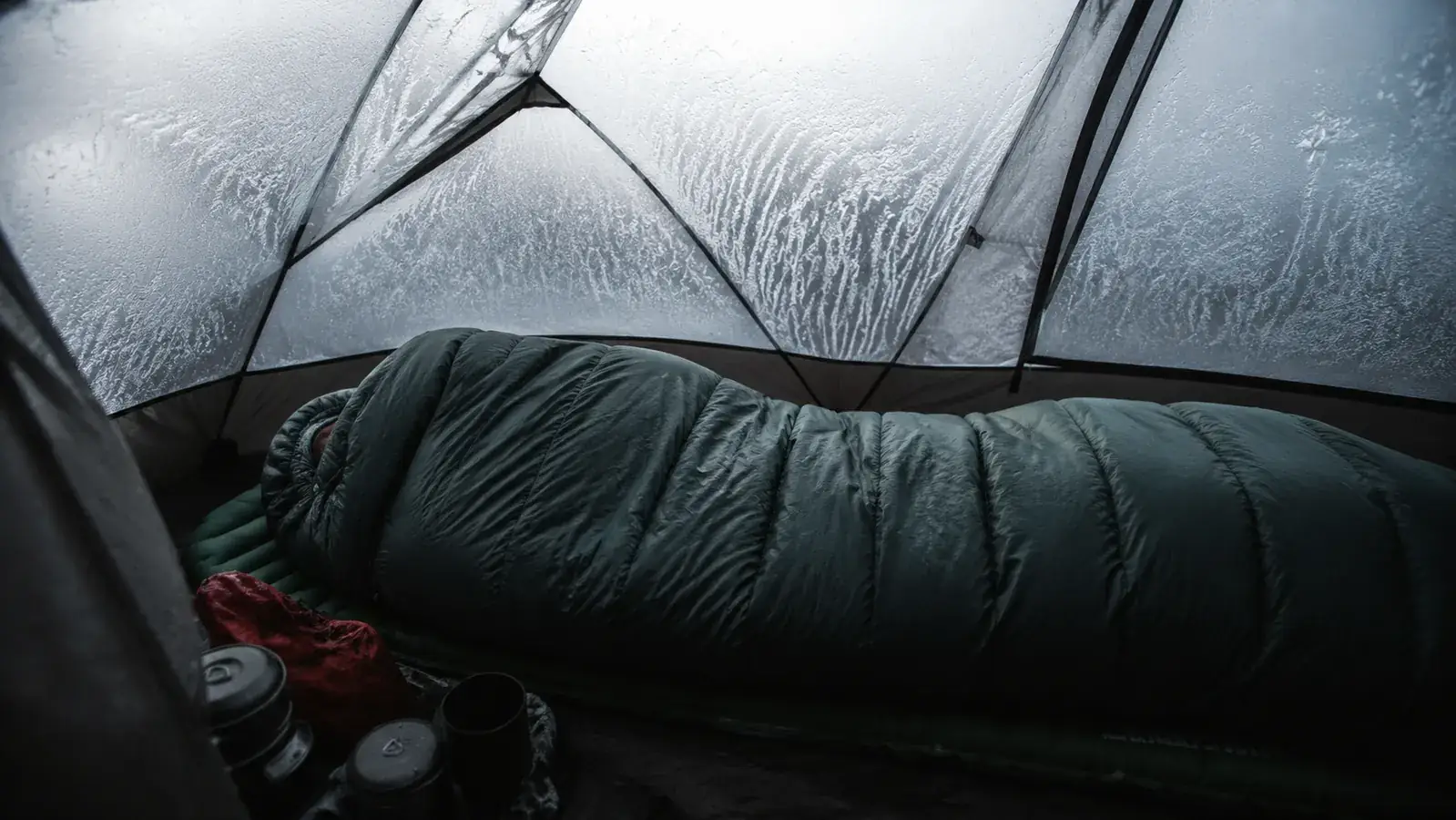
I have been cold at 3am in a camping situation that should have been fine. Bag rated to 20 degrees, temps in the mid-30s, and I was shivering inside my Teton Sports Celsius 20F mummy bag wondering what went wrong. What went wrong was I had three pieces of the sleep system and was missing two others. The cold does not care about your gear budget. It cares about gaps.
This guide covers every variable that determines whether you sleep warm or spend the night miserable. Not just the sleeping bag, which gets most of the attention, but the pad underneath you, what you wear inside the bag, how you eat before bed, and how you manage moisture in your tent. Get all five right and you can sleep warm in 20-degree weather without spending a fortune.
If you need a 20-degree bag that does not cost $200, the Teton Sports Celsius is where I'd start.
It is a mummy-cut, synthetic-fill bag rated to 20F with 3,500-plus reviews on Amazon. Not the lightest bag on the market, but at this price it delivers genuine warmth that cheaper rectangular bags cannot match. Check current pricing before you buy, since it moves around.
Amazon Check Today's Price on Amazon →Step 1: Match Your Bag's Temperature Rating to the Coldest Night, Not the Average Night
Most people choose a sleeping bag based on the average temperature at their destination. That is a mistake. You want to match the bag's lower limit rating to the coldest night you expect to encounter, not the typical night. Temperatures at elevation drop faster than forecasts suggest, and a clear night after a hot day can bottom out 15 degrees below the daytime high.
EN/ISO ratings split a bag's performance into two numbers: the comfort rating (the temperature a standard female sleeper stays warm) and the lower limit (the temperature a standard male sleeper stays warm). If you run cold, use the comfort number as your floor. If you are car camping and do not mind carrying extra weight, go one temperature tier colder than you think you need. A 20F bag used on a 35F night is comfortable. A 35F bag used on a 20F night is a long, bad experience.
The Teton Sports Celsius is rated to 20 degrees Fahrenheit. For three-season camping in most of the continental US, including shoulder-season trips where lows can hit the mid-20s, that rating covers the range well. For high-altitude summer backpacking above 10,000 feet, I would still reach for it over a 32F bag. Nights above treeline are cold, even in July.
Step 2: Get Your Sleeping Pad R-Value Right Before Buying Anything Else
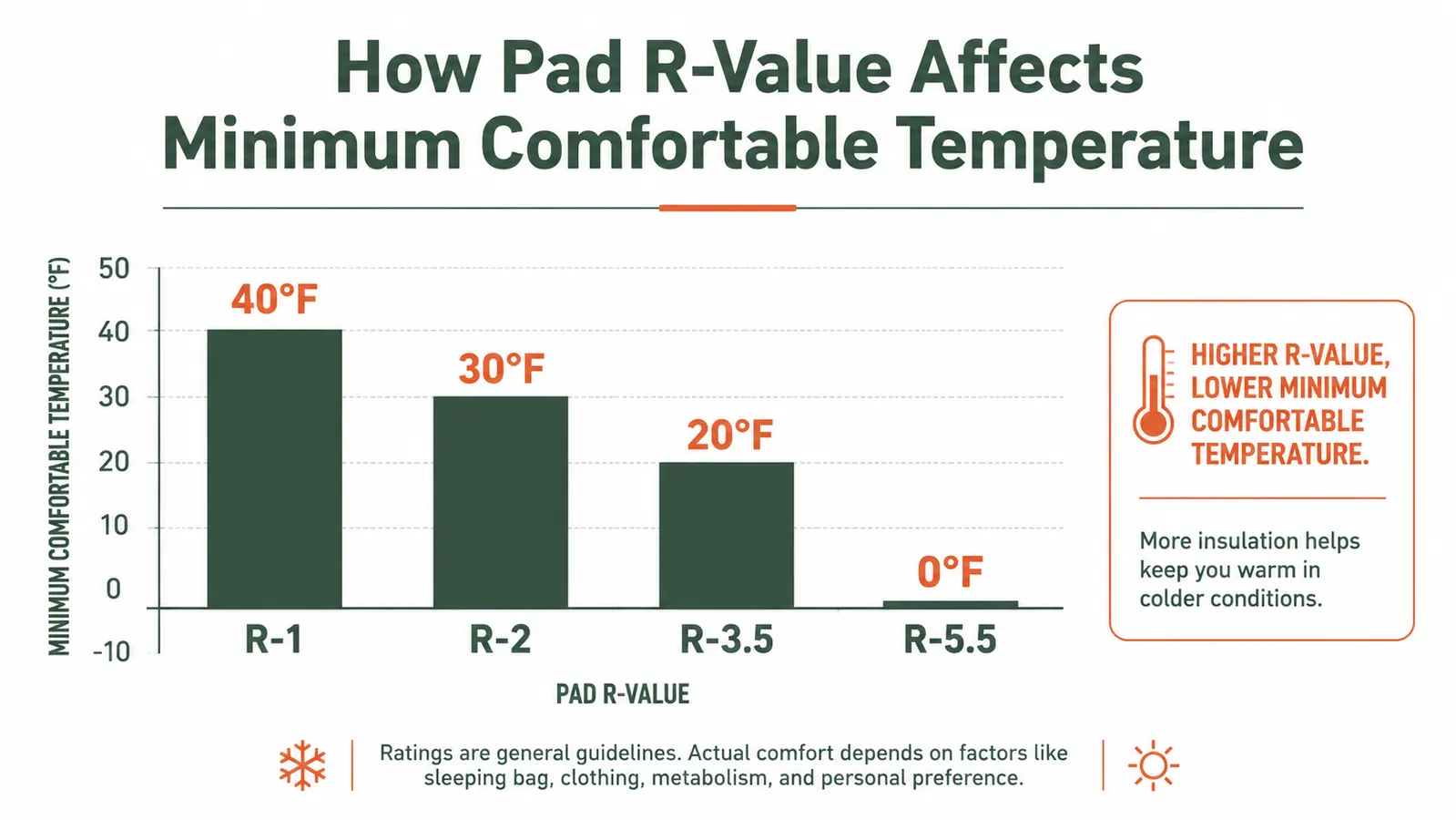
This is the step most campers skip because it sounds boring, and it is the one that causes the most 3am cold wakeups. Your sleeping bag insulates from above. The ground pulls heat directly from below at a rate that bag loft cannot counter on its own. R-value measures how well a pad resists that heat transfer. Higher is warmer.
For cold-weather camping, aim for a pad with an R-value of at least 3.5. That gives you solid insulation down to about 20 degrees when paired with a properly rated sleeping bag. If you are camping in shoulder seasons at lower elevations where lows stay in the 30s, an R-2 foam pad is workable. If you are sleeping on snow or frozen ground, you want R-4 or higher.
The cheapest reliable upgrade here is a closed-cell foam pad like the Therm-a-Rest Z Lite, which runs around $50 and has an R-value of 2.0. Layer it under an inflatable for combined R-values in the 4-6 range without breaking the bank. Many cold-weather campers run a thin foam layer plus an inflatable for exactly this reason.
Step 3: Wear the Right Layers Inside Your Bag
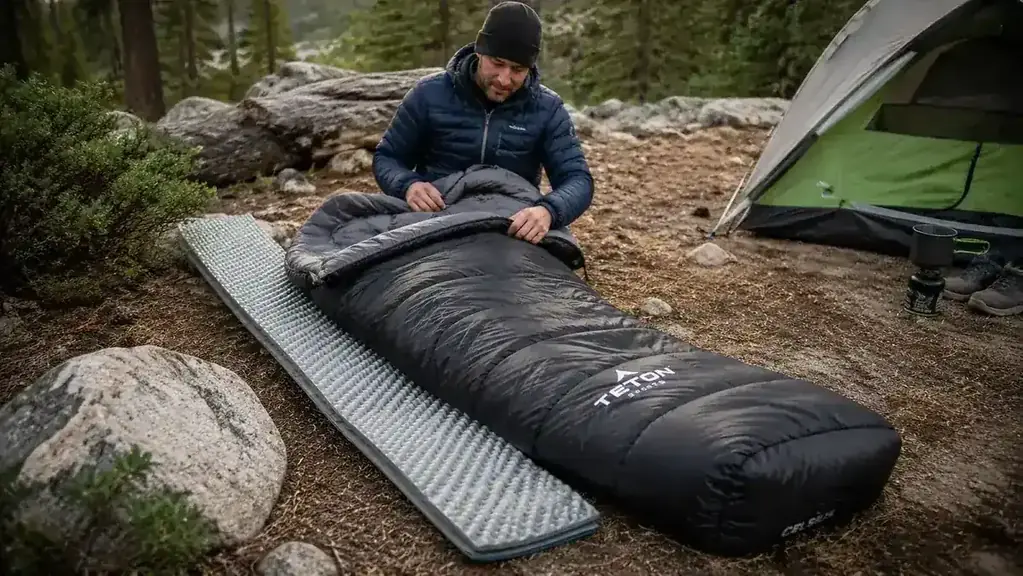
A sleeping bag's temperature rating assumes you are wearing a light base layer, not sleeping naked or fully clothed in a down jacket. The base layer fills gaps in bag fit, especially around your neck and shoulders where mummy bags can lose heat. A merino wool or synthetic long-sleeve shirt and fitted pants are the standard. Avoid cotton, which absorbs sweat and holds it against your skin.
Wear clean, dry layers into your bag. If you wore your base layer all day on trail, change before you sleep. Sweat-damp fabric feels cold before it feels wet, and it wicks warmth away from your core throughout the night. I carry a dedicated sleep set that never sees trail use. It weighs about 6 ounces total and has paid for itself in warm nights many times over.
Pay attention to your head. A significant portion of body heat escapes from your head and neck. The Celsius bag has a well-fitted hood and a cinch cord at the collar. Pull it tight around your face on cold nights and leave only your nose and mouth outside. If you still run cold, add a lightweight merino beanie inside the hood. The combination is noticeably warmer than the hood alone.
A dedicated sleep base layer, worn clean and dry, does more for warmth than upgrading to a more expensive bag. Six ounces of merino wool changed my cold-weather camping more than anything else I have tried.
Step 4: Manage Condensation Inside Your Tent
Moisture is the silent cold-weather problem. Every time you breathe inside a tent, you exhale water vapor. That moisture condenses on the tent walls, drips, and eventually soaks into your sleeping bag if you do not manage it. Wet down loses nearly all its insulation. Wet synthetic loses some but holds up better, which is one reason synthetic bags like the Celsius make sense for damp conditions.
Always vent your tent, even in cold weather. Leave the rain fly's door vent cracked a few inches. On a double-walled tent, this creates airflow between the inner and outer walls that carries moisture out without letting cold air into your sleeping space. A fully sealed tent builds up enough interior moisture overnight to make your bag feel damp by morning.
Shake your sleeping bag out and let it air for 30 minutes in the morning whenever conditions allow. Even one night of use builds up body moisture inside the insulation. After a multi-night trip, hang the bag outside your car on the drive home and let it dry fully before storage. Compressing a damp bag degrades the fill over time.
Step 5: Fuel Your Body for Warmth Before You Sleep
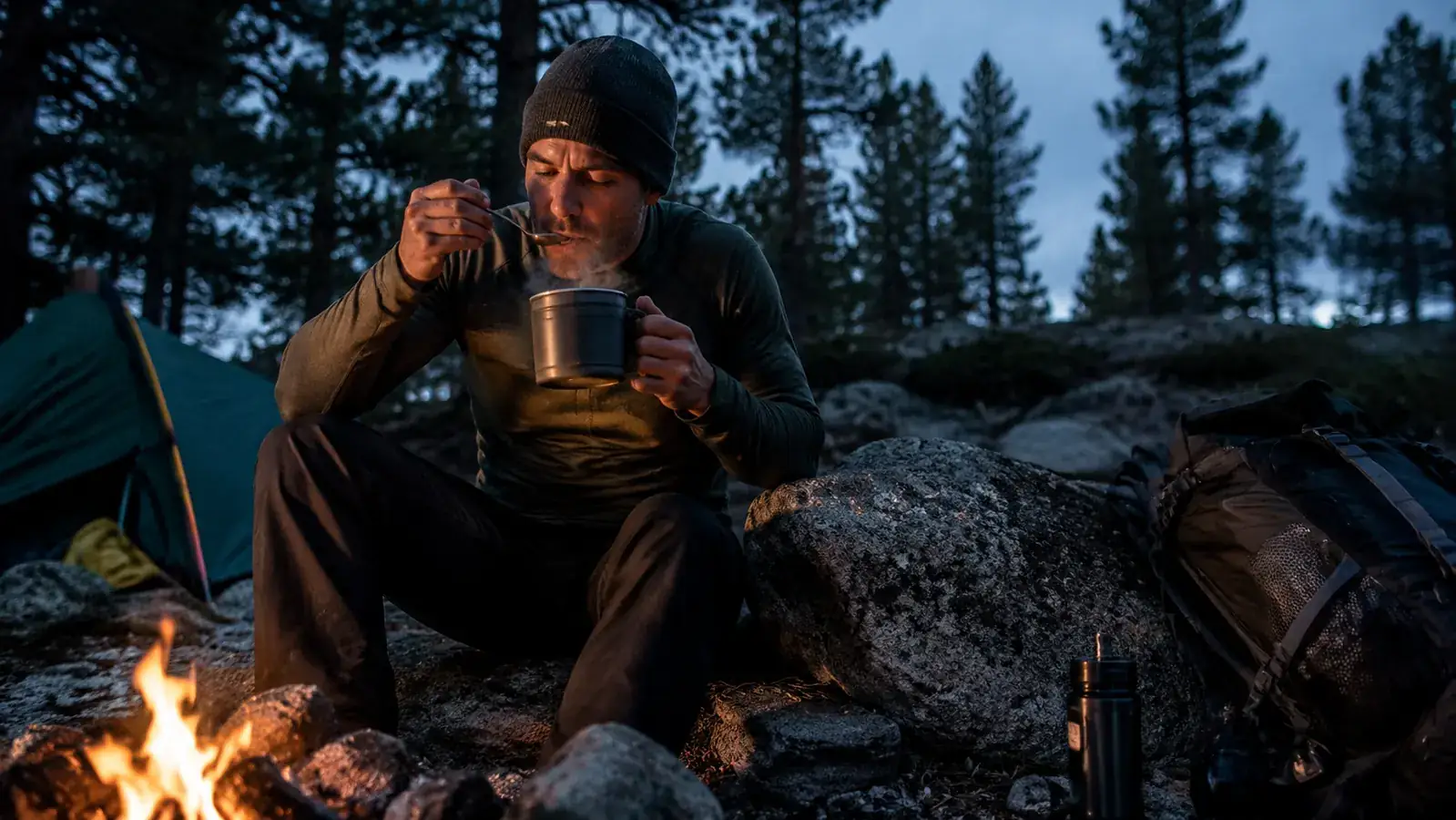
Your body is the heat source. The sleeping bag, pad, and layers are just insulation around that source. If your body is not generating heat, none of the gear helps. Two things matter most before bed: food and hydration.
Eat a substantial meal within two hours of sleeping. Your body generates the most heat while digesting, and that peak digestion window lines up with the first few hours in your bag, which are the most important for warming the sleeping environment. High-fat, high-calorie food burns longer than carbohydrates alone. A handful of nuts, some cheese, or a spoonful of peanut butter eaten right before you zip up keeps the furnace running longer.
Drink water consistently throughout the day. Dehydration reduces circulation, and reduced circulation means your extremities get cold first. Cold feet are the most common complaint from campers who are doing everything else right. If you wake up with cold feet, drink a full 12 ounces of water, do 20 jumping jacks outside the bag to get blood moving, and then get back in. It works most of the time.
If you boil water for dinner or hot chocolate, fill a Nalgene with boiling water, cap it tightly, wrap it in a sock, and put it at the foot of your bag. That hot water bottle pre-warms the footbox and adds 20-30 minutes of heat output at the coldest end of the bag. On truly cold nights, this one trick makes a measurable difference.
What Else Helps
A few additional variables matter when temperatures are close to your bag's limit. Tent site selection changes your sleep temperature more than people expect. Avoid low spots and valley floors where cold air pools. Sleep on slightly elevated ground when you have the option. Trees on the windward side of camp block wind chill without trapping moisture the way dense brush does.
If you are in a group, share a tent. Two people in a four-person tent generate enough body heat to raise the interior temperature noticeably above outside air. Solo camping in a very large tent in the cold gives the opposite effect: you are heating a big air volume with one body and losing heat to cold tent walls on three sides.
Check the Teton Sports Celsius reviews on Amazon before buying. With more than 3,500 reviews averaging 4.3 stars, the feedback patterns are consistent: real warmth at 20 degrees for average-temperature sleepers, solid construction at the price point, zipper quality that is good but not bulletproof over many years. For the price and the conditions most three-season campers face, it is a strong match. If you want the longer field-test breakdown, the Teton Sports Celsius long-term review covers three full seasons of use in detail. For the argument on why a mummy bag out-performs a rectangular bag at the same temperature rating, see 10 reasons a mummy bag beats a rectangular bag.
Cold nights are not a gear problem. They are a system problem. The Celsius is the bag half of that system.
Pair it with an R-3.5 or higher pad, clean base layers, and a decent camp meal before bed, and 20-degree nights become manageable. Check today's price on Amazon and see if it fits your kit.
Amazon Check Today's Price on Amazon →