
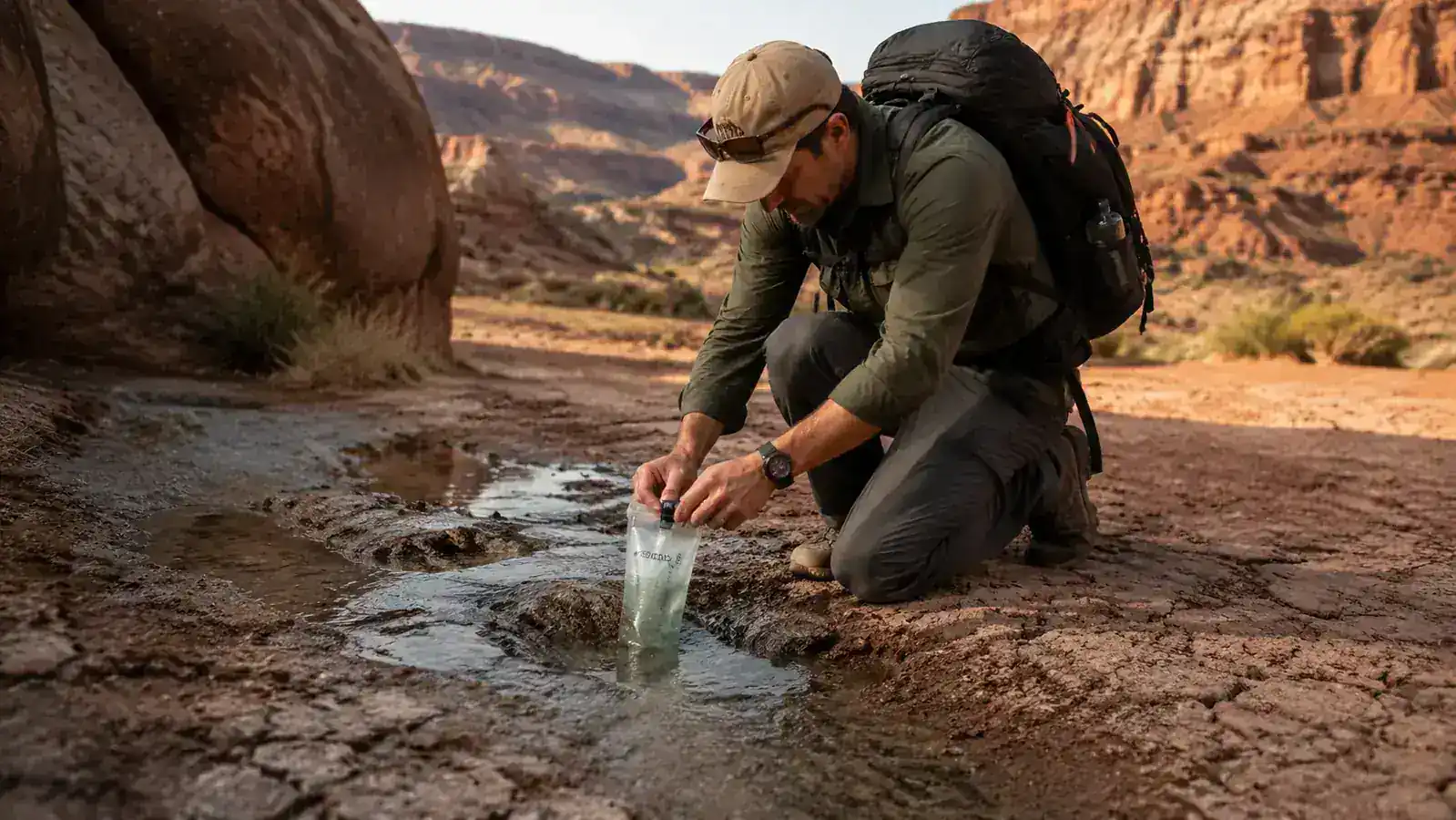
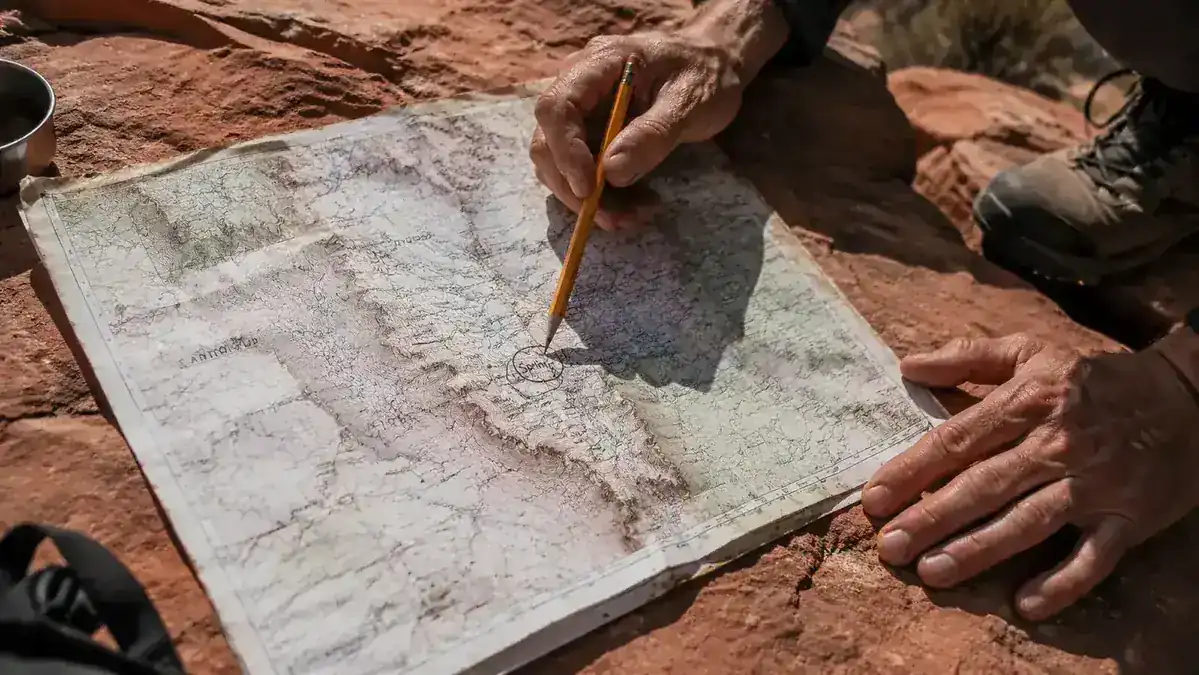
The spring was right there on the map. A blue circle with a little droplet symbol, about 9 miles in on the Coyote Gulch connector in southern Utah. I had checked the report two weeks before the trip. Somebody had filtered there in October. It was now late May, and the spring was a patch of cracked mud with a ring of dead grass around it.
I had 14 ounces of water left in my bottle. My camp was another 3 miles out. The temperature was 88 degrees at 2 in the afternoon and still climbing. There is a version of this story that ends badly. This one does not, because of a 2-ounce filter I almost left at home.
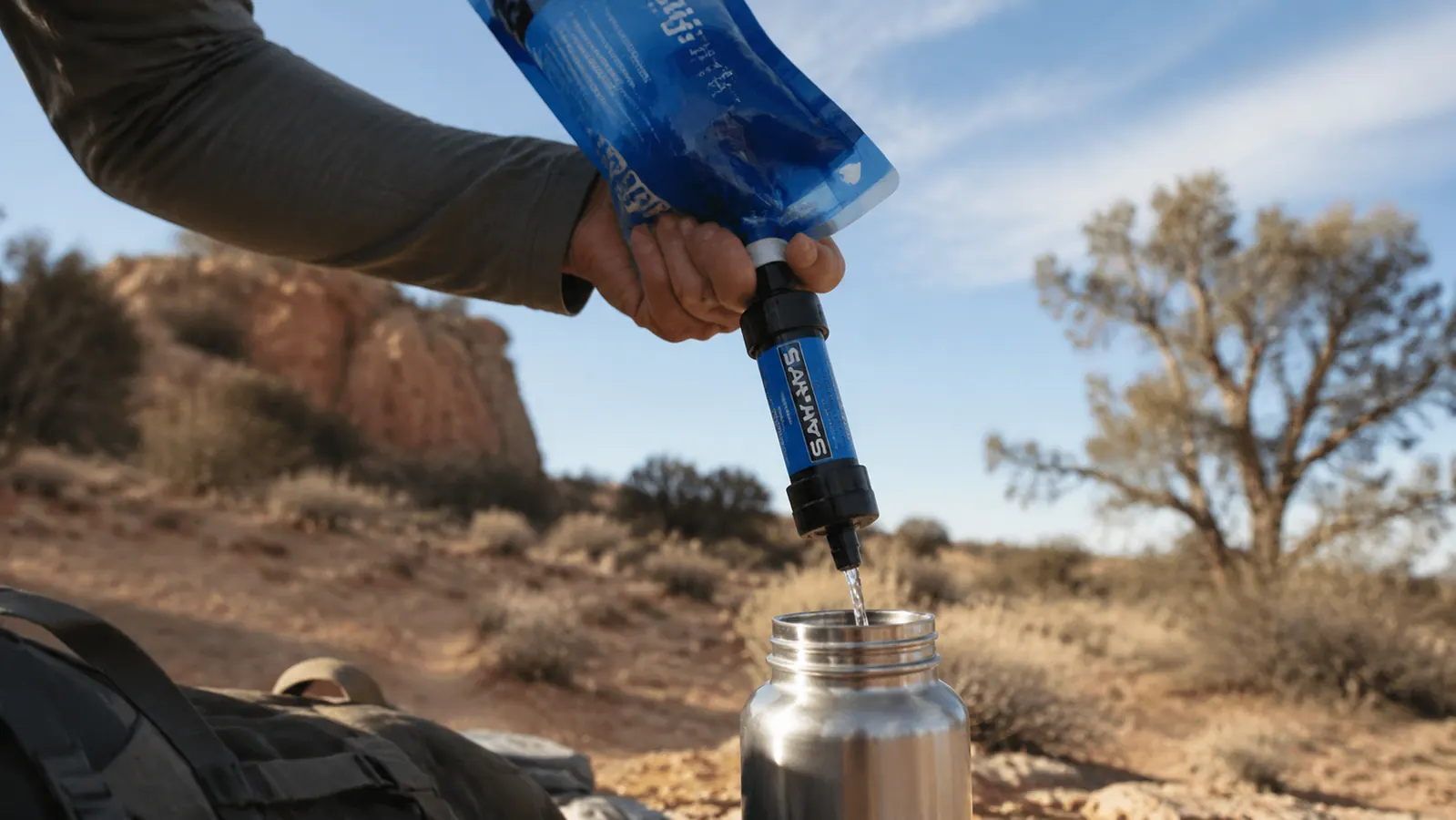
I had packed the Sawyer Mini as a backup. My main plan was the spring, the known source, the thing on the map. The Sawyer Mini was something I tossed in at the last minute because it weighs 2 ounces and takes up about as much space as a travel-size shampoo bottle. It had been in my kit for two years, mostly unused. I kept meaning to leave it home to save space. I am very glad I never did.
I had been stepping over that seep for five minutes before I realized what I was looking at. Water, barely moving, about four inches wide, trickling out from under a ledge into a sandy depression.
About a quarter mile past the dry spring, I found a seep. Not a source I would have called water in any other context. A four-inch trickle coming out from under a sandstone ledge into a shallow sandy depression, maybe two inches deep at its widest point. Enough to dip a pouch into if you were patient. With a standard squeeze filter or a gravity bag, I would have been there for twenty minutes filling a two-liter. With the Sawyer Mini and the little 16-ounce squeeze pouch it comes with, I filled up twice, filtered both pouches into my Nalgene, and was back on trail in about twelve minutes.
The Mini's hollow-fiber membrane filters down to 0.1 microns. That gets Giardia, Cryptosporidium, bacteria, all the things you actually worry about in a backcountry water source. It does not filter viruses, which matters more in international travel than in the Utah backcountry, but I keep iodine tablets in my first aid kit as a backup for that edge case. For domestic use in clear mountain or canyon water, the Mini handles everything I need.
That 2-ounce filter kept a miserable situation from becoming a medical one.
The Sawyer Mini weighs 2 oz, filters up to 100,000 gallons, and comes with a 16-oz squeeze pouch, a straw, and a cleaning plunger. It is one of the few pieces of gear I carry on every single trip, including day hikes in unfamiliar terrain.
Amazon Check Today's Price on Amazon →The thing I want to tell you is how little it costs to be prepared for this specific problem. I have talked to people at trailheads who are carrying no filtration at all because they planned around a known water source. That works right up until it does not. Water sources in the desert southwest, and honestly in a lot of mountain terrain, are unpredictable in ways that recent trip reports cannot fully account for. Snowpack variation, unseasonably warm springs, cattle activity upstream, a beaver dam that moved, all of it can turn a reliable source into nothing.
I also want to say something about flow rate, because it is the most common complaint about the Sawyer Mini and I think it is mostly a backflushing problem. If you backflush the filter with the plunger after every trip, the flow rate stays fast. If you do not backflush it, the pores clog with particulate and it gets slow. The Mini I used that day in Utah was about 18 months old and had been backflushed maybe a dozen times. It pushed water through as fast as I could squeeze the pouch.
What I'd Tell You If We Were Sitting at My Kitchen Table
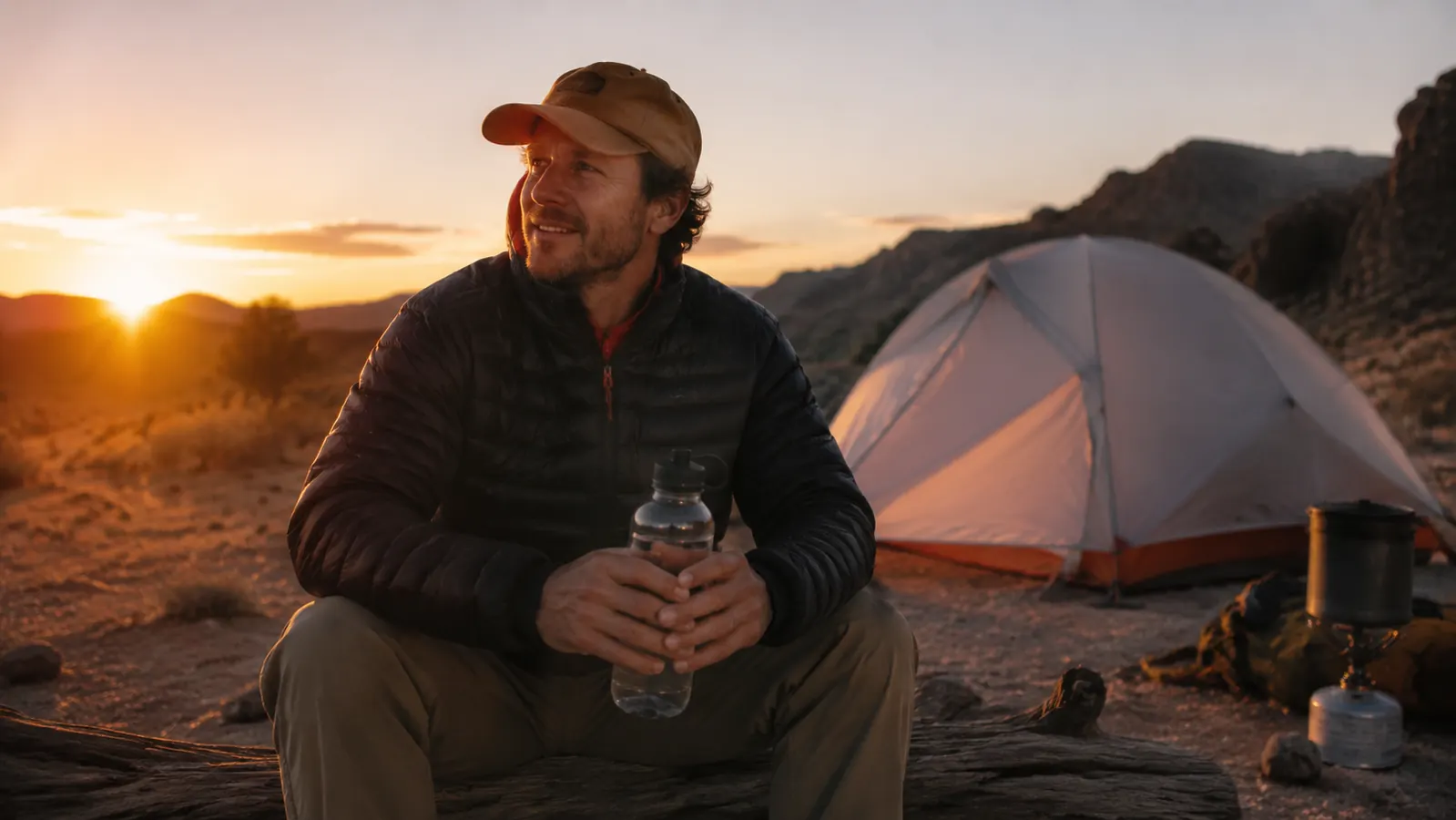
Here is the plain version. You are going to plan your water around sources that are on the map. That is fine. That is what everyone does. But the gap between a trip that goes well and a trip that goes sideways is usually something small, and water is the one thing you can never improvise around. The Sawyer Mini weighs what a set of car keys weighs. It fits in the hip belt pocket of most packs. The cost is less than a tank of gas.
I carry mine on every trip now, including day hikes in terrain I do not know well. I also dropped one in my wife's daypack without her knowing it, and she has never complained about the weight. It got used on a family trip to Rocky Mountain National Park last summer when we stopped at a snowmelt stream and everyone wanted to refill. That trip it was not a rescue, just a convenience. But I have been in the Utah canyon country version of that situation, and I know the difference between having it and not.
Buy it before your next trip. Backflush it when you get home. Keep it in your pack. You probably will not need it the way I needed it that afternoon in May. But if you ever do, you will be very glad it is there and not sitting on your gear shelf because you were trying to save two ounces.
The Sawyer Mini: the only 2-ounce piece of gear that can actually save a trip.
Rated 4.7 stars across more than 41,000 Amazon reviews. Filters up to 100,000 gallons. Works as a squeeze filter, inline filter, or drinking straw. For a deep dive on setup and proper backflushing, see the full long-term review.
Amazon Check Today's Price on Amazon →